
Materials for Vibratory Bowls
- Main Bowl and Track Materials
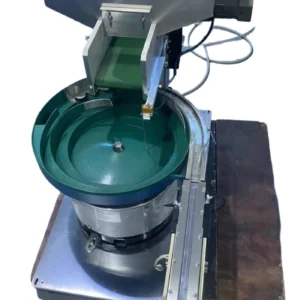
- Stainless Steel
- Types: สแตนเลส 304 is most common; SUS 316 is used for higher corrosion resistance.
- ข้อดี: High strength, corrosion resistance, non-magnetic, easy to clean.
- Applications: The standard choice for most industrial bowls.
- Aluminum
- ข้อดี: Lightweight, lower cost, easy to machine.
- Disadvantages: Less durable and wear-resistant than steel.
- Applications: For lightweight parts or where weight is critical.
- Mild Steel
- ข้อดี: Lowest cost.
- Disadvantages: Prone to rust; requires coating.
- Applications: Prototypes or low-cost, short-term use.
- Surface Treatments and Coatings
- Teflon/PTFE Coating
- ข้อดี: Very low friction, non-stick, protects delicate parts.
- Applications: Plastic, plated, polished, or easily scratched parts.
- Polyurethane Coating
- ข้อดี: Wear-resistant, elastic, reduces noise.
- Applications: For heavier parts or noise reduction.
- Rubber Coating
- ข้อดี: High friction, best for noise and vibration damping.
- Applications: For very smooth or light parts.
- Chrome Plating
- ข้อดี: Very hard, smooth, and wear-resistant.
- Applications: For feeding steel parts.
- Abrasive Blasting/Brushing
- ข้อดี: Creates a uniform matte finish to moderately increase friction.
- Applications: For slippery or lightweight parts.
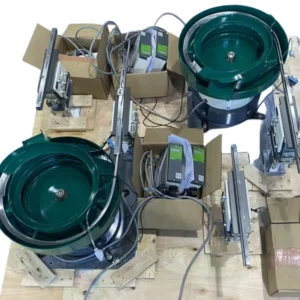
In summary, stainless steel is the preferred main material, while the surface coating is chosen based on part characteristics and process requirements.


 Thai
Thai  English
  Spanish (Mexico)
  Czech
Czech  Arabic
  Russian
  German
  French
  Turkish
  Italian
  Ukrainian
  Polish
  Romanian
  Bengali
  Portuguese (Portugal)
  Japanese
  Korean
  Hebrew
  Uzbek
Uzbek  Hindi
Hindi  Slovak
  Vietnamese
  Portuguese (Brazil)
  Spanish (Peru)
  Spanish (Spain)
  Spanish (Venezuela)
รีวิว
ยังไม่มีบทวิจารณ์