
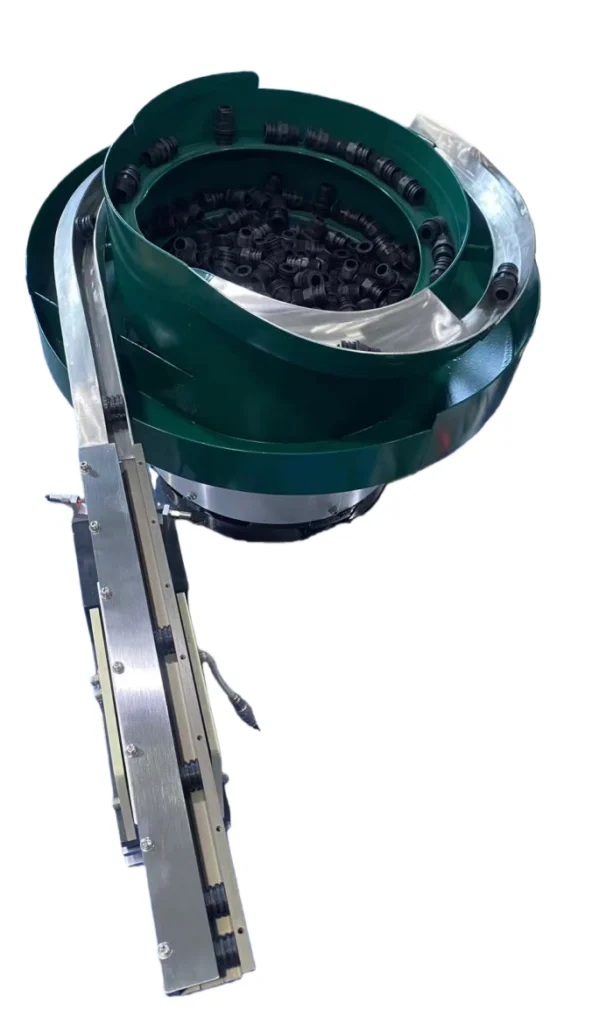
I. Functions of a Vibratory Bowl Feeder with a Counter A vibratory bowl feeder equipped with a counter (either a standalone counting module or integrated into a PLC/HMI) provides the following functions: Function Description Real-Time Counting Counts each part as it passes a sensor at the discharge point or on the linear track Batch Counting Counts parts into preset batch sizes (e.g., 100, 500, 1000 pieces) and triggers an output signal when the target is reached Total Production Logging Accumulates total parts fed per shift, per day, or per job for production tracking Automatic Start/Stop Stops the bowl when the batch target is reached; restarts when a new batch is […]
カテゴリーアーカイブ: Vibratory Bowl Feeder
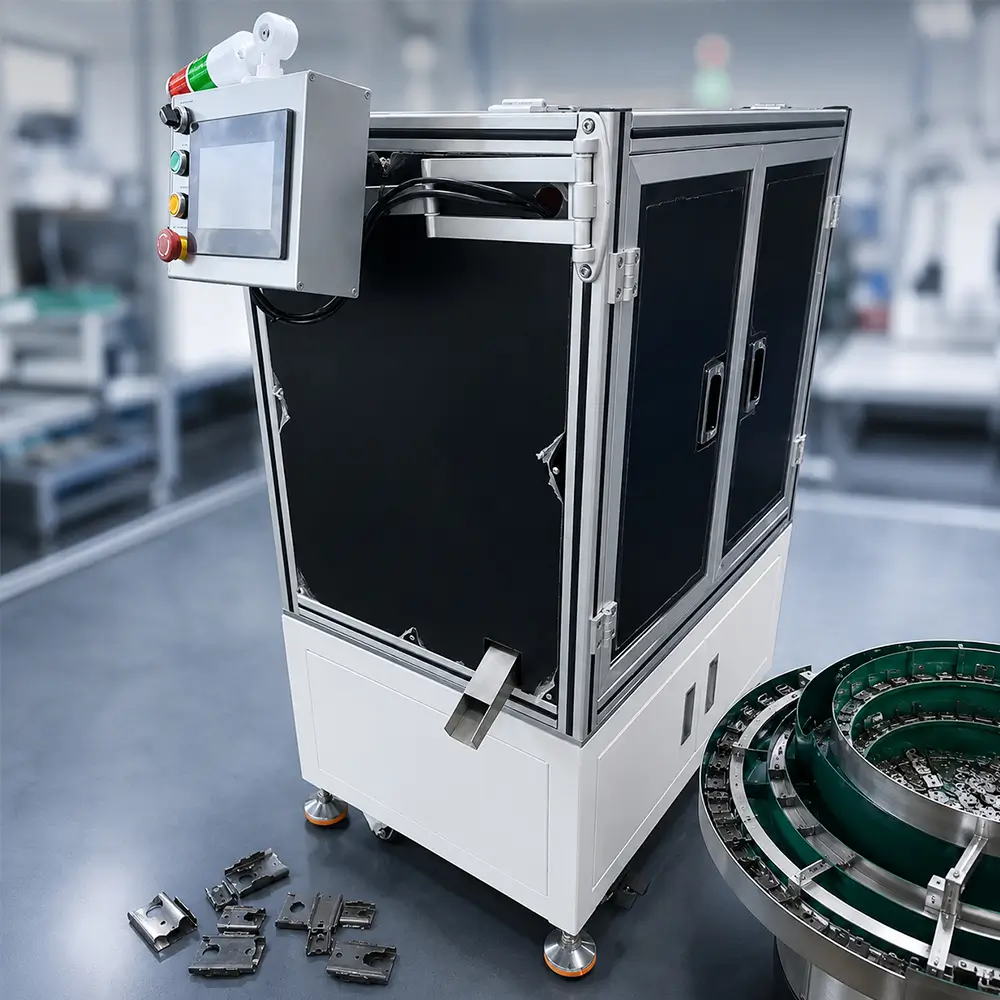
Small metal parts often arrive in bulk, but automated assembly machines need them one by one and in the correct position. Manual feeding can slow production and increase counting errors. An automatic counting vibratory bowl feeder solves these problems by combining part feeding, orientation, counting and fault detection in one system. The machine uses vibration to move small parts from a bulk supply into a controlled feeding track. Sensors then monitor the parts as they leave the feeder and help the system count each piece. For production lines that need a fixed number of parts or continuous automatic feeding, this type of feeder can provide a practical way to reduce […]
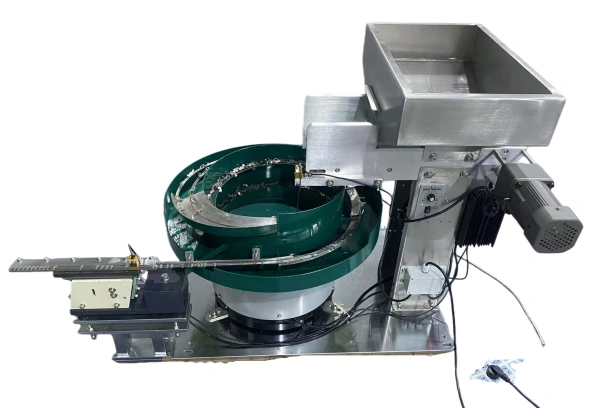
Common problems and solutions for vibratory bowl feeders I. Common Problems and Solutions Problem Possible Causes Solutions Parts not feeding or moving slowly Low amplitude; worn springs; dirty track; sticky parts; improper controller settings Increase amplitude; clean track; replace worn springs; adjust frequency; apply anti‑stick coating Parts jamming or stacking Incorrect track gap; wrong part size; burrs on parts; worn tooling; track misalignment Adjust track gap; check part dimensions; deburr parts; replace tooling; realign track Parts feeding backwards or wrong orientation Improper tooling design; worn wiper blades; incorrect air jet position Re‑design tooling; replace wipers; adjust air jets; add additional orientation tooling Inconsistent feed rate Unstable power supply; worn springs; […]
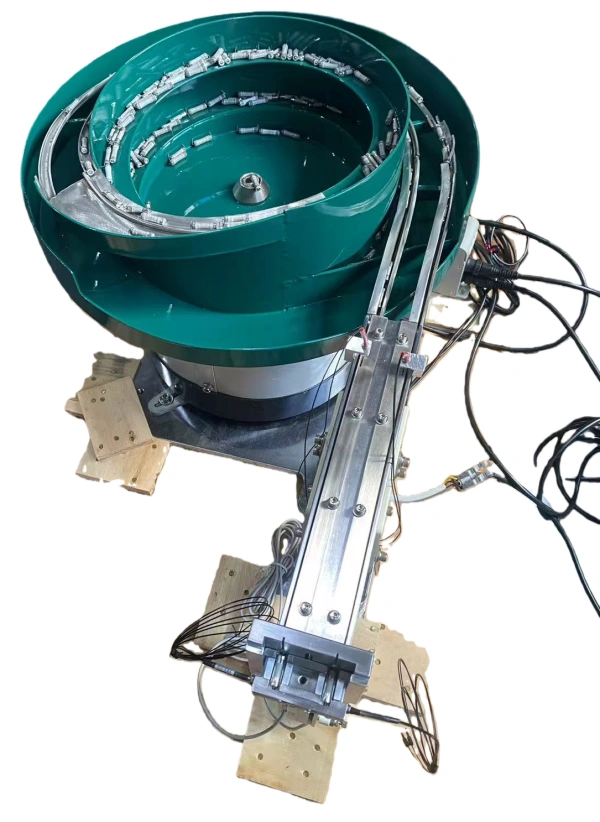
A vibratory bowl feeder with an integrated camera (vision-guided feeding system) is suitable for products that require high-precision orientation, quality inspection, or real-time defect detection. Below is a detailed breakdown: I. Product Types Best Suited for a Vibratory Bowl Feeder with a Camera Product Category Specific Examples Why Camera Integration Helps Parts with polarity or orientation marks ICs, connectors, diodes, capacitors, LEDs, sensors The camera detects polarity marks, notches, or orientation features to ensure correct feeding direction before assembly. Parts with fine details or subtle defects Precision gears, medical components, optical parts, micro‑switches The camera identifies scratches, burrs, cracks, missing features, or dimensional deviations that are difficult to detect mechanically. Parts that change […]
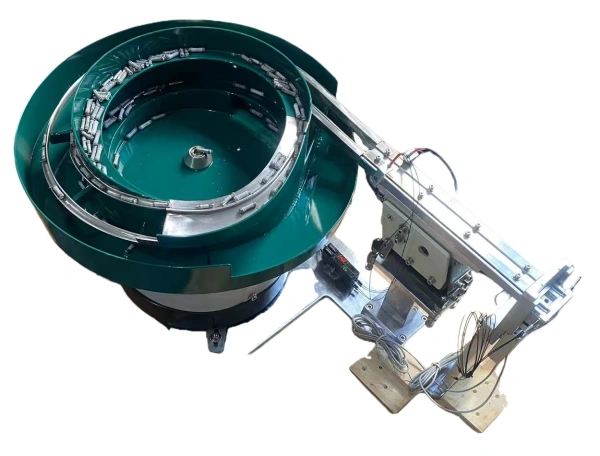
I. Quick Answer Yes, but with some limitations. Magnetic products can be fed using a vibratory bowl feeder, but the magnetic properties of the parts create unique challenges that must be addressed during the design and tuning of the feeder. II. Suitability Summary Magnetic Product Type Suitable for Vibratory Bowl? Key Considerations Ferromagnetic metal parts (steel, iron, nickel) ✅ Yes (with proper design) Parts may stick together or to the track; need to overcome magnetic attraction. Magnetically charged parts (permanent magnets, magnetized components) ⚠️ Yes, but with significant design changes Strong magnetic attraction causes parts to stick to each other and to the bowl/track; special measures required. Very small magnetic parts (< 5 mm) ⚠️ Yes, […]
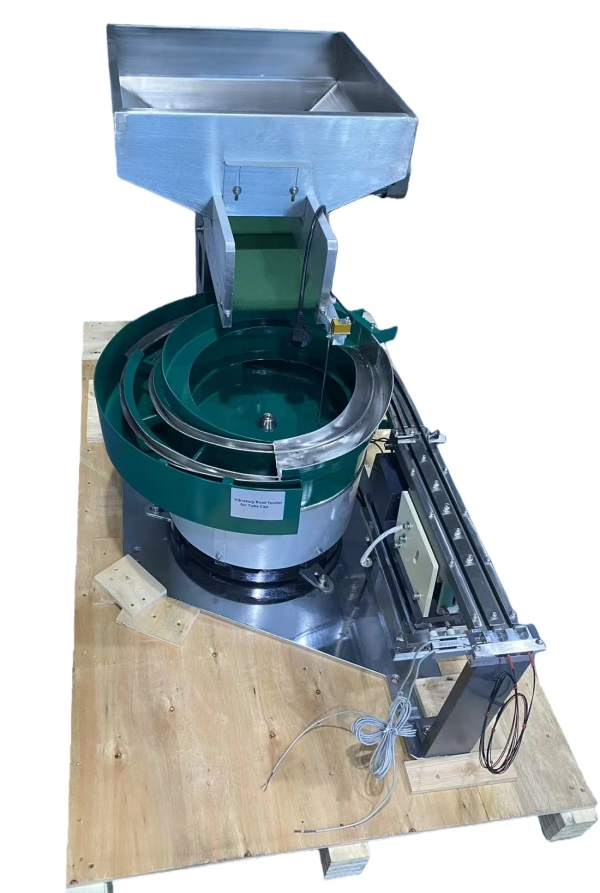
I. Quick Answer Aspect Vibratory Bowl Feeder Flexible Feeder Speed (parts/min) Much faster – typically 100–500+ parts/min, up to 1000+ for small, simple parts Slower – typically 10–60 parts/min (limited by robot cycle time) Stability Very stable – once tuned for a specific part, the feed rate is highly consistent Moderate – depends on vision processing speed and robot repeatability; can be affected by lighting, part appearance, and tray condition II. Speed Comparison Speed Factor Vibratory Bowl Feeder Flexible Feeder Typical range 100 – 500 parts/min 10 – 60 parts/min Maximum (small, simple parts) Up to 1000+ parts/min Up to 120 parts/min (with high‑speed robot + fast vision) Speed limitation Limited by track geometry […]
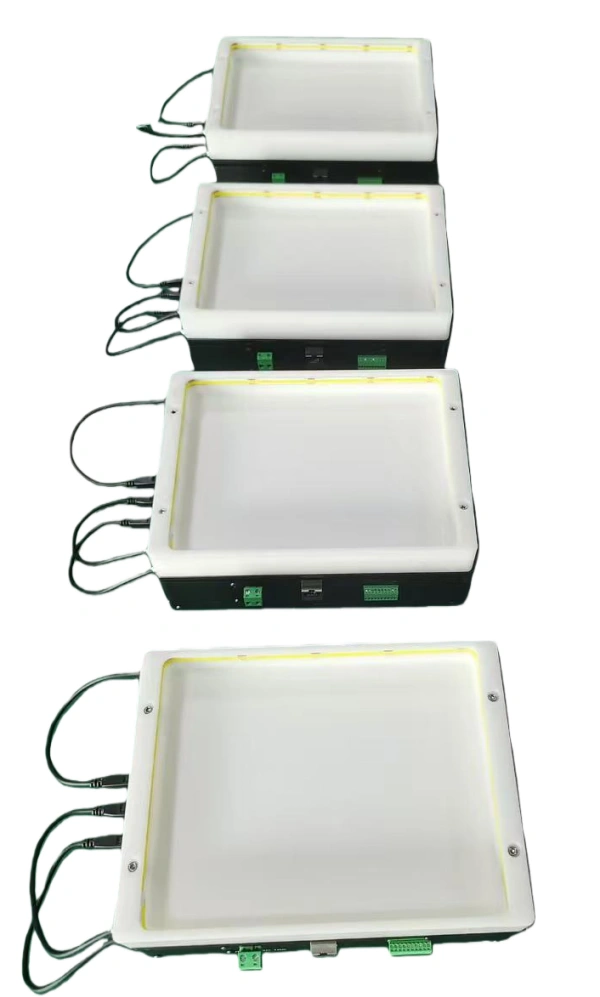
Which is better – a flexible feeder or a vibratory bowl feeder? What are the differences between them? I. Quick Answer Neither is universally “better” – they are designed for different applications. The choice depends on your part characteristics, production volume, changeover frequency, and budget. Choose a vibratory bowl feeder for high‑speed, long‑run feeding of a single part type that is rigid, uniform, and can be mechanically oriented. Choose a flexible feeder for high‑mix, low‑volume production, or when parts are delicate, complex, tangle‑prone, or difficult to orient mechanically. II. Key Differences (Comparison Table) Feature Vibratory Bowl Feeder Flexible Feeder Working principle Uses vibration + mechanical tooling (tracks, wipers, slots) to orient parts as they move along a spiral track Uses […]
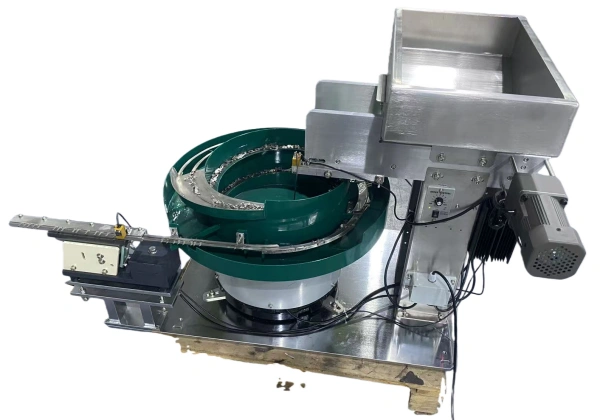
I. How to Maintain a Vibratory Bowl Feeder Proper maintenance includes cleaning, inspection, adjustment, and replacement of wear parts. Below is a clear, structured guide covering daily, weekly, monthly, quarterly, and yearly tasks. II. Daily Maintenance (Every Shift) Task Action Clean the bowl and track Remove dust, debris, and any stuck parts. Use a soft brush or compressed air. Inspect for foreign objects Check for broken parts, burrs, or contaminants that may cause jams. Check bolts and screws Tighten any loose mounting bolts or track fasteners. Listen for abnormal noise Unusual sounds may indicate loose springs, worn bearings, or foreign objects. Check sensor alignment Ensure sensors (fiber optic, photoelectric) are clean and correctly positioned. […]
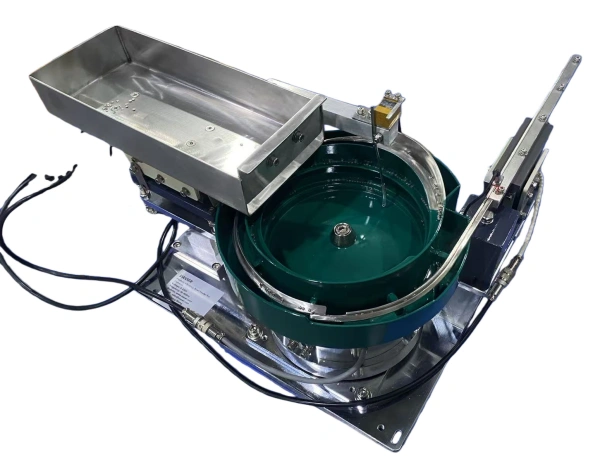
I. Typical Lifespan of a Vibratory Bowl Feeder Component / Condition Typical Lifespan Bowl body and track (stainless steel) 10 – 20+ years (with proper care) Springs / leaf springs 3 – 5 years (depending on duty cycle) Electromagnet coil 5 – 10 years (or longer if not overheated) Controller 5 – 10 years (electronics wear; may need replacement if components age) Rubber mounts / isolators 3 – 5 years (rubber hardens and cracks over time) Coating (Teflon, rubber, polyurethane) 1 – 3 years (depending on part abrasiveness) Overall bowl life: A well‑built vibratory bowl feeder, properly maintained, can last 10–20 years or more. The bowl body itself is very durable; wear parts […]
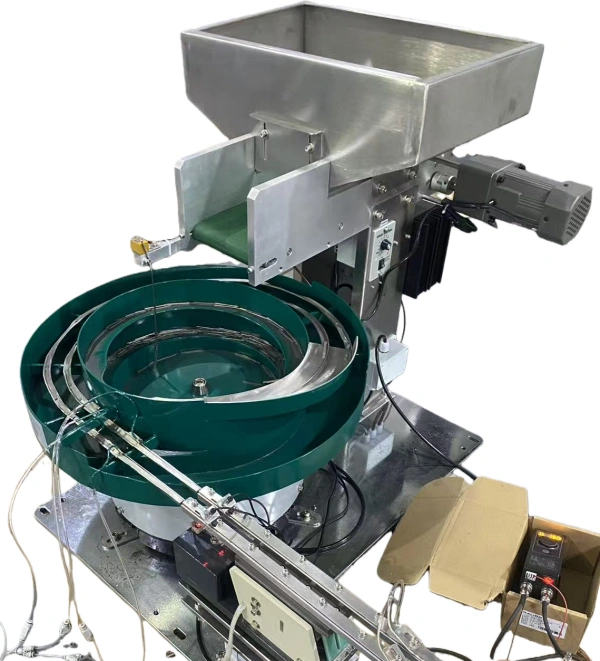
The answer depends on your specific application. Below is a structured comparison to help you choose. I. Quick Overview Feature Vibratory Bowl + Linear Vibrator Vibratory Bowl + Conveyor Belt Common name Bowl feeder + linear track (straight vibrator) Bowl feeder + belt conveyor Best for Precise, high‑speed part transfer and orientation Simple, low‑cost, non‑critical part transfer Cost Higher Lower Speed Very high Moderate Precision High (parts stay oriented) Low (parts may shift) Maintenance Moderate (springs, coils) Higher (belt wear, tracking, cleaning) Noise Moderate Low II. Detailed Comparison 1. Linear Vibrator (Straight Feeder) Aspect Detail How it works Uses electromagnetic vibration to move parts along a metal track (same principle […]
 Japanese
  English
  Spanish (Mexico)
  Czech
Czech  Arabic
  Russian
  German
  French
  Turkish
  Italian
  Ukrainian
  Polish
  Romanian
  Bengali
  Portuguese (Portugal)
  Thai
Thai  Korean
  Hebrew
  Uzbek
Uzbek  Hindi
Hindi  Slovak
  Vietnamese
  Portuguese (Brazil)
  Spanish (Peru)
  Spanish (Spain)
  Spanish (Venezuela)