
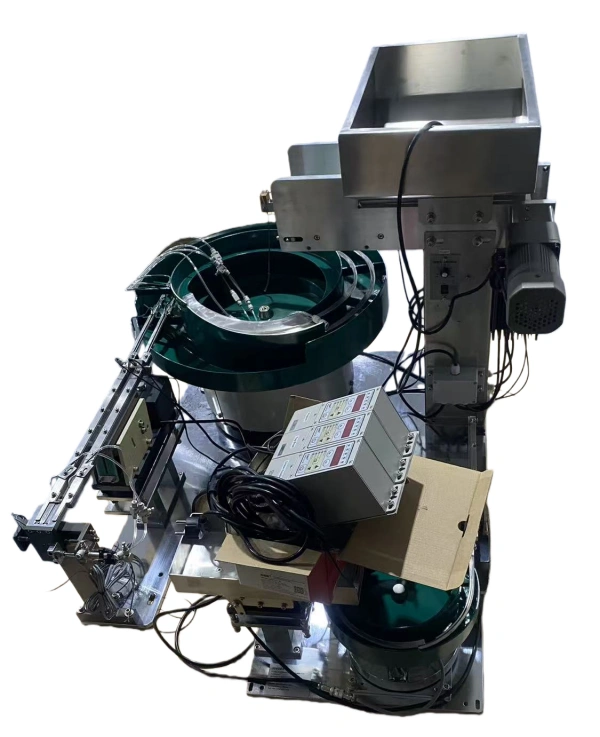
I. Products That Typically Require a Soundproof Enclosure Product Type / Characteristic Reason for High Noise Hard, heavy metal parts (e.g., steel screws, bolts, nuts, rivets, pins) Metal‑to‑metal contact generates loud impact noise. Small, rigid parts (e.g., bearings, small gears, machine components) High‑frequency impacts produce sharp, irritating sounds. High‑speed feeding applications (e.g., feeding at 300+ parts/min) Faster bowl operation increases both vibration noise and part‑to‑part collision noise. Large bowl with high amplitude (e.g., feeding parts > 50 mm) Larger bowls and higher vibration energy produce louder mechanical noise. Parts with sharp edges or rough surfaces (e.g., stamped metal parts, formed components) Rough surfaces increase friction noise and part‑to‑part scraping. Parts that tumble or bounce (e.g., disc‑shaped […]
タグアーカイブ: caps vibratory bowl feeders
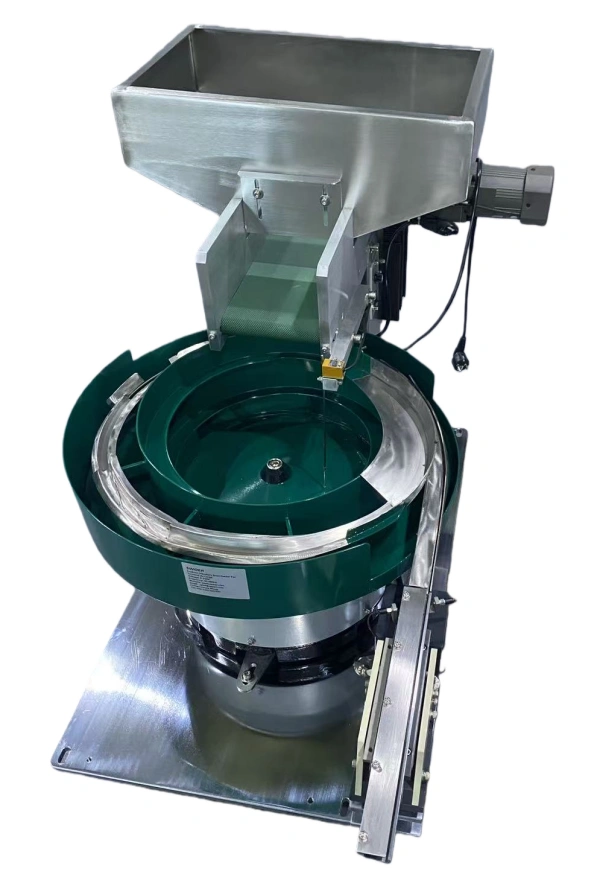
How Should a Vibratory Bowl Be Made for Oily Products? If you must use a vibratory bowl for oily parts, the following design modifications are recommended: 1. Surface Treatment & Materials Measure Purpose PTFE (Teflon) coating Reduces friction and prevents oil from sticking to the track. Stainless steel bowl (SUS304 or SUS316) Resists oil‑related corrosion and is easy to clean. Hydrophilic / oil‑repellent coating Special coatings that repel oil (e.g., oleophobic coatings). Smooth surface finish (polished) Minimizes surface roughness where oil can accumulate. 2. Track & Bowl Geometry Measure Purpose Wider track Reduces clogging from parts sticking together. Steeper incline Helps parts slide rather than stick. Air jet assistance Nozzles […]
 Japanese
  English
  Spanish (Mexico)
  Czech
Czech  Arabic
  Russian
  German
  French
  Turkish
  Italian
  Ukrainian
  Polish
  Romanian
  Bengali
  Portuguese (Portugal)
  Thai
Thai  Korean
  Hebrew
  Uzbek
Uzbek  Hindi
Hindi  Slovak
  Vietnamese
  Portuguese (Brazil)
  Spanish (Peru)
  Spanish (Spain)
  Spanish (Venezuela)