
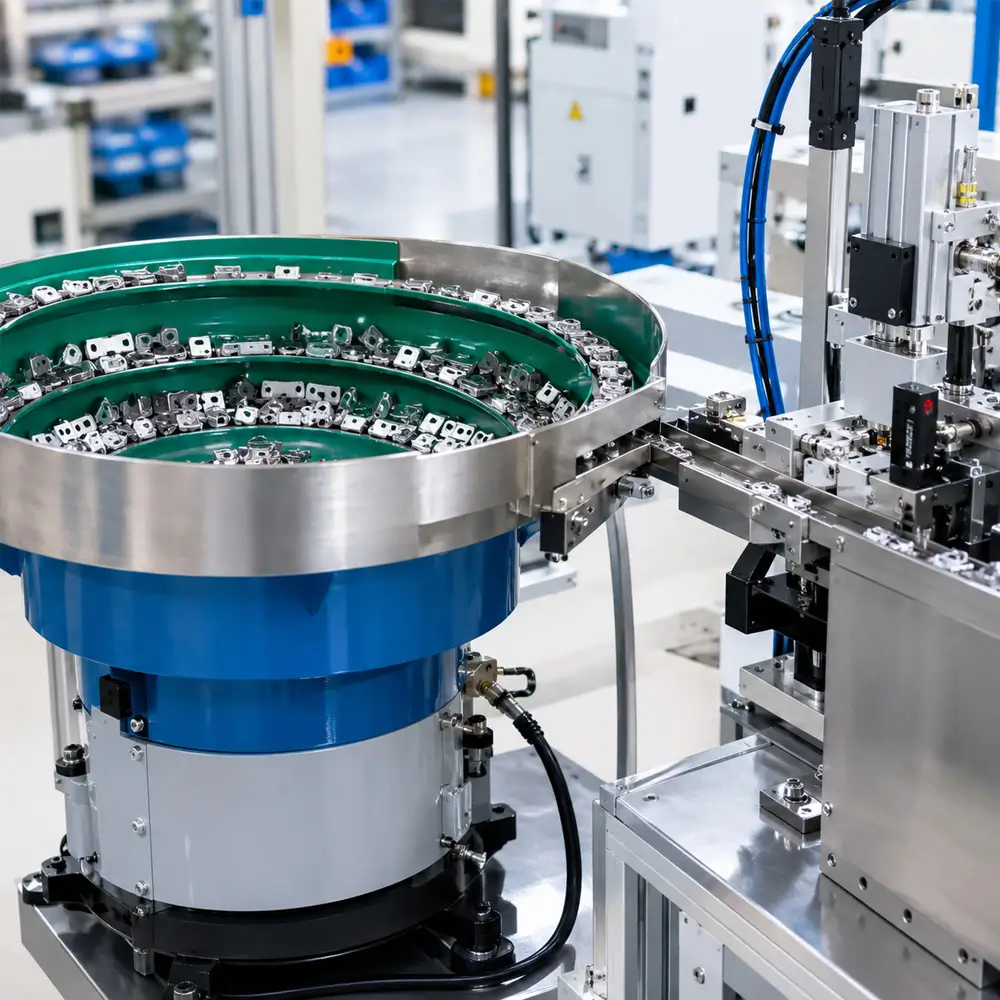
Vibratory bowl feeders help manufacturers automate the feeding and positioning of small parts. They are widely used with assembly machines, packaging equipment, inspection systems, and other production equipment. When looking for vibratory bowl feeder manufacturers in the USA, buyers need to consider more than the equipment price. Part shape, feeding speed, orientation, machine integration, and technical support can all affect the final solution. Some applications can use standard bowl feeders. Others require custom tooling and feeding systems based on the customer’s parts and production line. This guide explains what to check when choosing a vibratory bowl feeder manufacturer and how to select a suitable solution for your production needs. What […]
カテゴリーアーカイブ: Assembly Machine
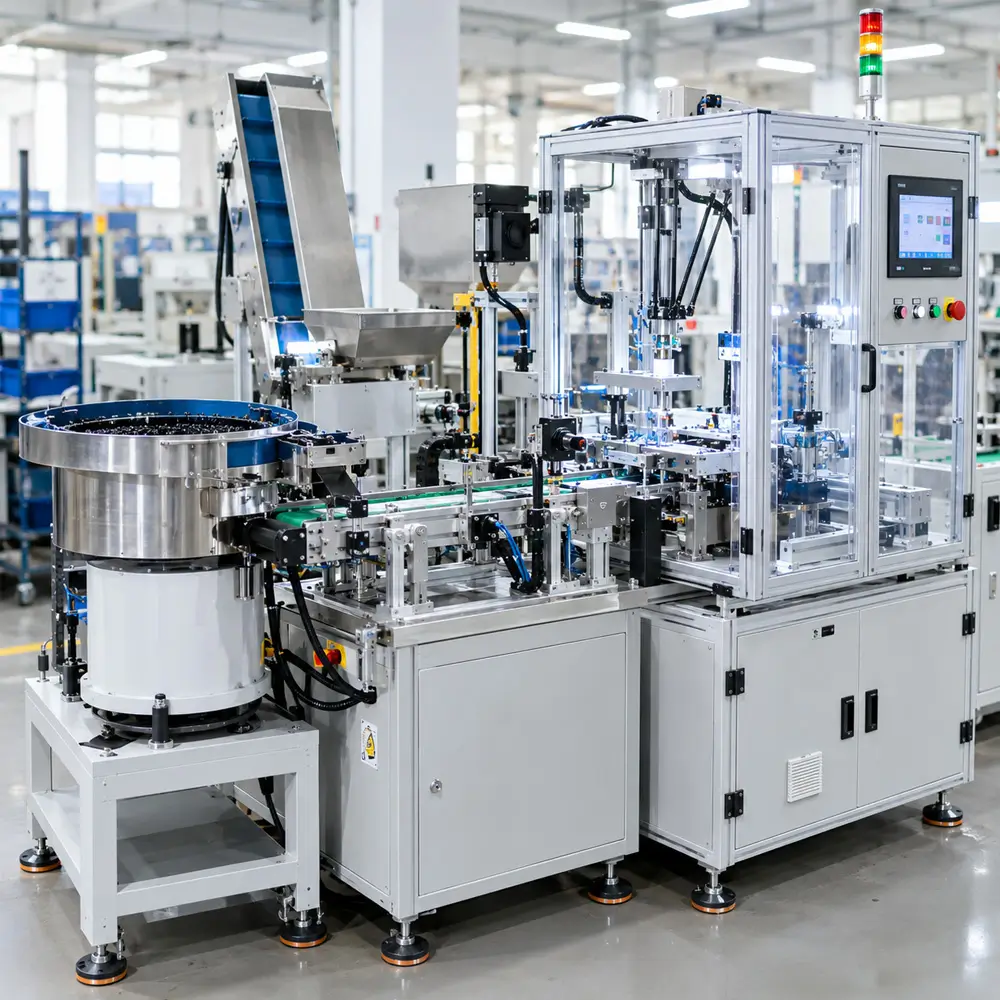
Germany has a strong market for industrial automation and custom assembly equipment. Many manufacturers provide automatic assembly machines, testing systems, robotic cells, feeding systems, and complete production lines. German assembly machine manufacturers serve industries such as automotive, electronics, medical devices, electrical products, and consumer goods. Some companies focus on complete production lines, while others specialize in custom machines for specific assembly processes. For companies looking for an automatic assembly machine in Germany, the key is not only the machine itself. Production speed, product structure, feeding method, inspection requirements, machine flexibility, and after-sales support all need to be considered. What Do Automatic Assembly Machine Manufacturers in Germany Provide? German manufacturers offer […]
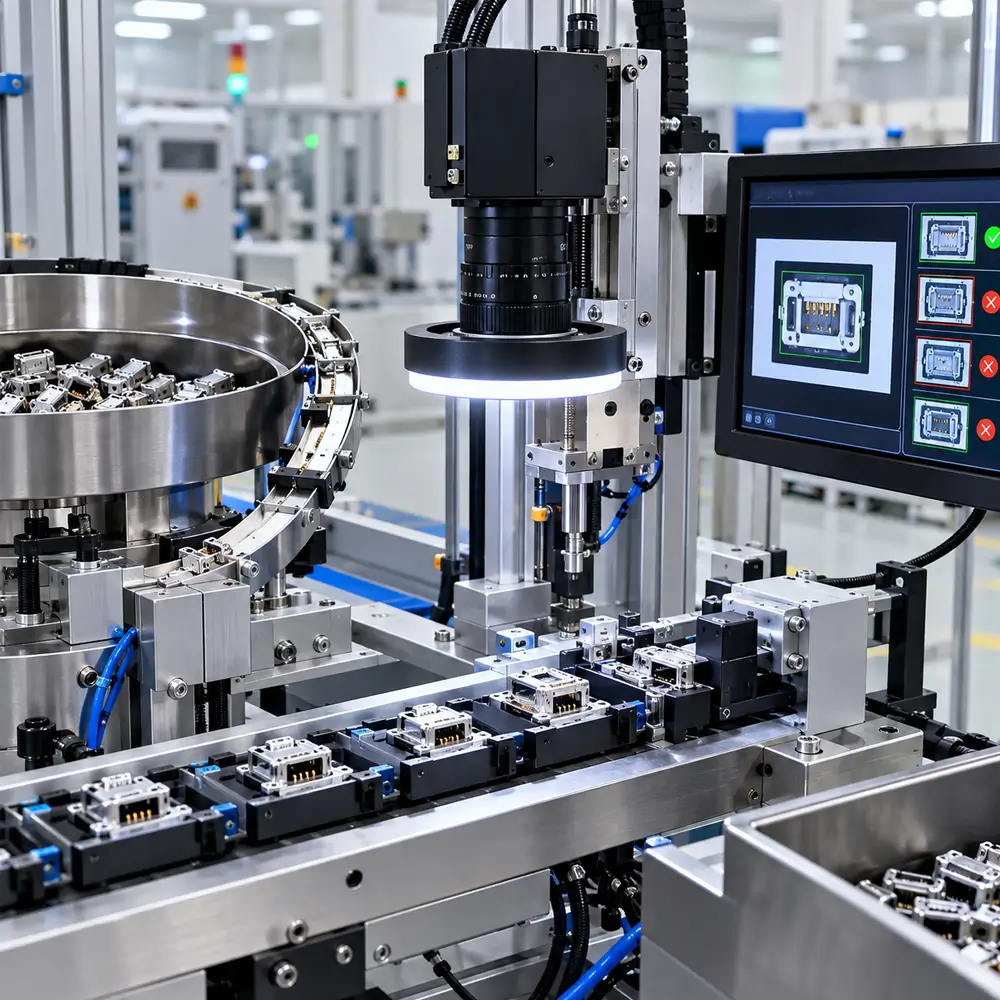
Introduction Vision inspection can make an automated assembly machine more accurate and reliable. It checks parts during production and finds problems before defective products reach the next process. For manufacturers, this means better quality control, fewer manual checks, and more stable production. Improve Assembly Accuracy Small parts often require precise positioning during assembly. Even a small position error can affect the final product. A vision inspection system uses cameras to check the position, direction, shape, and appearance of parts. The system can identify parts that are not correctly placed and send a signal to the assembly machine. This helps maintain consistent assembly quality during long production runs. Detect Defective Parts […]
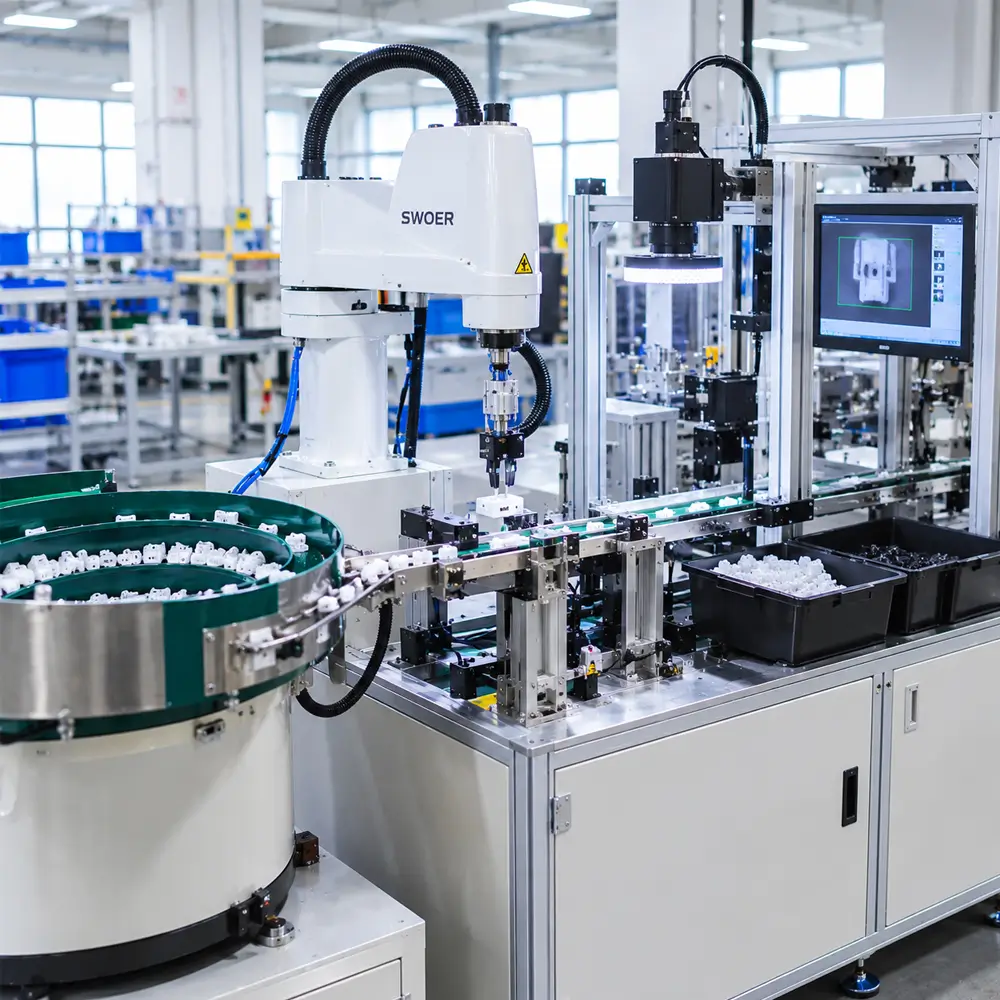
Introduction Many manufacturers want to produce more parts without adding more manual work. Assembly machines can take over repeated tasks such as feeding, positioning, pressing, fastening, inspection, and sorting. The right machine depends on the product, production volume, part size, and assembly process. SWOER designs custom assembly machines for different products and production needs. The machine can combine feeding, assembly, inspection, and material handling in one production line. Why Use Automation for Assembly? Manual assembly takes time and requires operators to repeat the same actions throughout the day. An automated assembly machine can handle many of these repeated operations. This allows operators to focus on machine monitoring, material supply, and […]
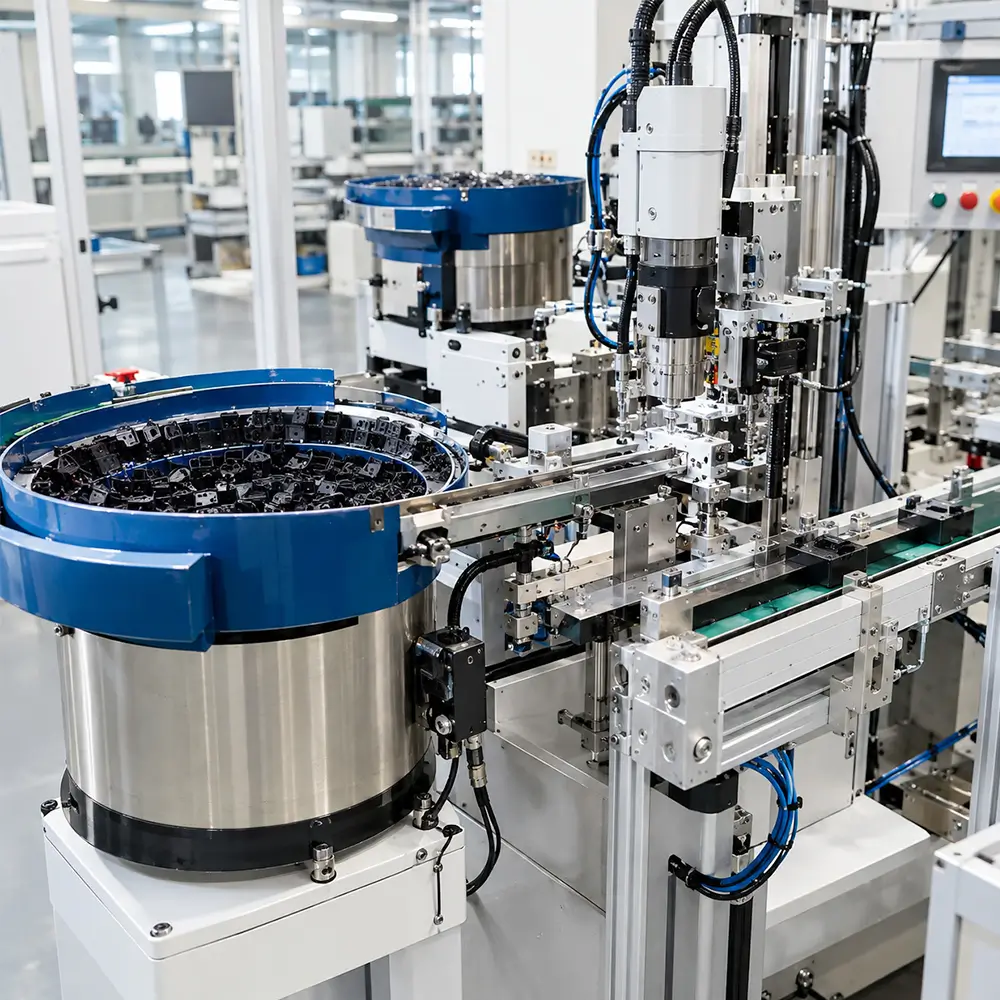
Introduction Consumer electronics often contain many small components and assembly steps. Manufacturers may need automatic feeding, positioning, assembly, inspection, testing, and product transfer. A turnkey assembly line can connect these processes into one production system. The first step is to provide enough product and production information for the supplier to prepare an accurate quotation. This guide explains what to include in your RFQ and how a custom assembly machine supplier such as SWOER can support the project. What Is a Turnkey Consumer Electronics Assembly Line? A turnkey consumer electronics assembly line combines several production processes into one automated system. Depending on the product, the line may include: Automatic part feeding […]
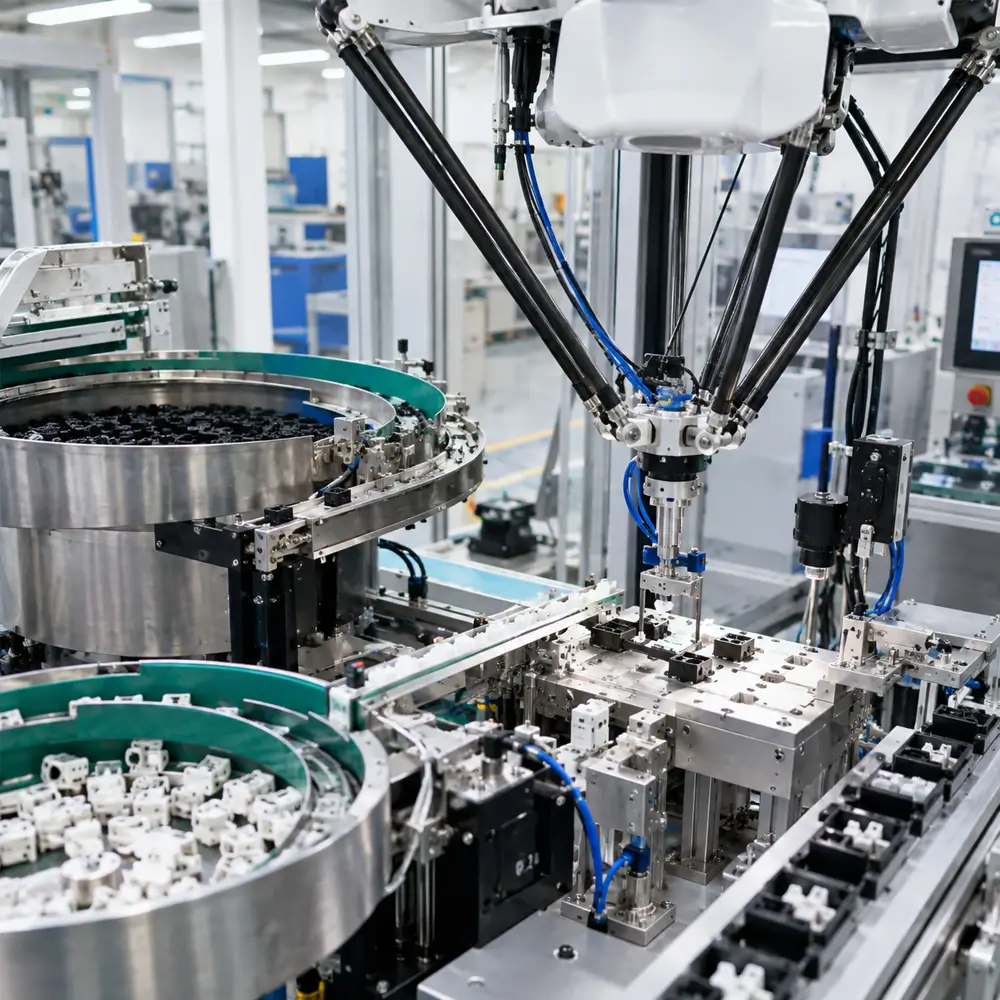
Small parts manufacturing often requires accurate feeding, stable positioning, fast handling, and repeatable assembly. Manual handling can become difficult when production volume increases. Small components may also require different feeding and assembly methods. A robotic assembly solution can combine part feeding, pick and place, assembly, inspection, and product transfer in one production system. The right solution depends on the product structure, assembly process, production target, and required accuracy. Check the Size and Shape of Your Parts Part size and shape are important when choosing robotic assembly equipment. Small parts may include connectors, springs, clips, washers, terminals, screws, electronic components, and plastic parts. Different shapes require different feeding and handling methods. […]
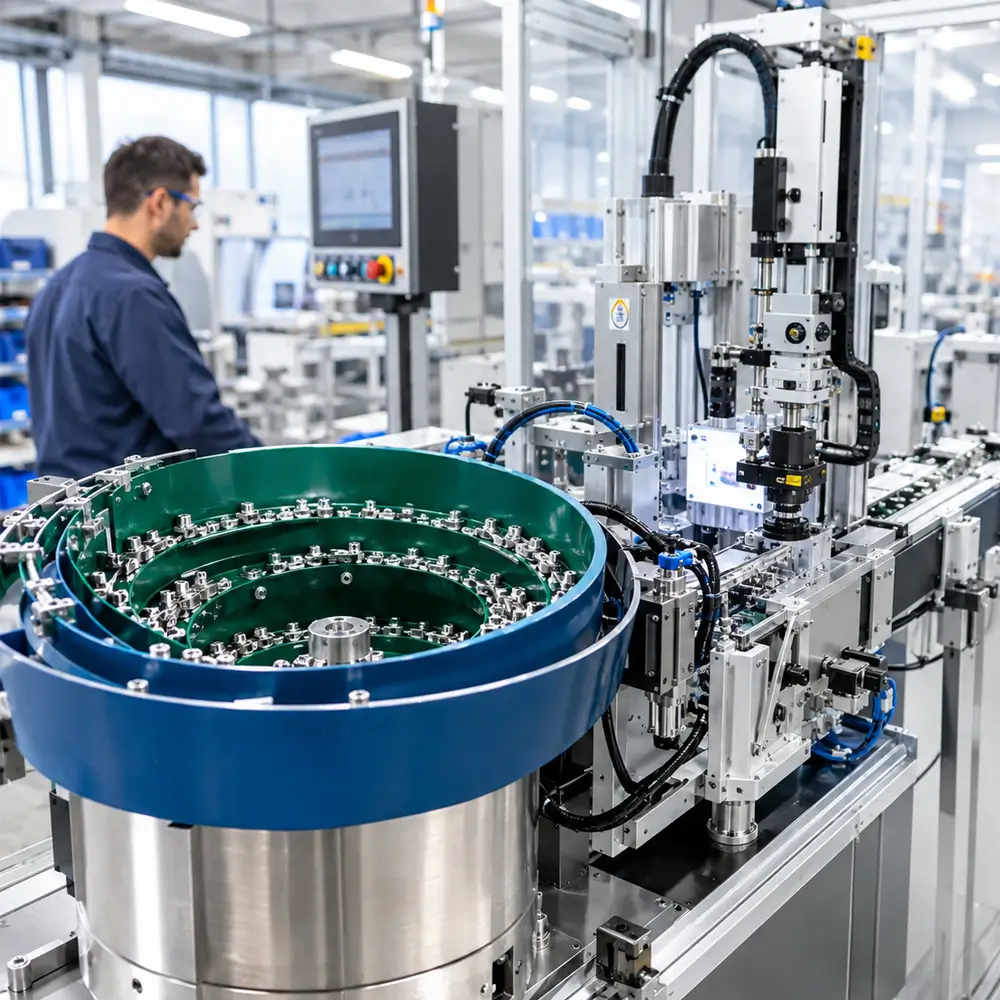
Finding the right company for custom assembly machine design can be difficult. French manufacturers have many options, from local machine builders to international automation suppliers. Custom assembly machine projects often require more than mechanical design. Feeding, assembly, inspection, robotics, controls, and production-line integration may all need to work together. French companies such as SEMSO, AUREA, CAIRE, SEMO, and other industrial automation specialists provide custom machinery and assembly solutions for different industries. SWOER also provides custom assembly machines for manufacturers that need integrated feeding, assembly, inspection, and automation. Where to Find Custom Assembly Machine Companies in France France has a strong industrial automation market. Many machine builders focus on special-purpose machines, […]
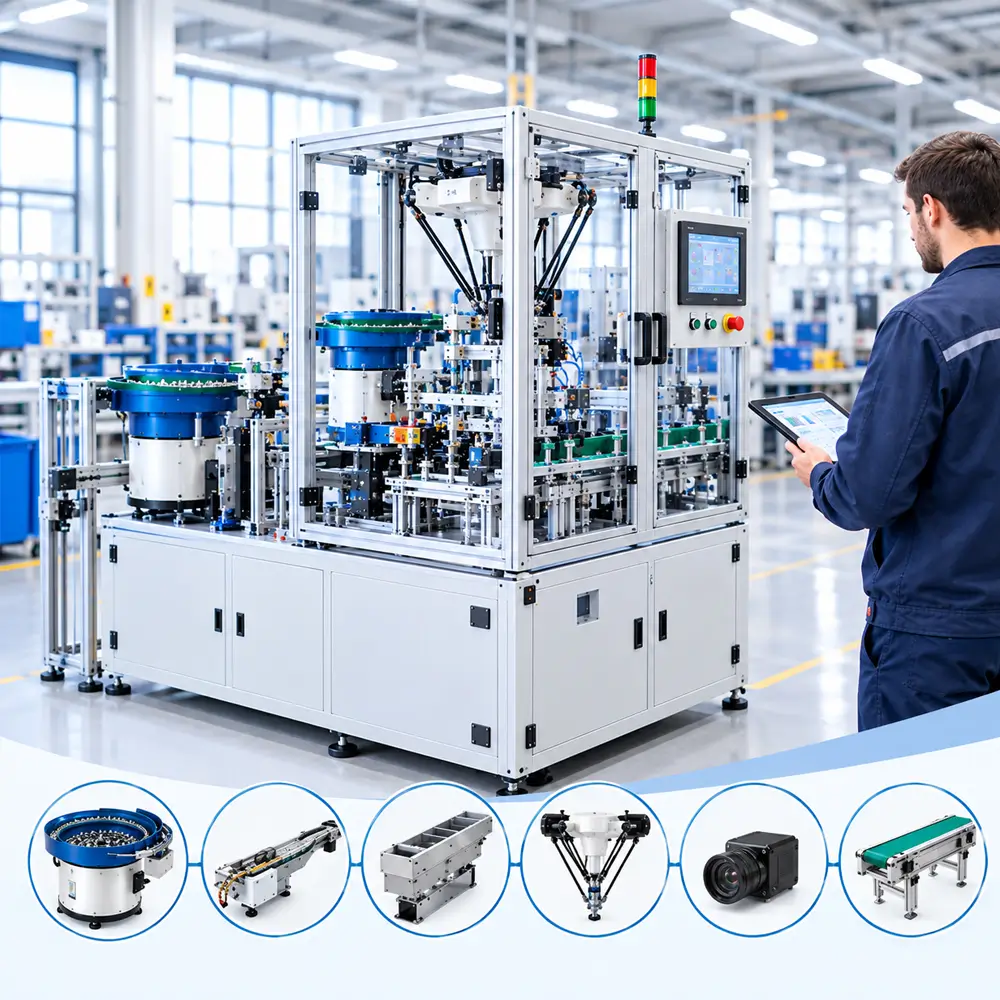
Buying an assembly machine involves more than comparing machine prices and specifications. Production lines need stable operation, fast troubleshooting, and technical support after installation. Good after-sales service can reduce downtime and make machine integration easier. French manufacturers should check several points before choosing an assembly machine supplier: Installation and commissioning support Machine operation training Spare parts availability Remote technical support Troubleshooting service Machine maintenance guidance Support for production line integration Custom assembly systems also need long-term technical support because each machine may have different feeding, assembly, inspection, and control requirements. Where to Buy Assembly Machines in France French manufacturers can purchase assembly machines through several channels. 1. Local Automation Companies […]
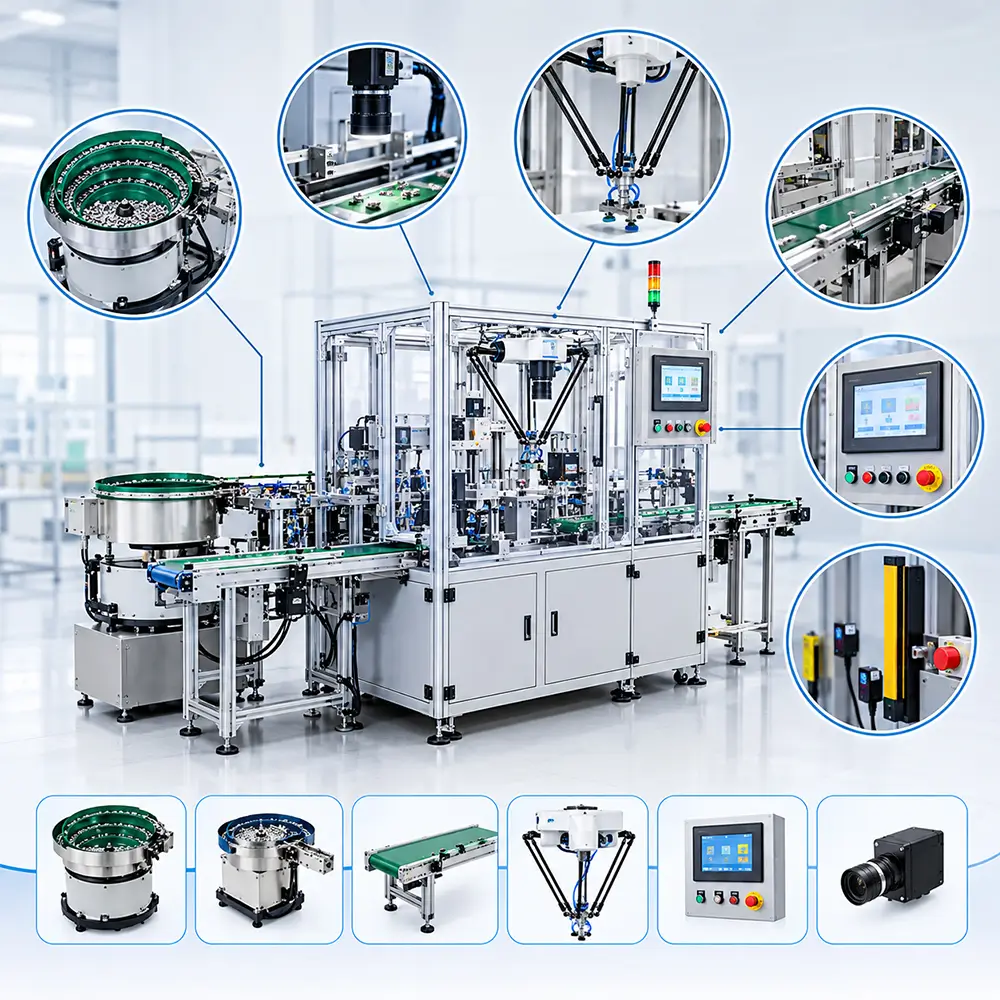
Modern automated assembly systems combine several machines and control technologies to complete production tasks with less manual work. Each component has a specific role in the production process. For manufacturers, choosing the right components depends on product design, production volume, assembly steps, part size, and required accuracy. Part Feeding System Part feeding is one of the first steps in an automated assembly process. The system supplies parts to the assembly machine in the correct position and direction. Common feeding equipment includes: Vibratory bowl feeders Flex feeders Step feeders Centrifugal feeders Hopper elevator conveyors Linear conveyors Vibratory bowl feeders work well for many small and irregular parts. Flex feeders can handle […]
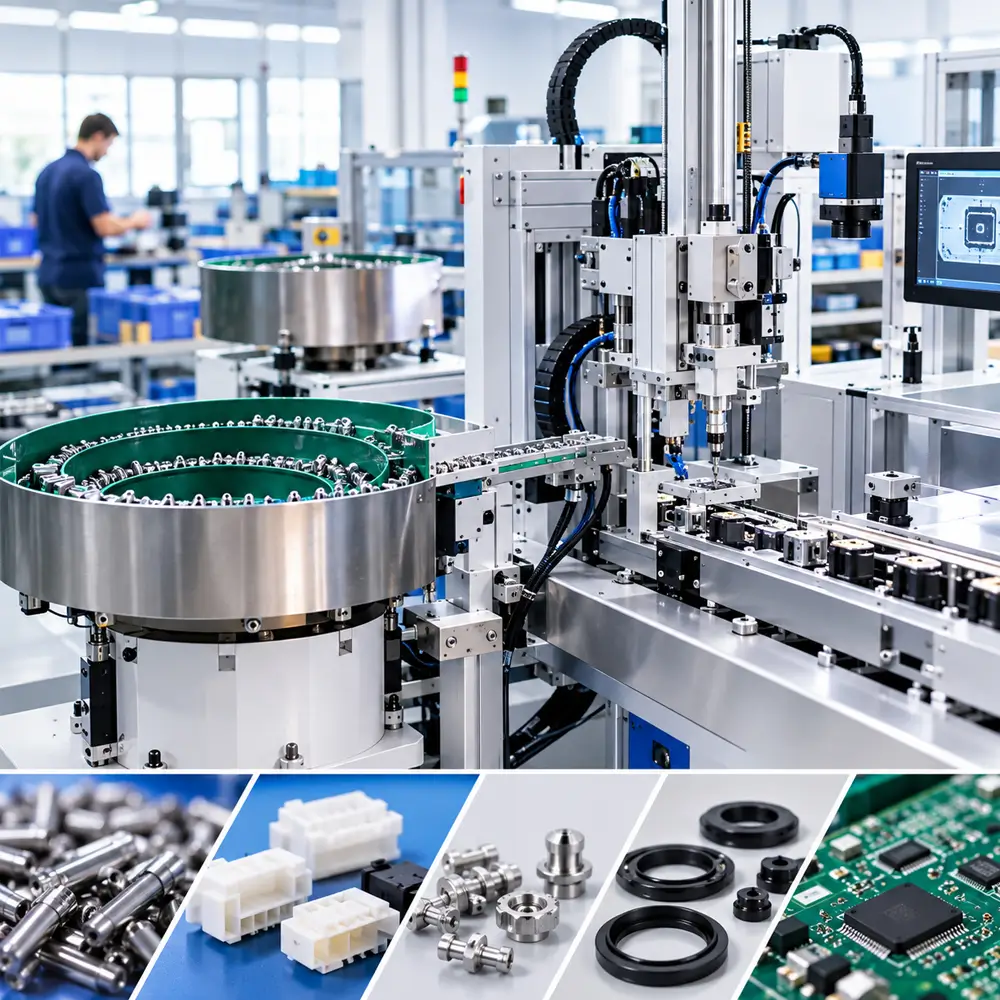
Why Small and Medium Manufacturers in France Use Assembly Machines Small and medium manufacturers often face pressure to control labor costs and maintain stable production. Manual assembly can work for low production volumes. However, repetitive tasks can become difficult when orders increase. Assembly machines can automate feeding, positioning, assembling, testing, inspection, and packaging. Common benefits include: Less manual handling More stable production speed Better assembly consistency Lower risk of human errors Easier production monitoring Better use of factory labor Production requirements vary from one company to another. Machine design should match the product, process, and target output. Common Assembly Machines for Small and Medium Manufacturers Different products require different automation […]
 Japanese
  English
  Spanish (Mexico)
  Czech
Czech  Arabic
  Russian
  German
  French
  Turkish
  Italian
  Ukrainian
  Polish
  Romanian
  Bengali
  Portuguese (Portugal)
  Thai
Thai  Korean
  Hebrew
  Uzbek
Uzbek  Hindi
Hindi  Slovak
  Vietnamese
  Portuguese (Brazil)
  Spanish (Peru)
  Spanish (Spain)
  Spanish (Venezuela)