
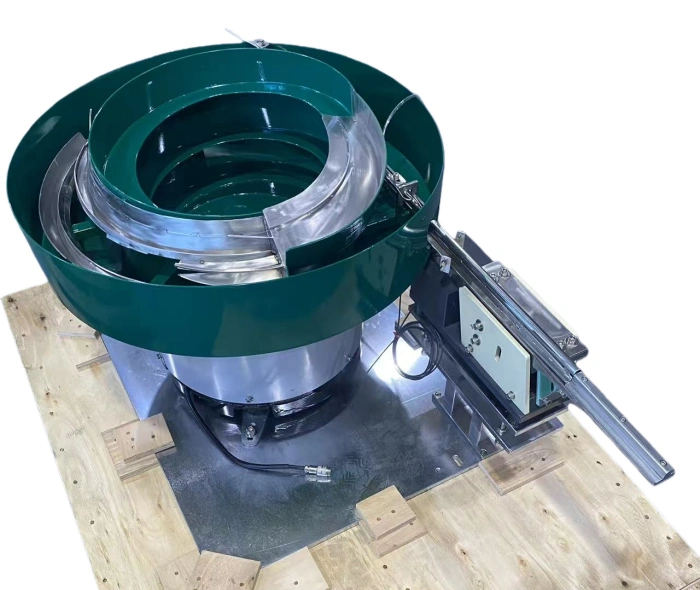
I. Quick Answer Generally, no. A vibratory bowl feeder typically cannot match the maximum speed of a centrifugal feeder, especially for small, symmetrical parts. However, in some specific applications with optimized design and suitable parts, a vibratory bowl can approach the speed of a lower-capacity centrifugal feeder. II. Speed Comparison Parameter Vibratory Bowl Feeder Centrifugal Feeder Typical Speed Range 50–300 parts/min 300–1000+ parts/min Maximum Speed Up to 500–700 parts/min (small, simple parts) Up to 1500–2000 parts/min (small, symmetrical parts) Motion Type Reciprocating vibration (parts move in small jumps) Continuous rotary motion (parts flow smoothly) Speed Limitation Limited by track geometry, part size, and vibration physics Limited by disc speed and part separation mechanism […]
タグアーカイブ: Automatic Assembly Machine
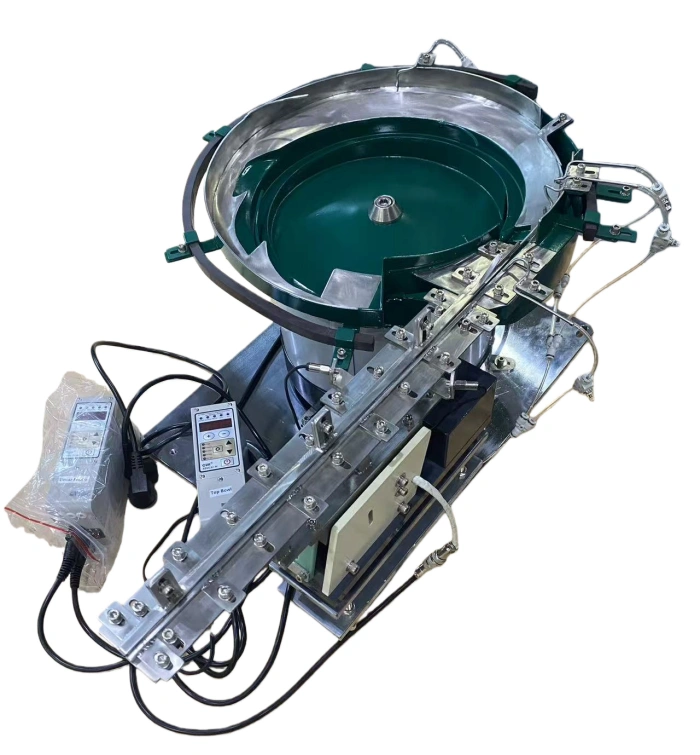
I. How a Vibratory Bowl Feeder Works with an Assembly Machine The vibratory bowl feeder acts as the parts supply source for the assembly machine. Its role is to sort, orient, and singulate parts, then deliver them one by one to the assembly machine’s pick-up point. The typical workflow is as follows: Step Action 1 Bulk parts are loaded into the vibratory bowl feeder 2 The bowl vibrates, moving parts up a spiral track 3 Track tooling (wipers, slots, air jets) orients each part correctly 4 Parts exit the bowl and enter a linear feeder (straight track) 5 A sensor at the end of the linear feeder detects a part is ready 6 The sensor sends a […]
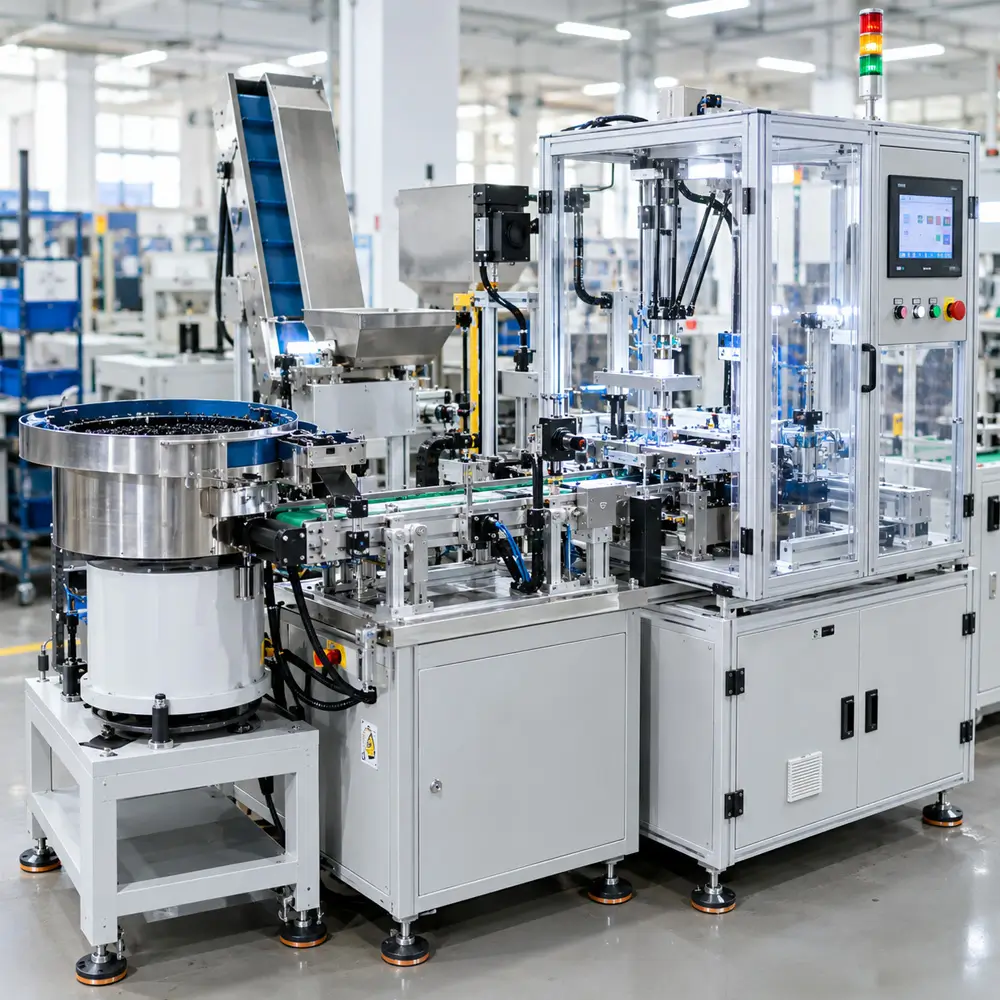
Germany has a strong market for industrial automation and custom assembly equipment. Many manufacturers provide automatic assembly machines, testing systems, robotic cells, feeding systems, and complete production lines. German assembly machine manufacturers serve industries such as automotive, electronics, medical devices, electrical products, and consumer goods. Some companies focus on complete production lines, while others specialize in custom machines for specific assembly processes. For companies looking for an automatic assembly machine in Germany, the key is not only the machine itself. Production speed, product structure, feeding method, inspection requirements, machine flexibility, and after-sales support all need to be considered. What Do Automatic Assembly Machine Manufacturers in Germany Provide? German manufacturers offer […]
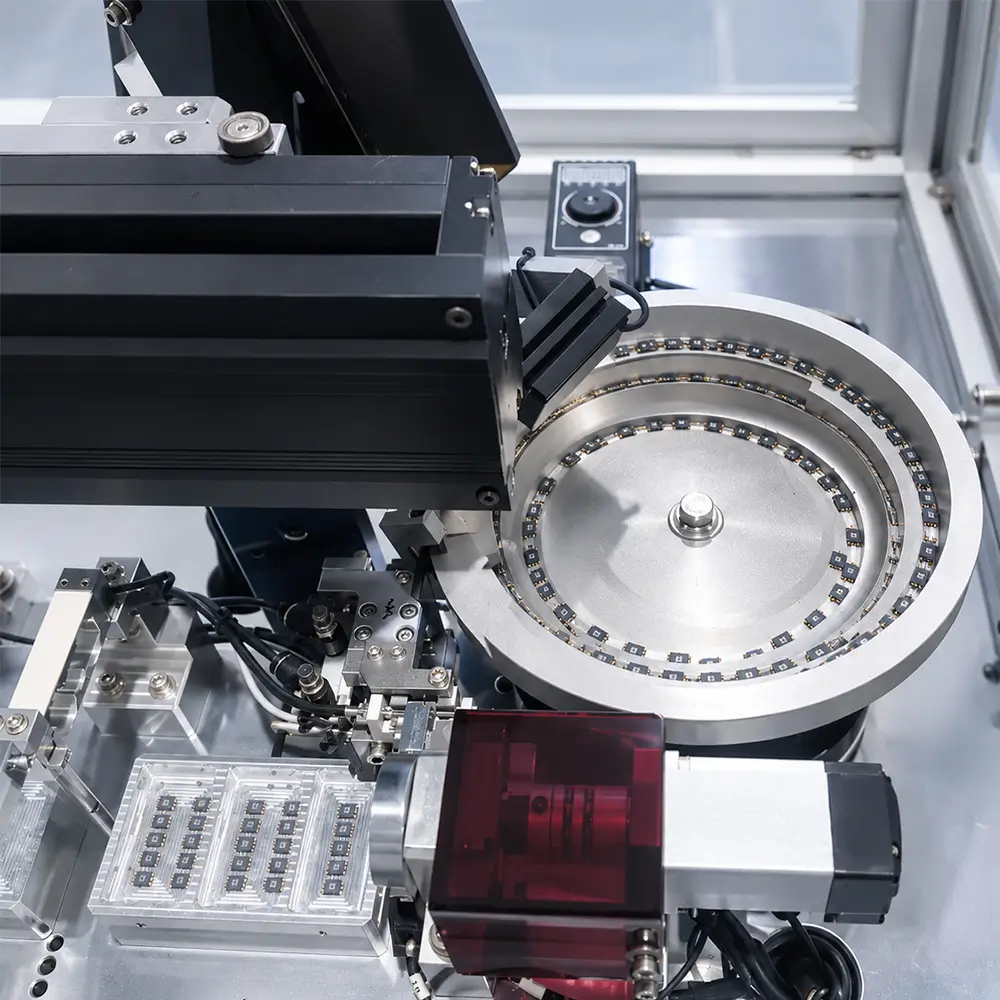
Introduction Electronic components such as chips require accurate positioning before assembly. Manual feeding creates problems including inconsistent supply, incorrect placement and lower production efficiency. A chip feeding system solves these challenges by organizing components and delivering them to the assembly station automatically. SWOER designs customized chip feeding solutions that integrate with automatic assembly machines for electronic manufacturing applications. Why Chip Feeding Is Important in Electronic Assembly During electronic component production, chips usually have small sizes and strict positioning requirements. Before assembly, each chip needs to reach the correct location and direction. A reliable feeding system helps manufacturers achieve: Continuous component supply Stable assembly speed Reduced manual operation Better production consistency […]
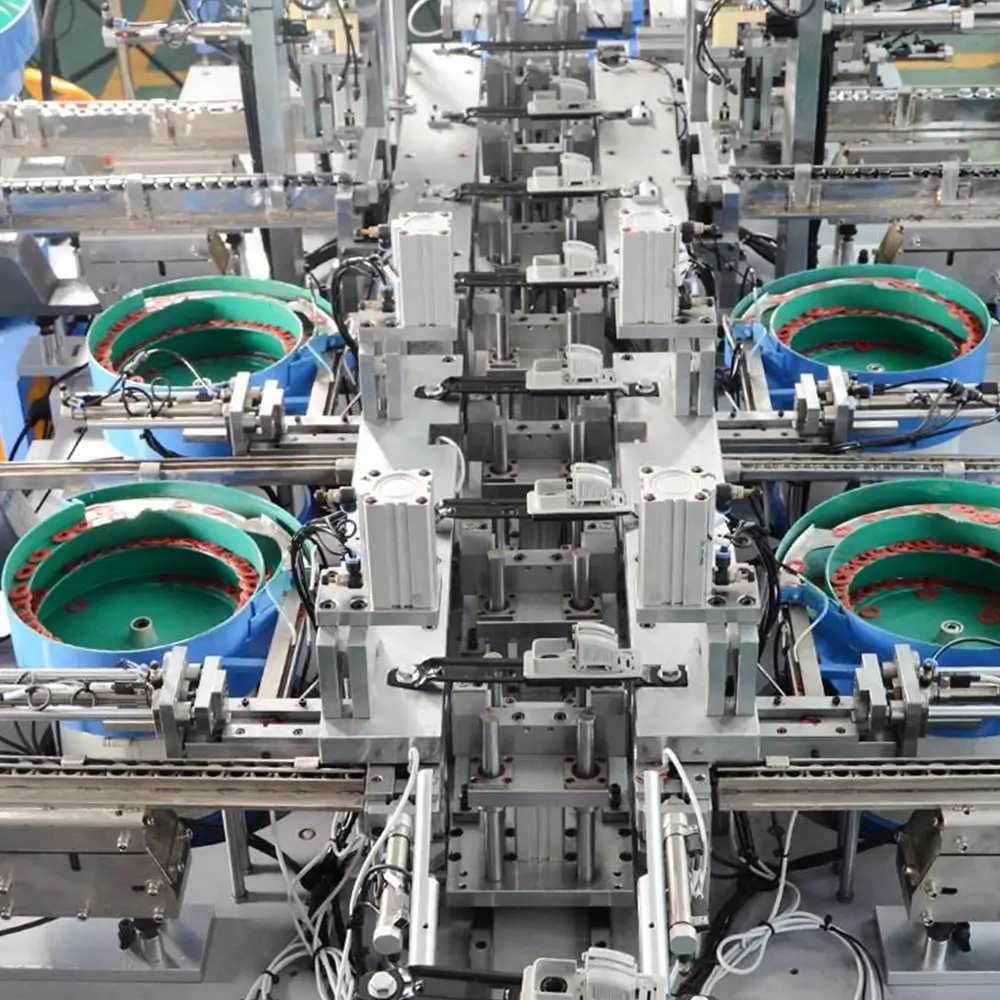
Automotive parts require accurate assembly, stable production, and consistent quality. Manual assembly can work for low-volume production, but higher output often requires better control and repeatability. Automatic assembly machines help manufacturers feed, position, assemble, test, and inspect automotive components with less manual work. Manufacturers can also combine several production steps into one machine. For companies producing clips, springs, washers, connectors, switches, plastic components, and other automotive parts, custom assembly automation can improve production efficiency while maintaining consistent assembly quality. What Are Automatic Assembly Machines for Automotive Parts? Automatic assembly machines combine mechanical systems, feeding equipment, sensors, robots, and control systems to complete multiple assembly tasks. Each machine can follow a […]
 Japanese
 English
 Spanish (Mexico)
 Czech
 Arabic
 Russian
 German
 French
 Turkish
 Italian
 Ukrainian
 Polish
 Romanian
 Bengali
 Portuguese (Portugal)
 Thai
 Korean
 Hebrew
 Uzbek
 Hindi
 Slovak
 Vietnamese
 Portuguese (Brazil)
 Spanish (Peru)
 Spanish (Spain)
 Spanish (Venezuela)