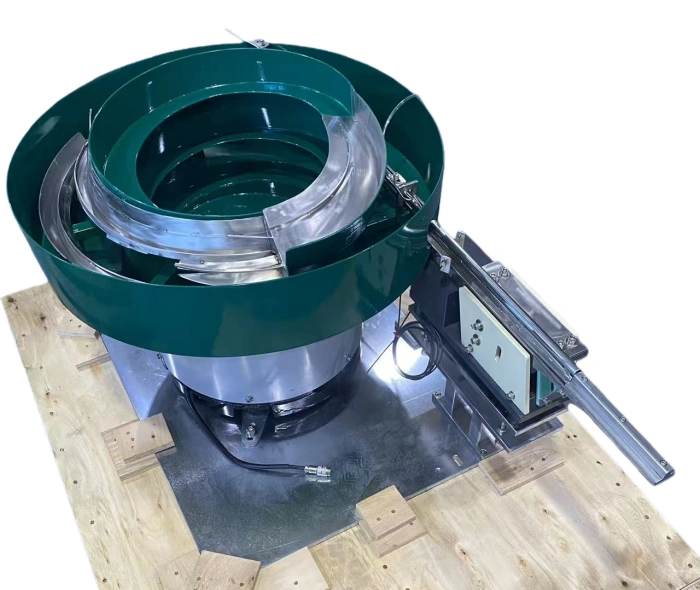
I. Quick Answer Generally, no. A vibratory bowl feeder typically cannot match the maximum speed of a centrifugal feeder, especially for small, symmetrical parts. However, in some specific applications with optimized design and suitable parts, a vibratory bowl can approach the speed of a lower-capacity centrifugal feeder. II. Speed Comparison Parameter Vibratory Bowl Feeder Centrifugal Feeder Typical Speed Range 50–300 parts/min 300–1000+ parts/min Maximum Speed Up to 500–700 parts/min (small, simple parts) Up to 1500–2000 parts/min (small, symmetrical parts) Motion Type Reciprocating vibration (parts move in small jumps) Continuous rotary motion (parts flow smoothly) Speed Limitation Limited by track geometry, part size, and vibration physics Limited by disc speed and part separation mechanism […]
著者アーカイブ: 张
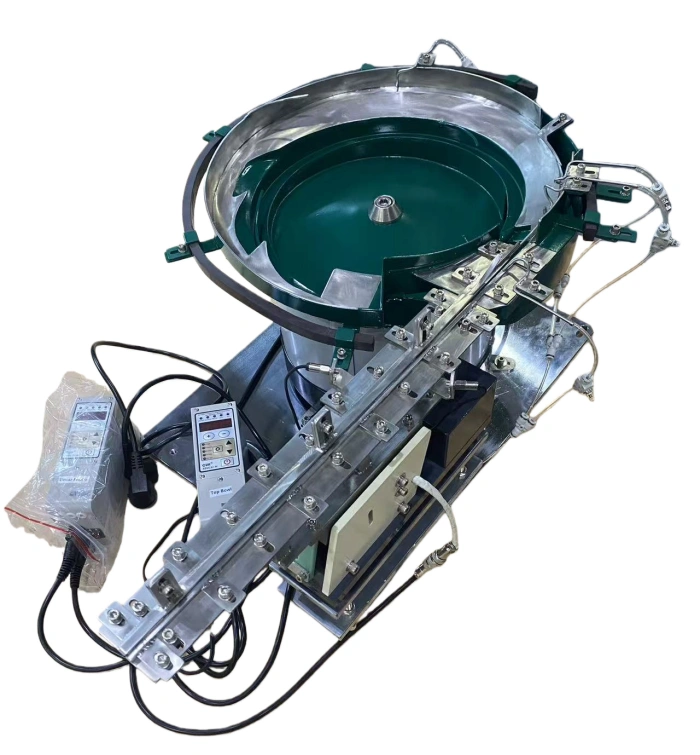
I. How a Vibratory Bowl Feeder Works with an Assembly Machine The vibratory bowl feeder acts as the parts supply source for the assembly machine. Its role is to sort, orient, and singulate parts, then deliver them one by one to the assembly machine’s pick-up point. The typical workflow is as follows: Step Action 1 Bulk parts are loaded into the vibratory bowl feeder 2 The bowl vibrates, moving parts up a spiral track 3 Track tooling (wipers, slots, air jets) orients each part correctly 4 Parts exit the bowl and enter a linear feeder (straight track) 5 A sensor at the end of the linear feeder detects a part is ready 6 The sensor sends a […]
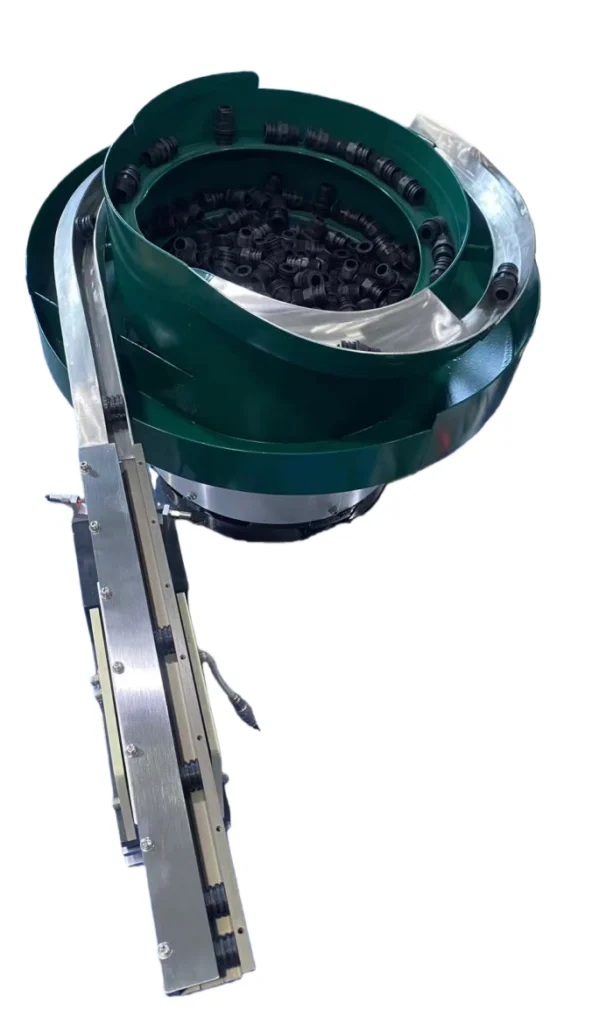
I. Functions of a Vibratory Bowl Feeder with a Counter A vibratory bowl feeder equipped with a counter (either a standalone counting module or integrated into a PLC/HMI) provides the following functions: Function Description Real-Time Counting Counts each part as it passes a sensor at the discharge point or on the linear track Batch Counting Counts parts into preset batch sizes (e.g., 100, 500, 1000 pieces) and triggers an output signal when the target is reached Total Production Logging Accumulates total parts fed per shift, per day, or per job for production tracking Automatic Start/Stop Stops the bowl when the batch target is reached; restarts when a new batch is […]
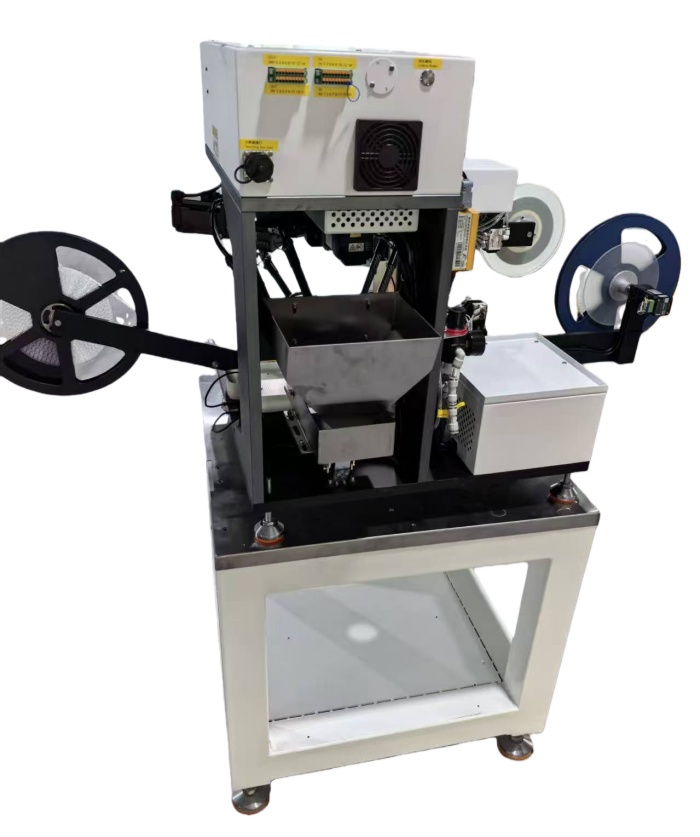
I. Functions of a Taping Machine A taping machine (also called a carrier tape sealing machine or SMT tape packaging machine) packages electronic components into carrier tape for automated surface mount assembly. Its main functions are: Function Description Component Feeding Feeds components from vibratory bowls, tube feeders, tray feeders, or reels Orientation & Placement Orients each component correctly (polarity, direction) and places it into carrier tape pockets Vision Inspection Verifies component presence, orientation, and seating before sealing (optional/common) Cover Tape Application Applies cover tape over filled pockets Heat Sealing Heat-seals cover tape to carrier tape to secure components Tape Indexing Advances tape pocket by pocket at precise intervals Reel Winding […]
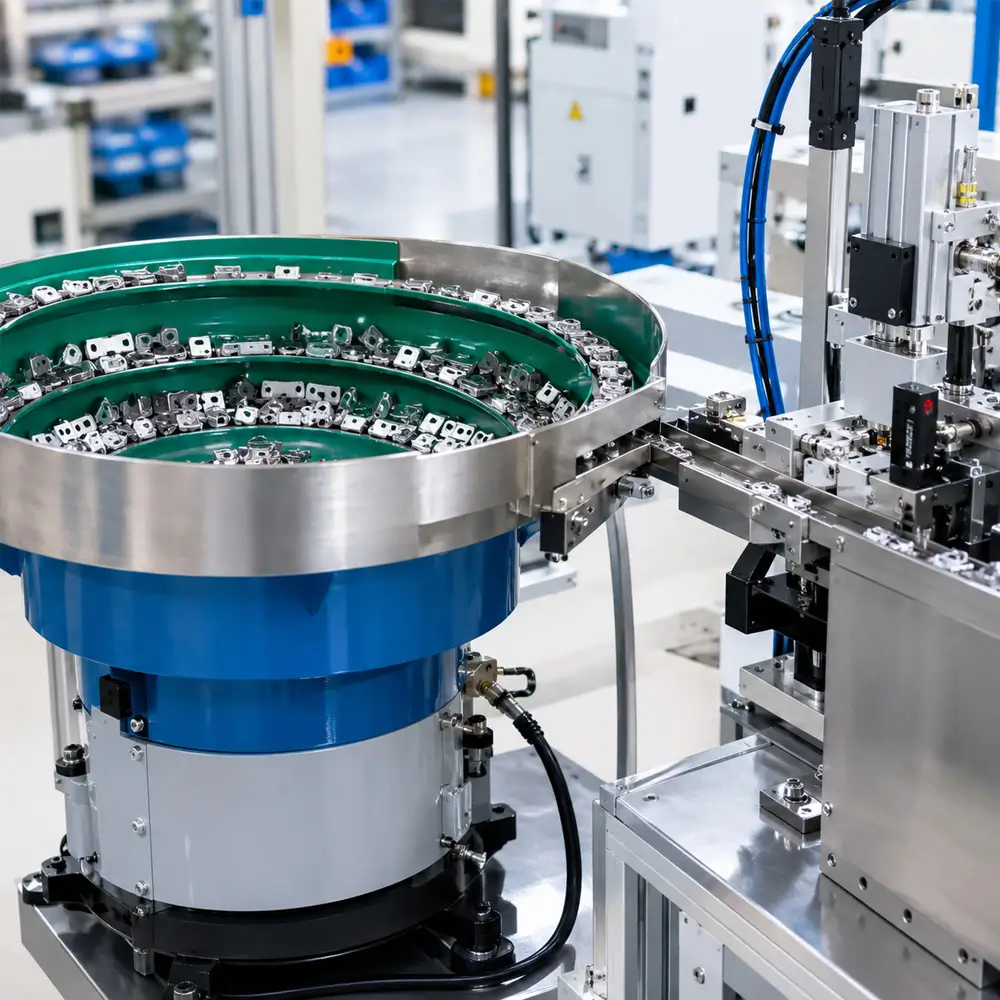
Vibratory bowl feeders help manufacturers automate the feeding and positioning of small parts. They are widely used with assembly machines, packaging equipment, inspection systems, and other production equipment. When looking for vibratory bowl feeder manufacturers in the USA, buyers need to consider more than the equipment price. Part shape, feeding speed, orientation, machine integration, and technical support can all affect the final solution. Some applications can use standard bowl feeders. Others require custom tooling and feeding systems based on the customer’s parts and production line. This guide explains what to check when choosing a vibratory bowl feeder manufacturer and how to select a suitable solution for your production needs. What […]
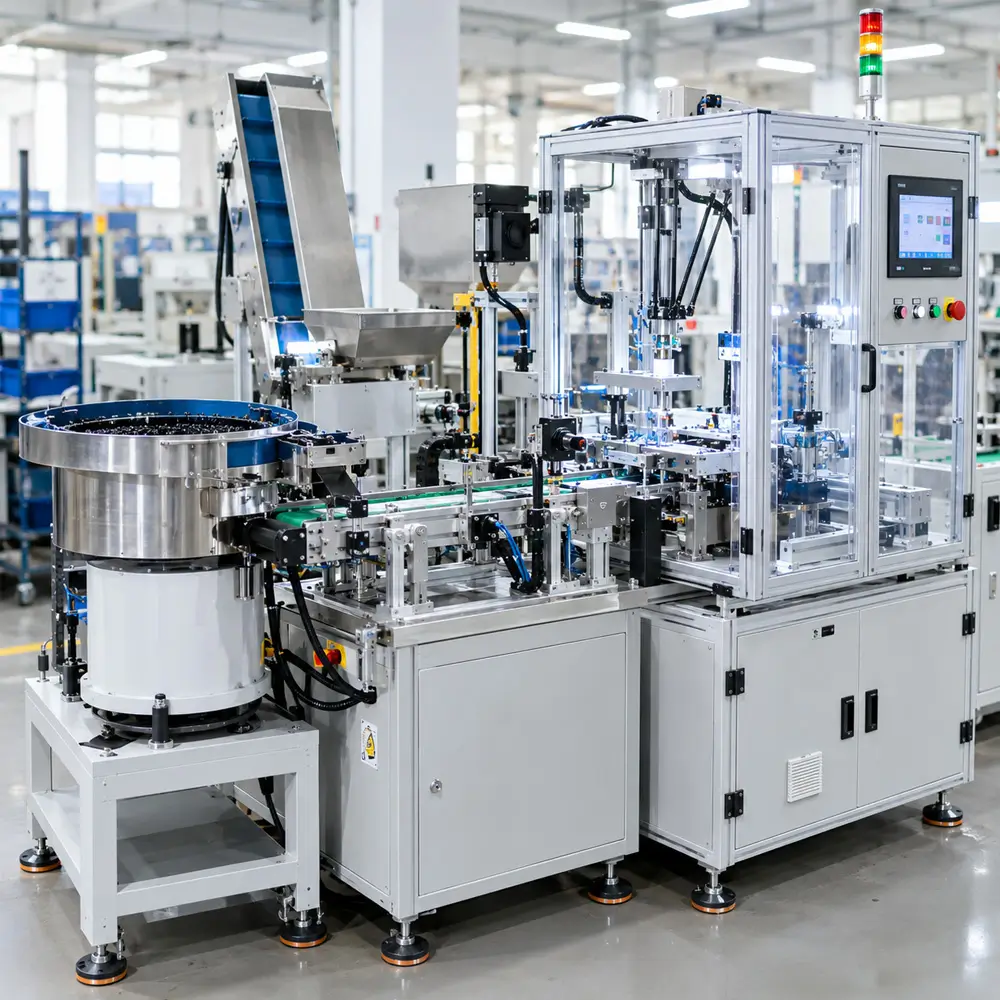
Germany has a strong market for industrial automation and custom assembly equipment. Many manufacturers provide automatic assembly machines, testing systems, robotic cells, feeding systems, and complete production lines. German assembly machine manufacturers serve industries such as automotive, electronics, medical devices, electrical products, and consumer goods. Some companies focus on complete production lines, while others specialize in custom machines for specific assembly processes. For companies looking for an automatic assembly machine in Germany, the key is not only the machine itself. Production speed, product structure, feeding method, inspection requirements, machine flexibility, and after-sales support all need to be considered. What Do Automatic Assembly Machine Manufacturers in Germany Provide? German manufacturers offer […]
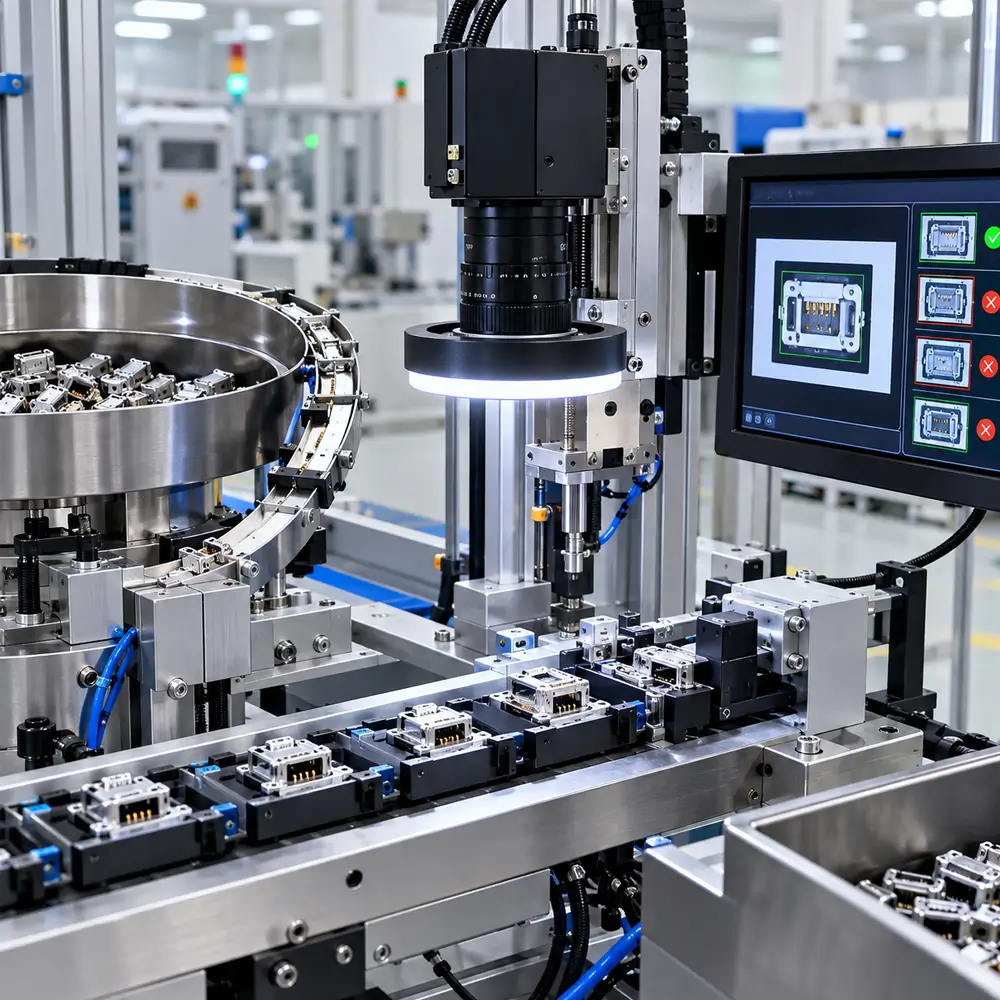
Introduction Vision inspection can make an automated assembly machine more accurate and reliable. It checks parts during production and finds problems before defective products reach the next process. For manufacturers, this means better quality control, fewer manual checks, and more stable production. Improve Assembly Accuracy Small parts often require precise positioning during assembly. Even a small position error can affect the final product. A vision inspection system uses cameras to check the position, direction, shape, and appearance of parts. The system can identify parts that are not correctly placed and send a signal to the assembly machine. This helps maintain consistent assembly quality during long production runs. Detect Defective Parts […]
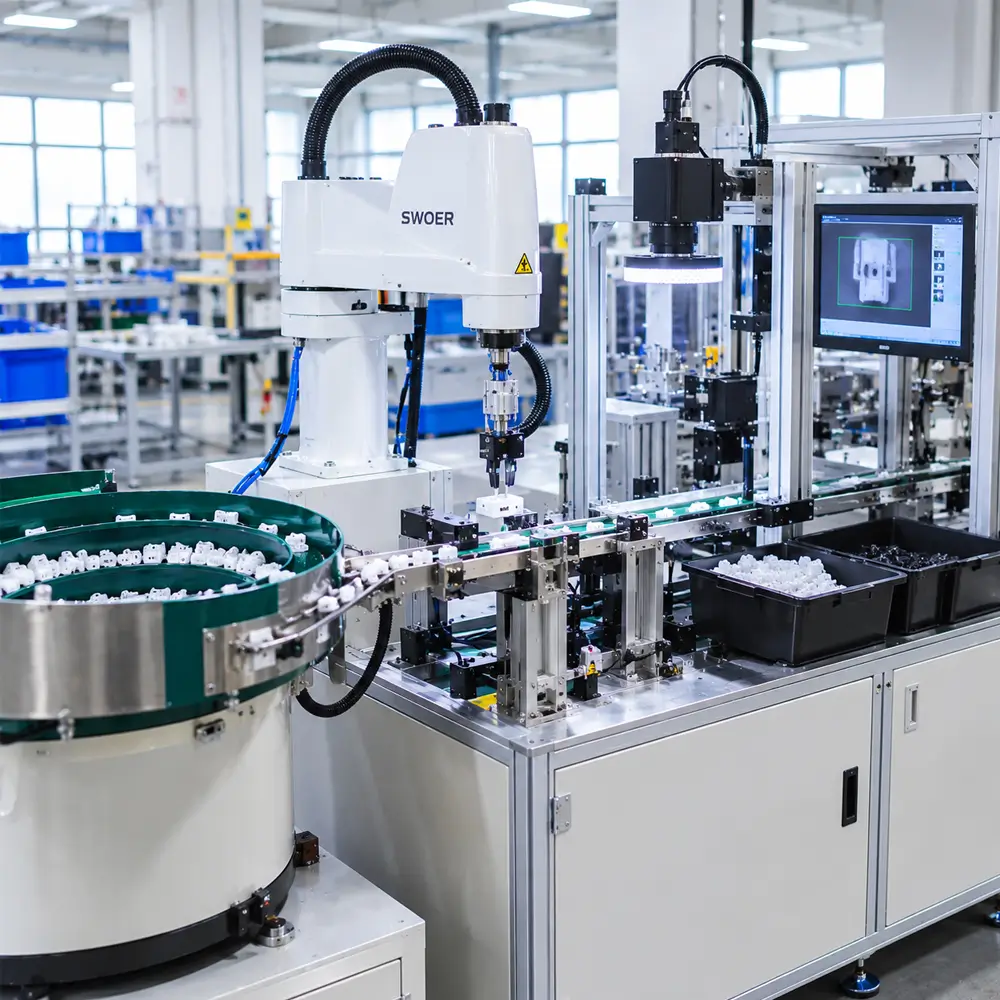
Introduction Many manufacturers want to produce more parts without adding more manual work. Assembly machines can take over repeated tasks such as feeding, positioning, pressing, fastening, inspection, and sorting. The right machine depends on the product, production volume, part size, and assembly process. SWOER designs custom assembly machines for different products and production needs. The machine can combine feeding, assembly, inspection, and material handling in one production line. Why Use Automation for Assembly? Manual assembly takes time and requires operators to repeat the same actions throughout the day. An automated assembly machine can handle many of these repeated operations. This allows operators to focus on machine monitoring, material supply, and […]
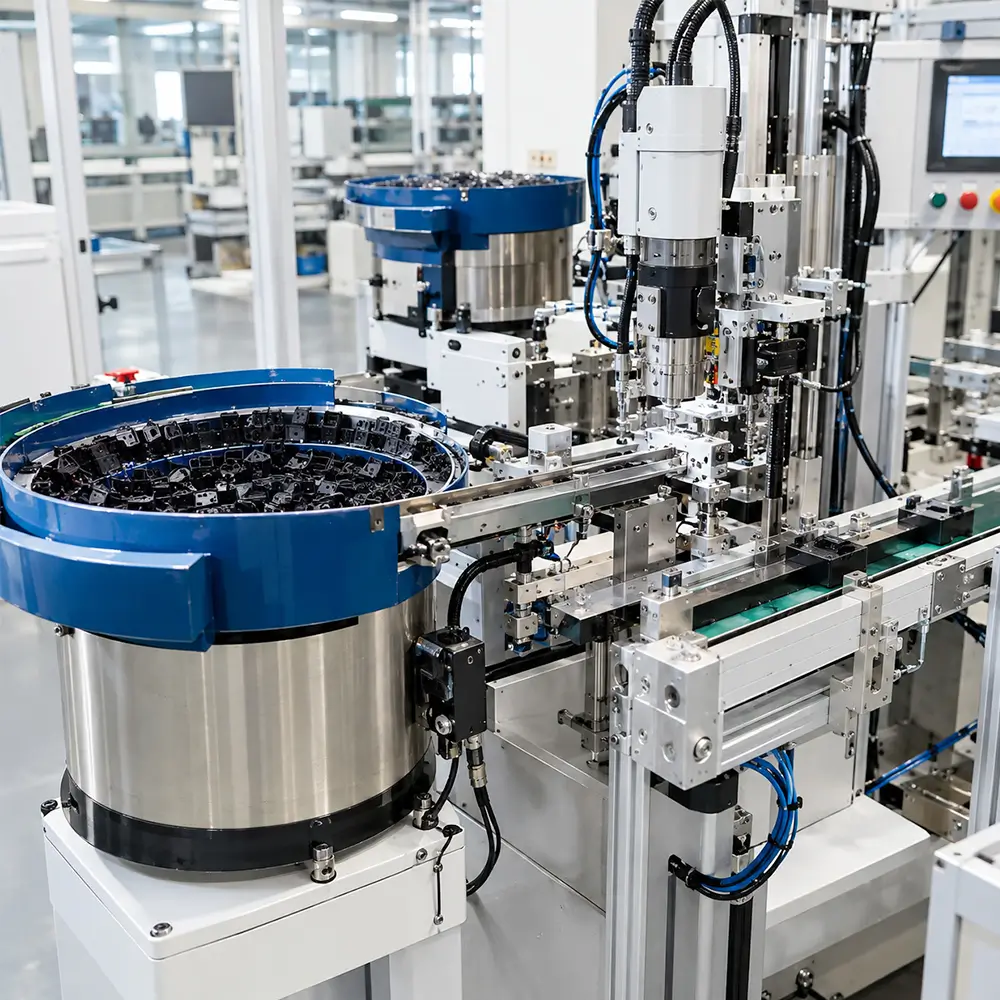
Introduction Consumer electronics often contain many small components and assembly steps. Manufacturers may need automatic feeding, positioning, assembly, inspection, testing, and product transfer. A turnkey assembly line can connect these processes into one production system. The first step is to provide enough product and production information for the supplier to prepare an accurate quotation. This guide explains what to include in your RFQ and how a custom assembly machine supplier such as SWOER can support the project. What Is a Turnkey Consumer Electronics Assembly Line? A turnkey consumer electronics assembly line combines several production processes into one automated system. Depending on the product, the line may include: Automatic part feeding […]
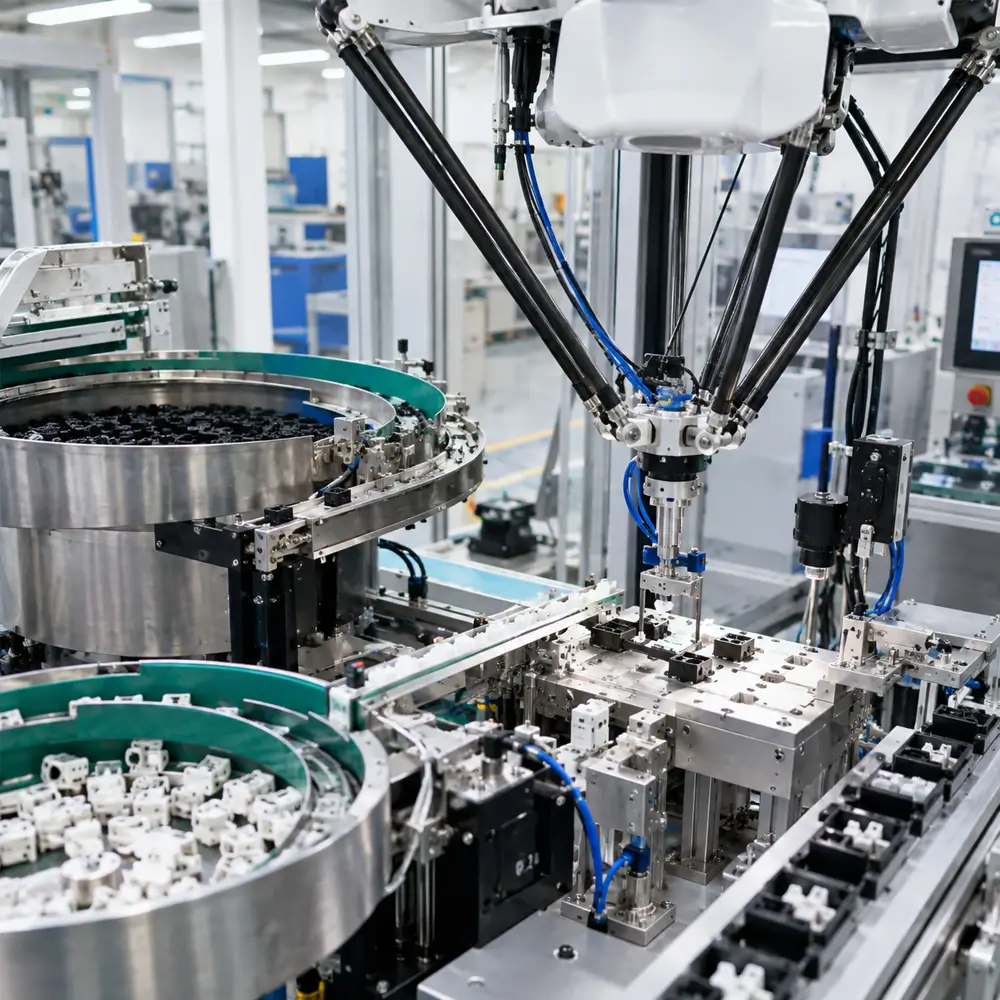
Small parts manufacturing often requires accurate feeding, stable positioning, fast handling, and repeatable assembly. Manual handling can become difficult when production volume increases. Small components may also require different feeding and assembly methods. A robotic assembly solution can combine part feeding, pick and place, assembly, inspection, and product transfer in one production system. The right solution depends on the product structure, assembly process, production target, and required accuracy. Check the Size and Shape of Your Parts Part size and shape are important when choosing robotic assembly equipment. Small parts may include connectors, springs, clips, washers, terminals, screws, electronic components, and plastic parts. Different shapes require different feeding and handling methods. […]
 Japanese
  English
  Spanish (Mexico)
  Czech
Czech  Arabic
  Russian
  German
  French
  Turkish
  Italian
  Ukrainian
  Polish
  Romanian
  Bengali
  Portuguese (Portugal)
  Thai
Thai  Korean
  Hebrew
  Uzbek
Uzbek  Hindi
Hindi  Slovak
  Vietnamese
  Portuguese (Brazil)
  Spanish (Peru)
  Spanish (Spain)
  Spanish (Venezuela)