What is the maximum speed that a parallel robot can reach? Which products are applicable?
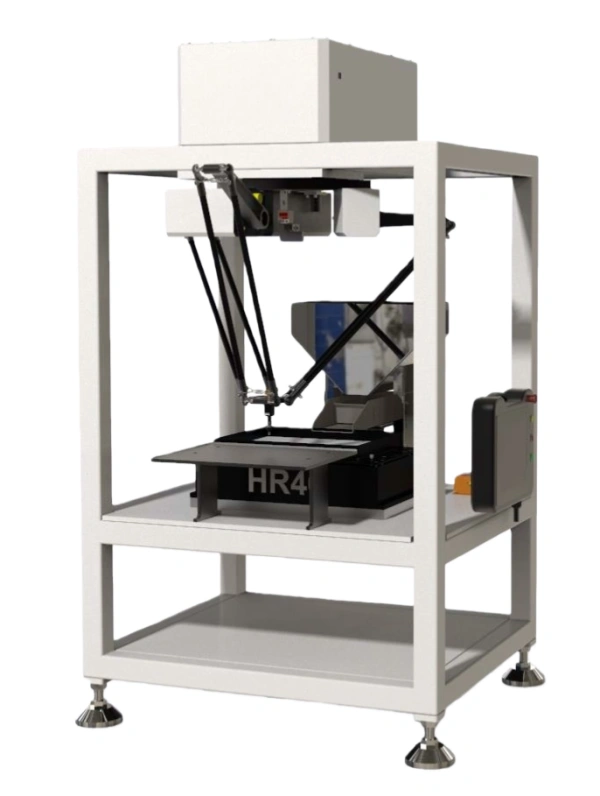
Parallel robots (mainly Delta robots) are currently one of the fastest types of industrial robots. Its maximum speed does not have a unified fixed value, depending on the load, stroke, and specific model. Under ideal light load conditions, the beat of the cutting-edge model can exceed 300 beats per minute, and the linear velocity can exceed 8 m/s; Conventional commercial models typically have a nominal frequency of 180 to 200 cycles per minute.
Speed data reference
The speed performance of different sources and models varies greatly, depending on the testing standards (such as load weight, operating trajectory):
High frequency standard beat: Some manufacturers claim that their specific high-speed series standard beat can reach over 300 beats per minute, with a maximum single cycle time of less than 0.14 seconds. Common commercial models (such as Weiss DR series) have a nominal rating of up to 200 cycles per minute (ISO cycle).
Tested maximum speed: Academic testing data shows that the TH-SR4 model can reach a maximum speed of 8.15 m/s and a maximum acceleration of 189 m/s ² in specific circumferential tests; Under a light load of 0.1kg, the standard reciprocating beat is measured to be approximately 272 times per minute.
General industrial performance: When combined with visual systems for grasping and placing, the speed is usually between 100 and 200 times per minute. Part of the load models (such as a load of 3kg) have a maximum speed of about 6.0 m/s and a beat rate of about 180 beats per minute.
Applicable products and industries
Parallel robots are mainly suitable for rapid handling, sorting, and assembly of light and small materials due to their high rigidity, high speed, and fast dynamic response. Specific application products include:
Food and medicine: pharmaceutical factory particle bag sorting (some cases show that 7800 bags can be sorted per hour), food flexible packaging grabbing, wet towel cover fitting, cosmetics powder sorting, etc.
3C Electronics and Semiconductors: Rapid retrieval, precise assembly, packaging, and intelligent testing of electronic components.
New energy and automotive components: grabbing 25kg aluminum battery box panels (high load models are required), automotive electronic assembly, and component sorting.
Daily chemical and packaging: the assembly, packing, labeling of daily chemical bottles and cans, as well as packaging lines for various light industrial products.
Additional note: The actual speed of parallel robots is significantly affected by the load. The above “maximum speed” is usually measured under extremely light loads (such as 0.1kg) or no load; If grabbing heavier workpieces (such as several kilograms or more), the rhythm will decrease accordingly. In addition, when combined with a visual system for dynamic tracking, the recognition algorithm’s time consumption will slightly affect the final comprehensive grasping efficiency.


 Japanese
 English
 Spanish (Mexico)
 Czech
 Arabic
 Russian
 German
 French
 Turkish
 Italian
 Ukrainian
 Polish
 Romanian
 Bengali
 Portuguese (Portugal)
 Thai
 Korean
 Hebrew
 Uzbek
 Hindi
 Slovak
 Vietnamese
 Portuguese (Brazil)
 Spanish (Peru)
 Spanish (Spain)
 Spanish (Venezuela)