
How Rotary Indexing Assembly Machines Improve Automatic Feeding and Assembly
Manufacturers handling small plastic and metal components often need faster production, stable assembly quality, and less floor space. Traditional automation solutions using SCARA robots or linear modules can work well, but they may require more equipment, additional programming, and longer development time for certain assembly tasks.
Rotary indexing assembly machines offer another option. By combining automatic feeding, part positioning, and assembly operations on a rotary platform, these machines can simplify production processes and improve cycle efficiency. Their compact design and ready-to-use structure make them suitable for manufacturers looking to automate repetitive assembly work without building a complex system from scratch.
What Is a Rotary Indexing Assembly Machine?
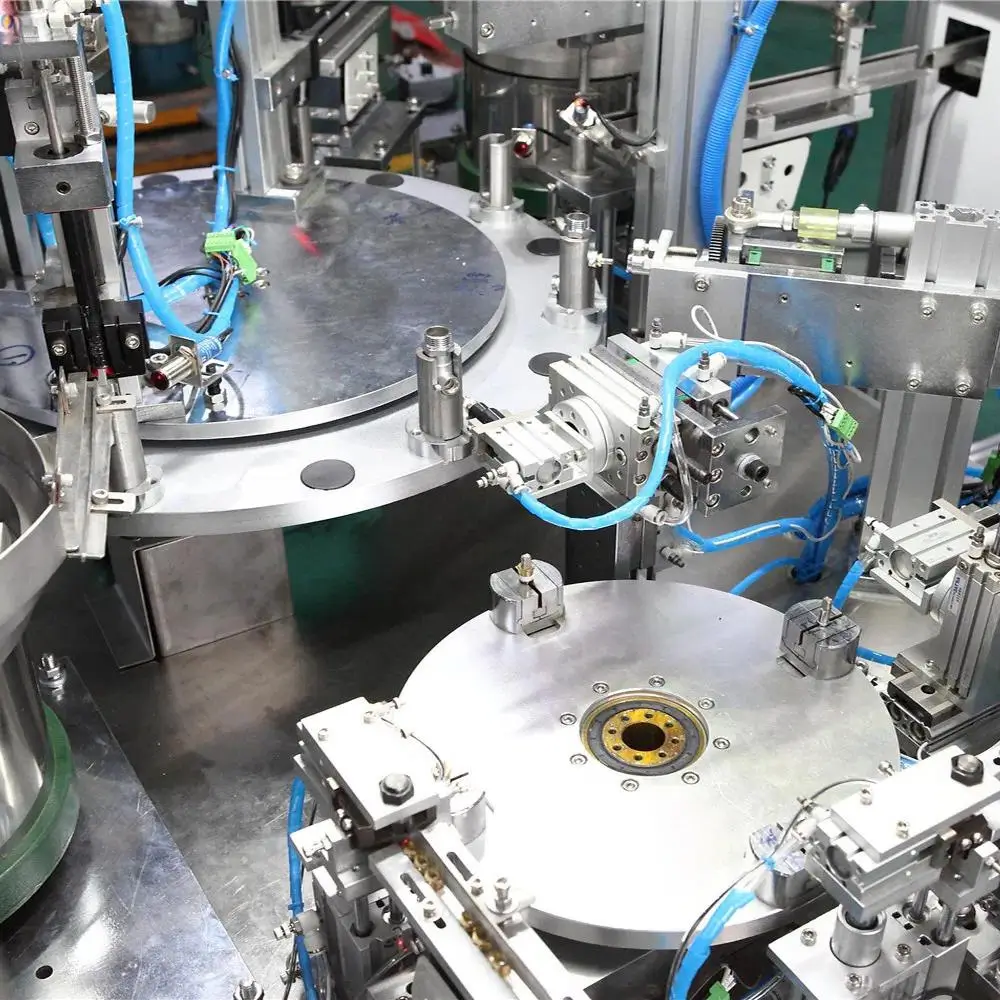
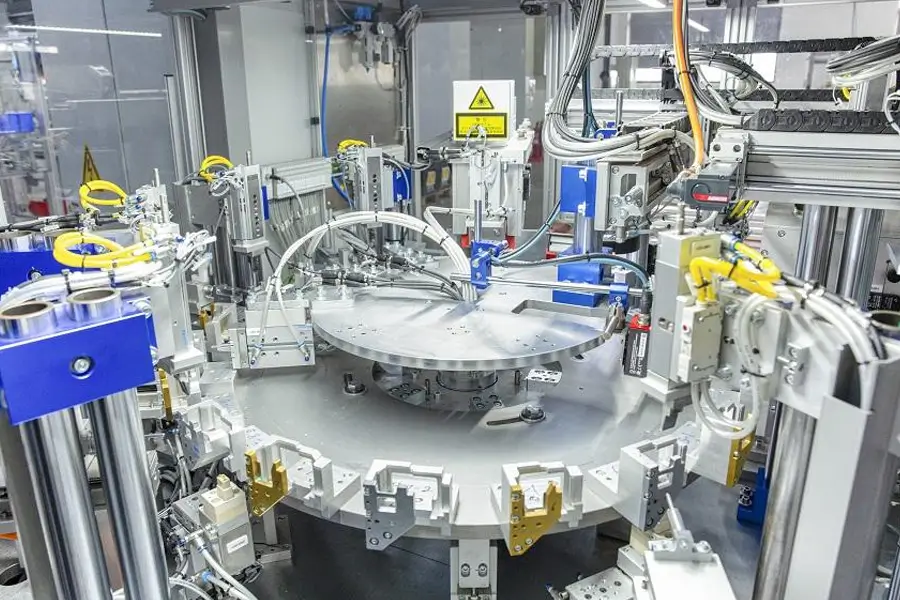
Rotary indexing assembly machines use a rotating table to move workpieces through different stations. Each station performs a specific operation, such as feeding, positioning, pressing, fitting, inspection, or unloading.
The rotary table moves parts from one station to the next in a controlled sequence. This setup allows multiple operations to take place within one machine, reducing the need to transfer parts between separate workstations.
Custom rotary indexing assembly machines can be designed for different component shapes, assembly requirements, and production processes. Plastic parts, metal components, and mixed-material products can be handled with suitable fixtures and feeding mechanisms.
Unlike a general-purpose robot that needs to be programmed for a specific task, a rotary assembly machine can integrate dedicated tooling and automation into a fixed production process.
Why Choose Rotary Assembly Instead of SCARA Robots or Linear Modules?
SCARA robots and linear modules are widely used in industrial automation. They provide flexibility for different movements and production tasks. However, some repetitive assembly processes do not require complex robotic movement.
Rotary indexing systems can offer a more compact and practical solution when parts follow a fixed assembly sequence.
Compact Machine Design
Rotary assembly systems arrange multiple operations around a circular platform. This layout can reduce the space required compared with some robot-based or linear production setups.
Compact equipment is particularly useful for factories with limited floor space or production lines that need to add automation without making major layout changes.
Faster Production Cycle
Rotary tables can move workpieces between stations quickly, allowing feeding and assembly operations to run in a coordinated sequence.
With an optimized machine design, some applications can achieve a cycle time of less than one second. Actual speed depends on the component, assembly process, feeding method, and required accuracy.
Reduced System Complexity
Dedicated feeding mechanisms, fixtures, and assembly stations can be integrated into one machine.
This can reduce the need for multiple independent modules, complicated robot programming, and additional equipment coordination, making the production process easier to manage.
Automatic Feeding and Precision Assembly for Plastic and Metal Parts
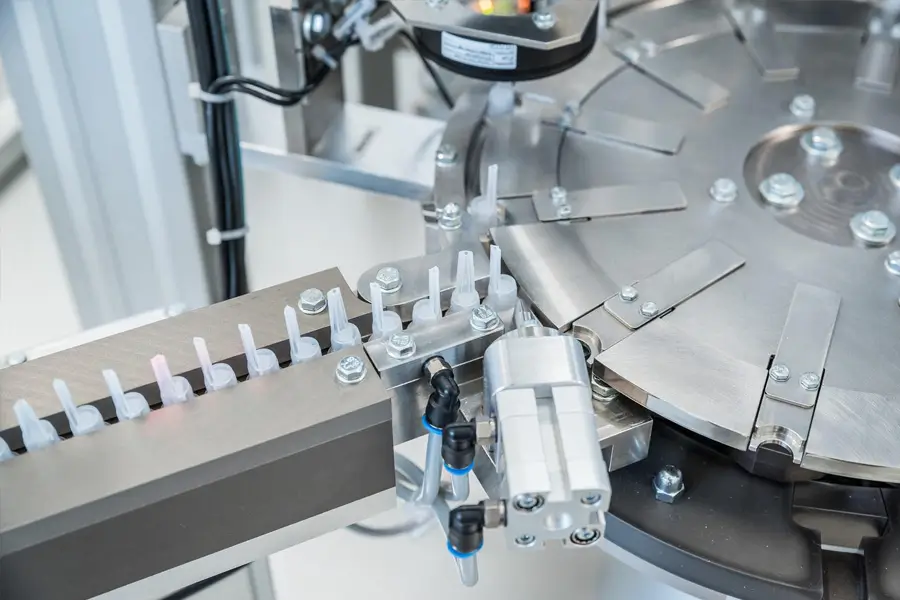
Automatic feeding is one of the key functions of a rotary indexing assembly machine. Components are supplied to the machine, positioned at the required station, and processed according to the assembly sequence.
Different parts require different feeding and positioning methods. Plastic components may need careful handling to avoid deformation or surface damage, while metal parts may require precise positioning, fitting, or pressing.
A custom machine can be designed around the product’s structure and assembly requirements.
Typical operations may include:
- Automatic component feeding
- Part positioning and alignment
- Press-fit assembly
- Component insertion
- Fastening or fitting
- In-process inspection
- Finished-part unloading
Suitable fixtures and feeding mechanisms help maintain consistent part positioning throughout the assembly process. When multiple operations are integrated into the rotary table, manufacturers can reduce manual handling and improve production consistency.
High-Speed Assembly with Integrated Vision Inspection
Production speed is important, but accurate assembly and process stability are equally important. Vision systems can be integrated into a rotary assembly machine to check component position, orientation, presence, or assembly results.
Image capture can be performed during machine movement or at a designated station, depending on the inspection requirements and system design.
For applications requiring rapid inspection, an integrated vision system may reduce the need for separate inspection equipment. The machine can identify certain assembly issues before the product moves to the next stage.
Combining feeding, assembly, and vision inspection in one system can help manufacturers reduce manual checks and maintain a more consistent production process.
Shorter Development Time with a Standard Machine Design
Developing a completely new automation system for every product can take time. Mechanical design, electrical control, programming, feeding systems, and vision inspection may all need to be coordinated before the machine is ready for production.
Standard rotary assembly machine designs can help shorten this process.
Using a proven machine structure and mature control system allows customization to focus on the parts that directly affect the customer’s product, such as fixtures, feeding mechanisms, assembly stations, and process settings.
This approach can reduce repeated development work and make equipment deployment more straightforward.
For manufacturers with clear assembly requirements, a standard machine with customized tooling may be a practical alternative to a fully custom automation line.
Is a Rotary Indexing Assembly Machine Right for Your Production?
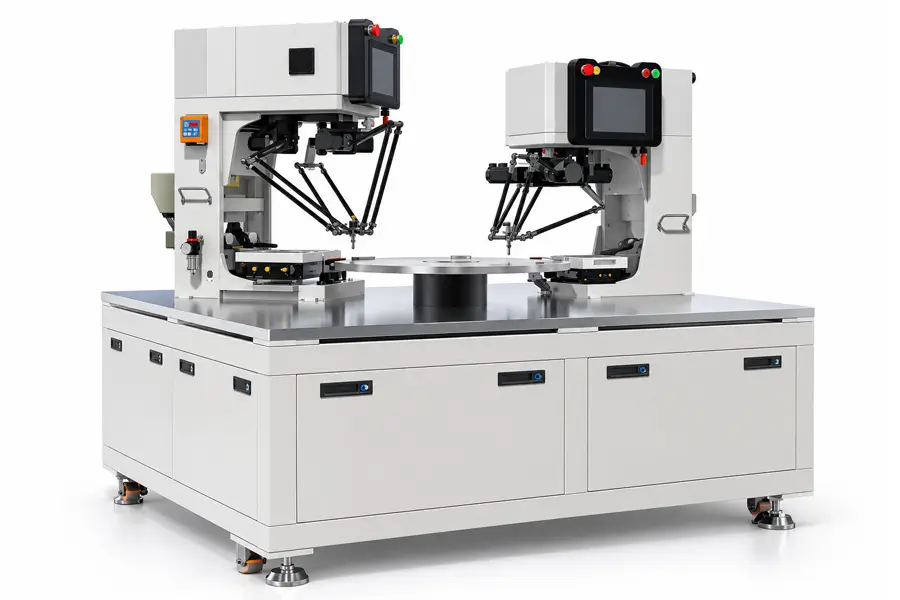
Rotary indexing assembly machines are suitable for production tasks involving repetitive assembly operations, fixed process sequences, and components that can be accurately positioned using dedicated fixtures.
This solution may be worth considering when:
- Assembly operations follow a fixed sequence.
- Production requires automatic feeding and positioning.
- Plastic or metal components need to be assembled consistently.
- Floor space is limited.
- Cycle time needs to be reduced.
- A ready-to-use machine is preferred over a long automation development project.
Not every product is suitable for rotary assembly. Component geometry, assembly force, feeding stability, process steps, cycle time, and inspection requirements should be evaluated before selecting the machine.
Custom Rotary Assembly Solutions for Your Products
Choosing the right automatic assembly machine depends on the product, assembly process, production volume, and required cycle time. Rotary indexing systems offer a compact way to combine feeding, positioning, assembly, and inspection into one production setup.
For plastic parts, metal components, and other small assemblies, a customized rotary assembly machine can provide a practical balance of speed, accuracy, equipment size, and investment.
If you are looking to automate repetitive assembly operations, a rotary indexing assembly machine may help simplify your production process and reduce the time needed to implement automation.
Share your component drawings, assembly steps, and production targets with an automation equipment manufacturer to evaluate whether a rotary assembly solution fits your application.

 Japanese
 English
 Spanish (Mexico)
 Czech
 Arabic
 Russian
 German
 French
 Turkish
 Italian
 Ukrainian
 Polish
 Romanian
 Bengali
 Portuguese (Portugal)
 Thai
 Korean
 Hebrew
 Uzbek
 Hindi
 Slovak
 Vietnamese
 Portuguese (Brazil)
 Spanish (Peru)
 Spanish (Spain)
 Spanish (Venezuela)