
Úvod
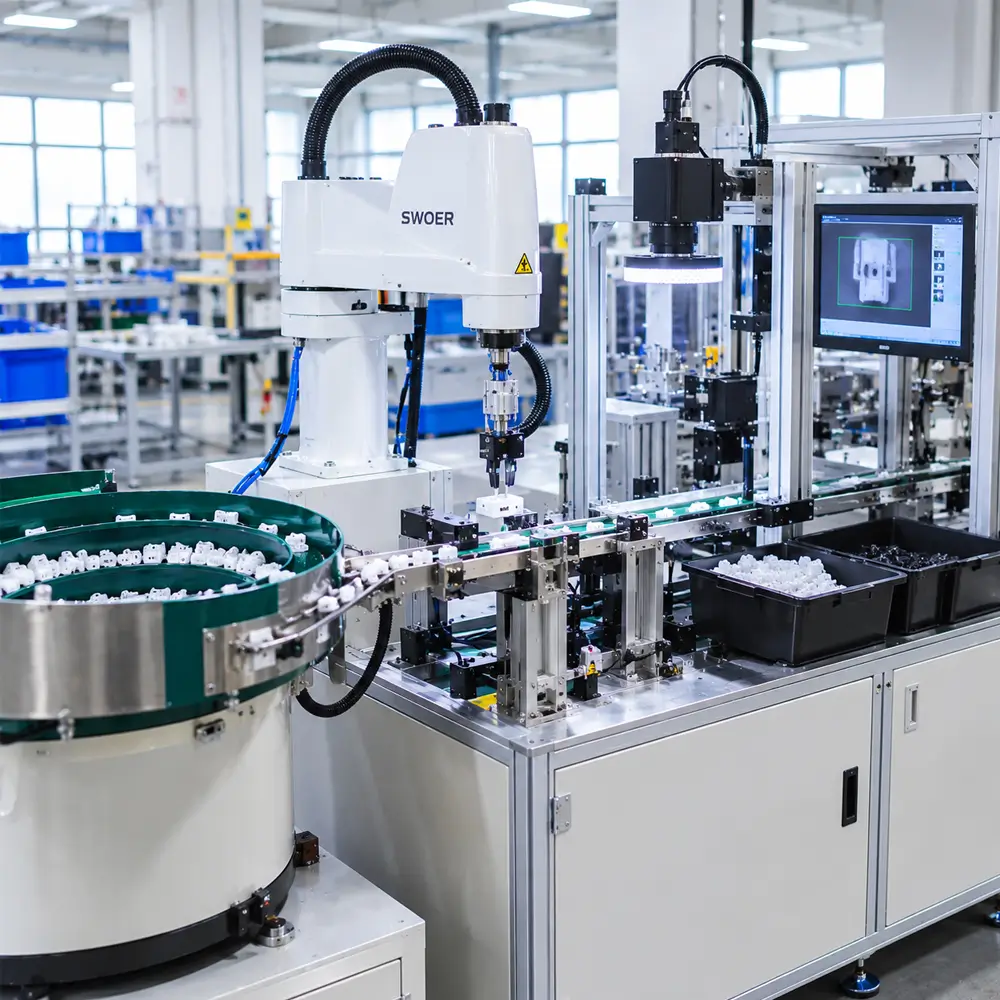
Many manufacturers want to produce more parts without adding more manual work. Assembly machines can take over repeated tasks such as feeding, positioning, pressing, fastening, inspection, and sorting.
The right machine depends on the product, production volume, part size, and assembly process.
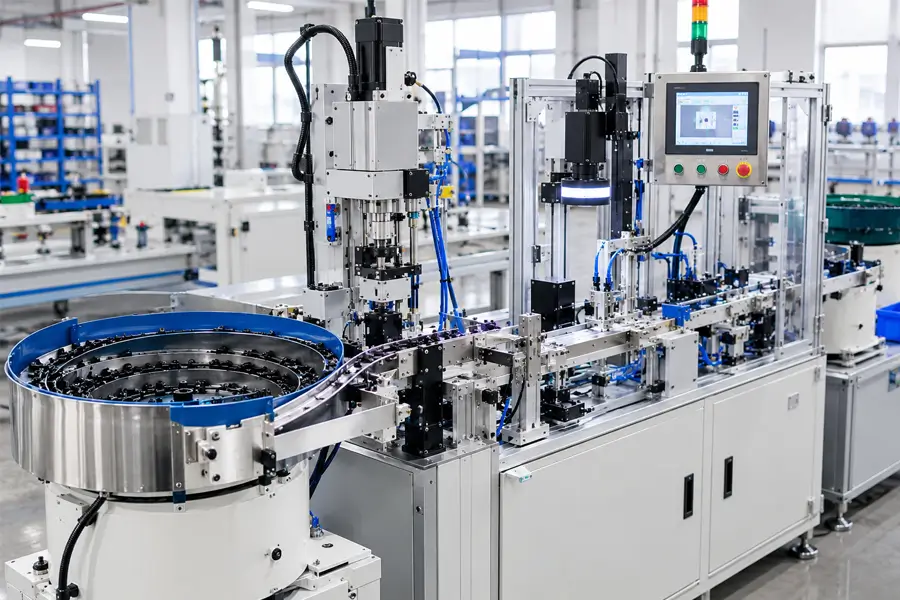
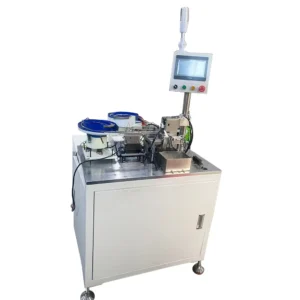
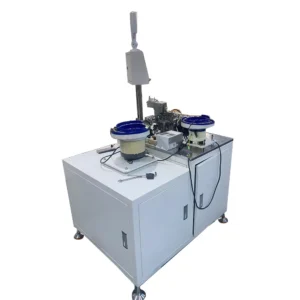
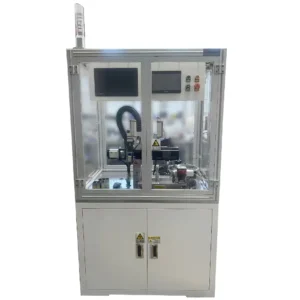
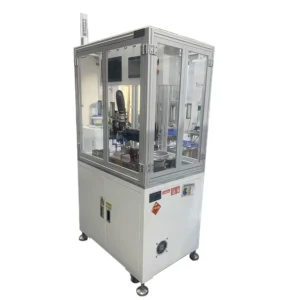
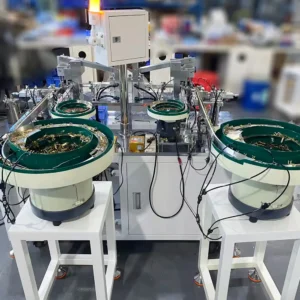
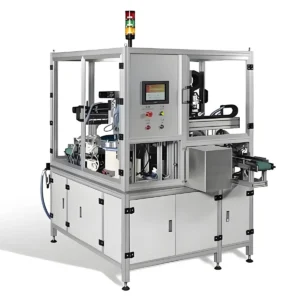
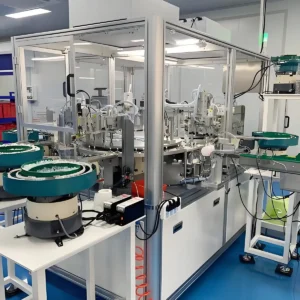
SWOER designs custom assembly machines for different products and production needs. The machine can combine feeding, assembly, inspection, and material handling in one production line.
Why Use Automation for Assembly?
Manual assembly takes time and requires operators to repeat the same actions throughout the day.
An automated assembly machine can handle many of these repeated operations. This allows operators to focus on machine monitoring, material supply, and quality checks.
Common reasons to use assembly automation include:
- Reduce repetitive manual work
- Increase production speed
- Keep assembly results more consistent
- Reduce errors caused by manual handling
- Handle small parts more easily
- Keep several production steps running together
- Reduce the need for manual part transfer
The actual results depend on the product and machine design.
Common Assembly Machine Automation Options
Different products need different types of equipment. A production line may use one automation option or several together.
Automatic Part Feeding
Small parts often need to reach the assembly station in the correct position.
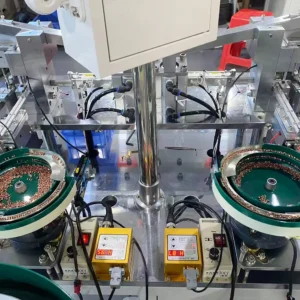
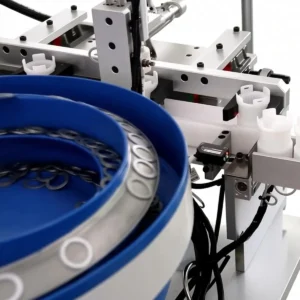
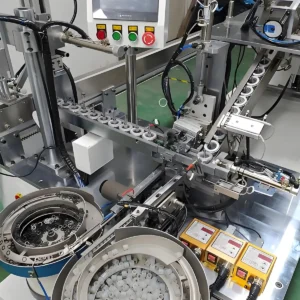
Vibratory bowl feeders are widely used for this purpose. They can sort and feed parts continuously to the next station.
Other feeding options include:
- Flex podavače
- Kroková podavače
- Centrifuge feeders
- Hopper elevator conveyors
- Belt conveyors
- Custom feeding systems
SWOER can choose the feeding method based on the shape, size, material, and feeding speed of the parts.
Automatic Assembly
Assembly machines can handle many repeated operations without requiring an operator for every part.
Depending on the product, the machine may include:
- Pick and place mechanisms
- Servo motors
- Pneumatic cylinders
- Delta robots
- Pressing units
- Screwing units
- Riveting units
- Gluing units
For example, a connector assembly machine may feed connectors automatically and then place them into another component.
The assembly method should match the product structure and required production speed.
Vision Inspection
Some products need to be checked during production.
A camera can inspect the part before or after an assembly step. It can check whether the part is present, correctly positioned, or assembled correctly.
- Typical inspection tasks include:
- Checking missing parts
- Checking part position
- Checking part orientation
- Checking surface defects
- Checking assembly results
- Separating good and defective parts
SWOER can combine a feeder, camera, and assembly machine when the application requires automatic inspection.
Automatic Material Handling
Moving parts between different stations can also take a lot of manual work.
Conveyors, robotic arms, tray systems, and elevators can move parts from one station to another.
Common equipment includes:
- Belt conveyors
- Transfer units
- Hopper elevators
- Tray handling systems
- Delta robots
- Pick and place systems
These machines can connect feeding, assembly, inspection, and packaging operations.
Semi-Automatic or Fully Automatic Assembly?
The required automation level depends on production volume and the assembly process.
| Type | How It Works |
| Manual | Operators perform most assembly tasks |
| Semi-Automatic | The machine performs selected operations |
| Fully Automatic | The machine handles most production steps |
| Custom Automatic | The machine is designed around a specific product |
Semi-automatic equipment can be suitable when products change often or production volumes are limited.
Fully automatic equipment can be useful when the same product needs to be produced in large quantities.
How to Choose an Assembly Machine Automation
Before choosing an assembly machine, check the actual production requirements.
1. Check the Product
Start with the product itself.
Consider its:
- Velikost
- Shape
- Materiál
- Hmotnost
- Assembly method
- Required assembly position
These details affect the choice of feeder, robot, tooling, and inspection equipment.
2. Check Production Volume
Production volume is another important factor.
If the machine needs to produce thousands of parts every day, automatic feeding and assembly can reduce manual work.
For smaller production runs, a semi-automatic machine may be enough.
3. Check Cycle Time
Determine how many parts the machine needs to produce per minute or per hour.
The feeder, assembly mechanism, inspection system, and conveyor should all meet the required cycle time.
4. Check Quality Requirements
Some products need inspection during production.
If the assembly process has strict quality requirements, a vision system can check important assembly points before the part leaves the machine.
5. Consider Future Changes
Product designs and production requirements can change.
If you expect new models or higher production volumes in the future, discuss these plans with the machine manufacturer before the machine is built.
This can make future changes easier.
SWOER Custom Assembly Machine Automation
SWOER builds custom assembly machines based on the customer’s product and production process.
The equipment can include:
- Vibrační podavače misek
- Flex podavače
- Kroková podavače
- Conveyors
- Automatic assembly units
- Delta robots
- Vision inspection systems
- Counting systems
- Sorting systems
- Labeling equipment
- Packaging equipment
For each project, the customer provides product drawings, samples, and production requirements.
SLOER then designs the machine and creates a 3D model for customer confirmation.
After the design is confirmed, SWOER starts production. After delivery, SWOER provides installation guidance and technical support.
This approach allows the feeding system, assembly mechanism, inspection equipment, and other parts of the machine to work around the actual product.
Improve Your Assembly Process with the Right Equipment
Assembly automation does not always mean making every step automatic.
The most useful setup depends on your product and production
Get a customized solution
 Czech
Czech  English
  Spanish (Mexico)
  Arabic
  Russian
  German
  French
  Turkish
  Italian
  Ukrainian
  Polish
  Romanian
  Bengali
  Portuguese (Portugal)
  Thai
Thai  Japanese
  Korean
  Hebrew
  Uzbek
Uzbek  Hindi
Hindi  Slovak
  Vietnamese
  Portuguese (Brazil)
  Spanish (Peru)
  Spanish (Spain)
  Spanish (Venezuela)