
The term “machine base” can refer to different components depending on the equipment. Below are the advantages for two common applications: vibratory bowl feeder bases (drive units) and machine tool bases (support foundations). I. Advantages of a Vibratory Bowl Base (Drive Unit) The base of a vibratory bowl feeder is the core drive unit that generates vibration. Its […]
Archivos de Categoría: Vibratory Bowl Feeder
A vibratory bowl feeder is a versatile automation component that can be integrated with a wide range of machines to form complete automated production systems. Below are the primary categories of machines that commonly work with vibratory bowls: I. Assembly Machines Vibratory bowls are most frequently paired with various types of assembly equipment: Automatic Screwdriving […]
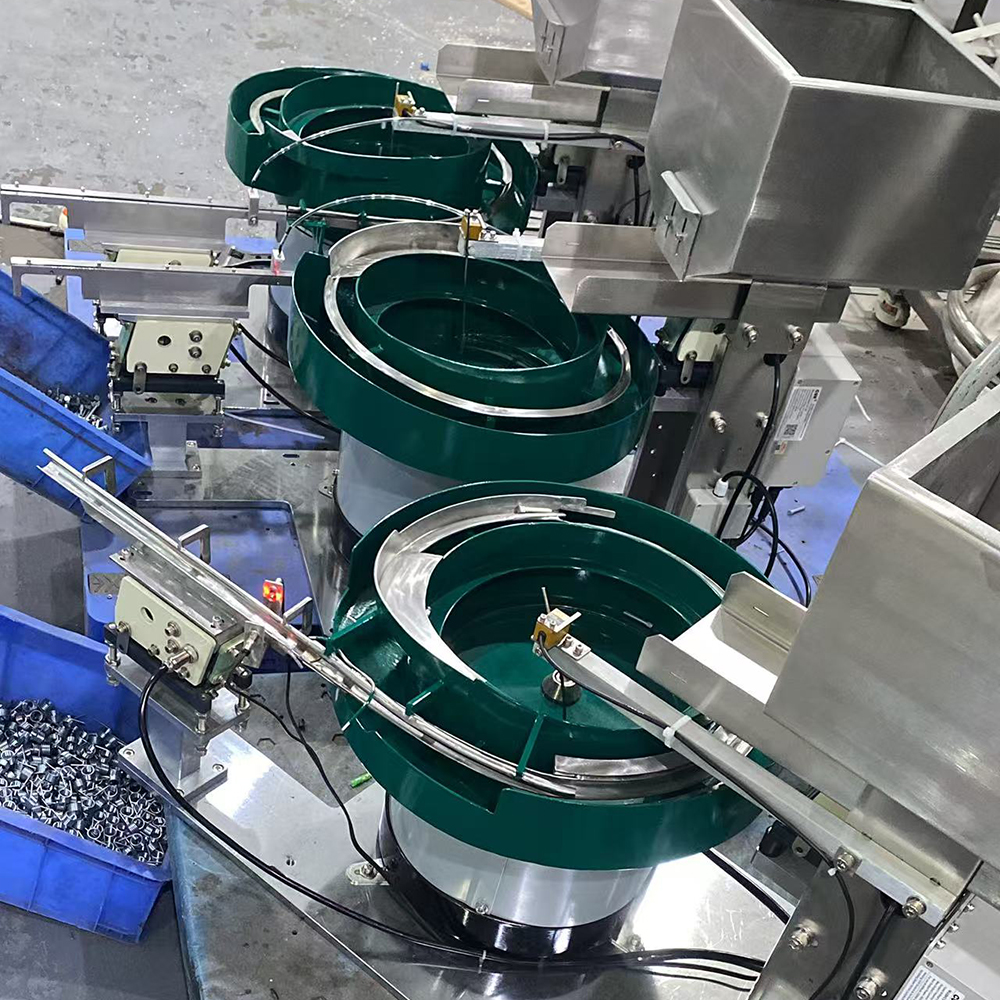
Small parts assembly needs precision and speed. Therefore, many factories use vibratory bowl feeders. These systems sort and orient components automatically. However, selecting the right feeder can be challenging. Many factors influence performance. This guide explains how to choose the right vibratory bowl feeder. In addition, it highlights how Swoer solutions support modern automation. Understand […]
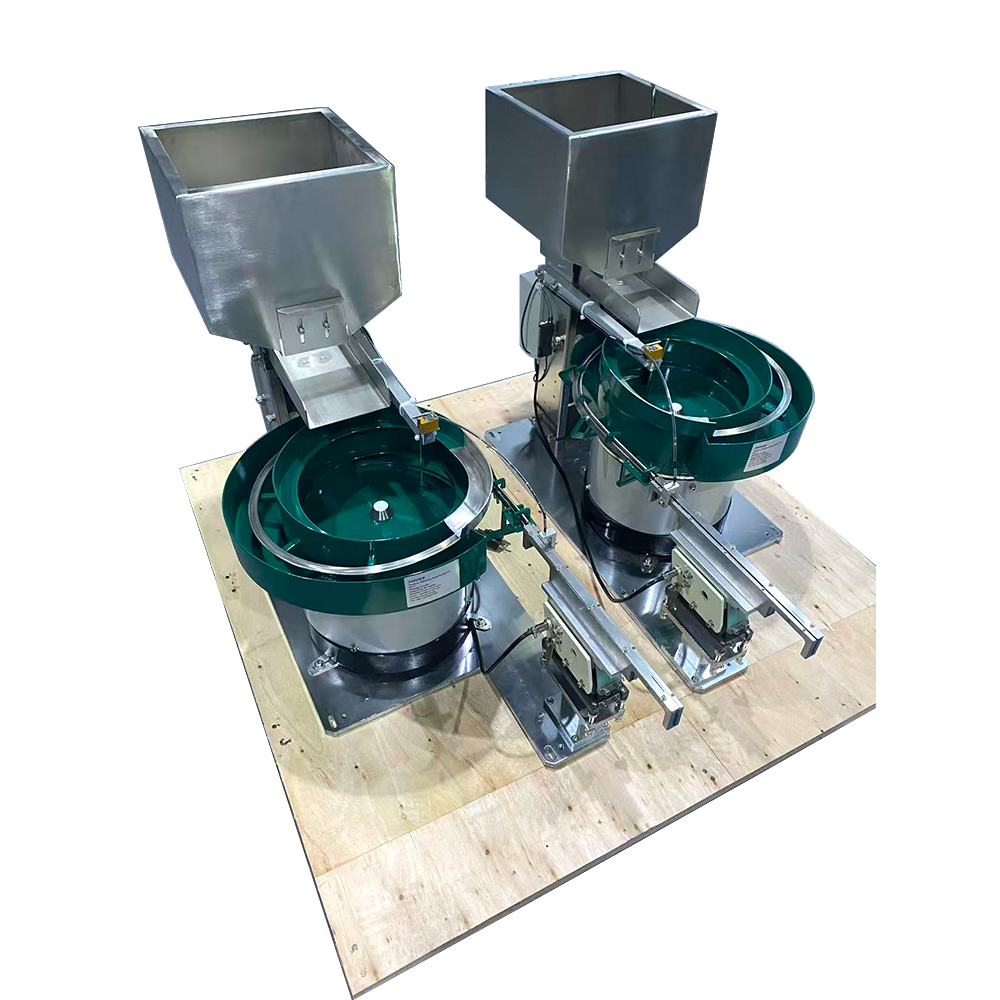
Main Uses of a Vibratory Bowl Feeder Part Orientation Many production lines need correctly positioned parts. For example, screws must face the same direction. Therefore, the feeder sorts and aligns them. Consequently, machines work faster and more accurately. Automated Feeding Factories must supply parts continuously. However, manual feeding slows production. Thus, vibratory feeders deliver parts […]
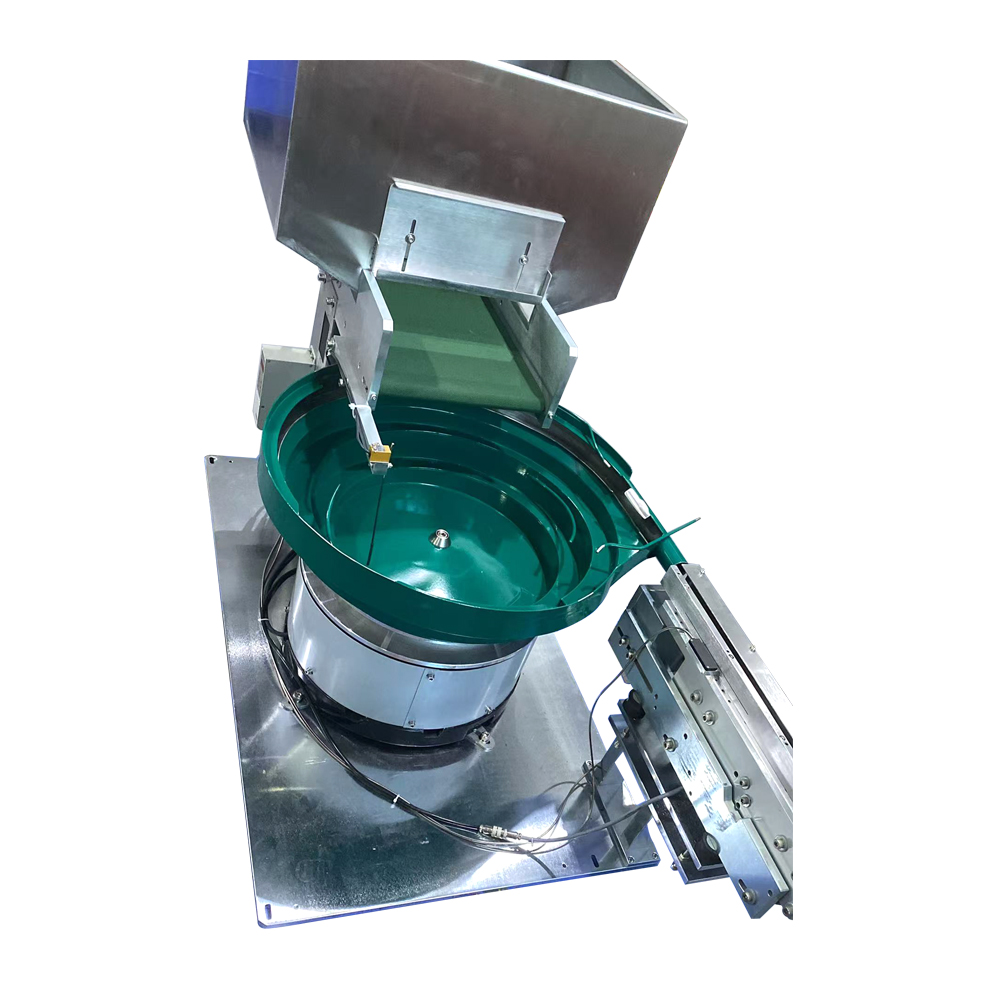
Flex Feeders and Robot-Integrated Machine: Flexible Feeders with Flex Feeders & Robot-Integrated Systems are ideal for industries like electronics, automotive, and manufacturing. These systems handle a variety of parts with precision and reliability. Moreover, their modular design ensures quick setup and minimal maintenance. By integrating with robots, they can automate tasks such as sorting, picking, […]
I. Main Functions of Industrial Cameras Guidance and Positioning Function: Precisely identifies an object’s location and orientation, providing coordinates for robots or motion systems to enable precise picking, placing, or alignment. Example: Guiding a robot to pick parts from a moving conveyor. Identification and Sorting Function: Reads and verifies text, barcodes, QR codes, or sorts objects based […]
Under What Circumstances Should a Parting/Separating Structure Be Added to a Vibratory Bowl? A parting or separating structure is typically added to solve specific part-handling challenges: Parts Tend to Overlap or Stack Symptom: Flat or sheet-like parts stack on top of each other on the track. Solution: Add flipper blades, air jets, or steps to knock down […]
Classified by Actuation Method Single-Acting Cylinders Principle: Air pressure drives in one direction (extend), and a spring (or external force) returns it. Characteristics: Simple, low air consumption. Uneven force, limited stroke. Double-Acting Cylinders Principle: Air pressure drives both extension and retraction. Characteristics: High, controllable force. Standard, most common type. Classified by Function & Special Structure Rodless Cylinders […]
Classified by Measured Property Position/Displacement Sensors: Detect presence, position, or distance. Force/Pressure Sensors: Measure force, weight, or torque. Vision Sensors: Capture images for identification, inspection, etc. Temperature Sensors: Measure temperature. Flow Sensors: Measure gas/liquid flow rate. Level Sensors: Detect liquid level in a tank. Classified by Working Principle Photoelectric Sensors: Use light (blocked or reflected […]
The connection forms a control loop: the PLC commands the bowl, and sensors provide feedback. Hardware Connection Power Connection Description: The bowl requires a power source. This is controlled indirectly via a relay. Wiring: Connect bowl power to the relay’s output contacts. Connect one side of the relay coil to a DC power supply. Connect the other […]
 Spanish (Spain)
  English
  Spanish (Mexico)
  Czech
Czech  Arabic
  Russian
  German
  French
  Turkish
  Italian
  Ukrainian
  Polish
  Romanian
  Bengali
  Portuguese (Portugal)
  Thai
Thai  Japanese
  Korean
  Hebrew
  Uzbek
Uzbek  Hindi
Hindi  Slovak
  Vietnamese
  Portuguese (Brazil)
  Spanish (Peru)
  Spanish (Venezuela)