


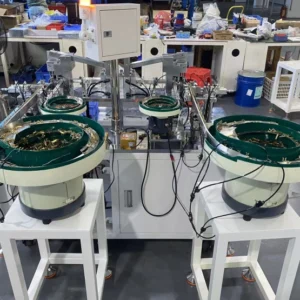
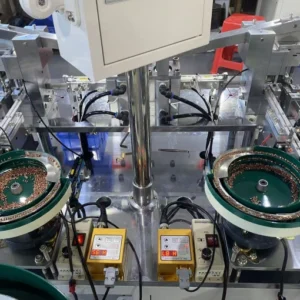
Pain Points of Pusher-Type Feeders
- High Sensitivity to Part Shape and Stability
- Описание: Pusher feeders rely on parts stacking stably in the hopper. Irregular shapes or unstable parts easily cause jams, bridging, or flipping.
- Pain Point: Requires highly precise, part-specific design of the hopper and pusher, offering poor versatility.
- Limited Feeding Speed
- Описание: The motion is intermittent. Its maximum speed is limited by the actuator’s cycle time and stability.
- Pain Point: The maximum feed rate is typically lower than that of a vibratory bowl, making it unsuitable for very high-speed applications.
- Jamming with Multiple Parts in a Row
- Описание: If the hopper allows multiple parts side-by-side, friction or interlocking can prevent smooth separation.
- Pain Point: Requires precise guiding and anti-jamming design, increasing complexity.
- High Demand for Consistent Part Quality
- Описание: Dimensional variation or burrs on parts can cause mis-feeds or jams.
- Pain Point: Fluctuations in incoming part quality directly cause feeder stoppages.
- Conflict Between Hopper Capacity and Reliability
- Описание: A larger capacity reduces refilling frequency, but the increased pressure on bottom parts raises the risk of jamming and wear.
- Pain Point: A balance must be struck, often sacrificing capacity for reliability.
- Weak Complex Orientation Capability
- Описание: The primary function is separation and feeding; it lacks inherent complex orientation capability. It often requires parts to be pre-oriented or needs additional tooling.
- Pain Point: Increases system complexity for parts requiring orientation.
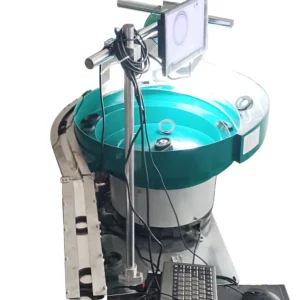
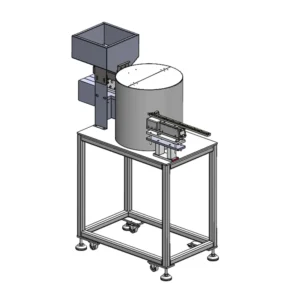
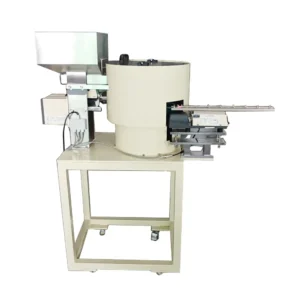
In summary, the core pain points of pusher feeders are their “low flexibility, speed limitations, and high dependency on specific part characteristics and consistency.” It is crucial to ensure a strong match between the part and the feeder’s principle.


 Russian
  English
  Spanish (Mexico)
  Czech
Czech  Arabic
  German
  French
  Turkish
  Italian
  Ukrainian
  Polish
  Romanian
  Bengali
  Portuguese (Portugal)
  Thai
Thai  Japanese
  Korean
  Hebrew
  Uzbek
Uzbek  Hindi
Hindi  Slovak
  Vietnamese
  Portuguese (Brazil)
  Spanish (Peru)
  Spanish (Spain)
  Spanish (Venezuela)
Отзывы
Отзывов пока нет.