
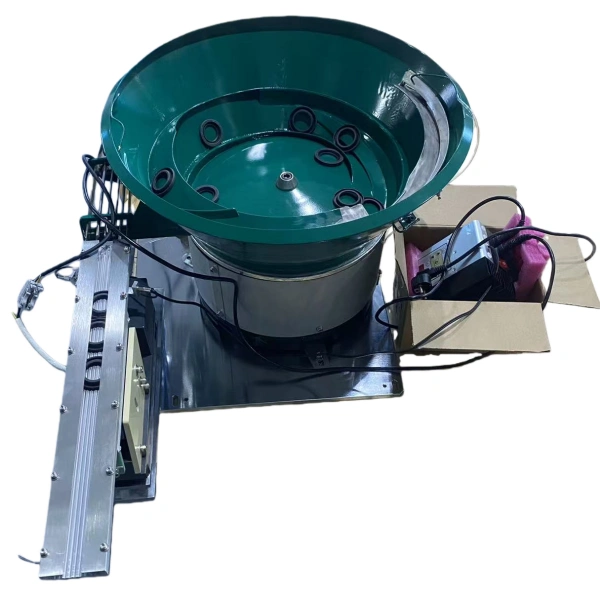
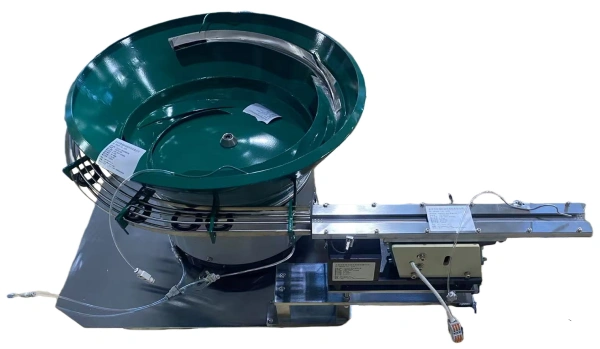
What Is the Function of a Vibratory Bowl with Counting Capability?
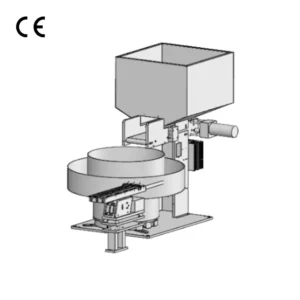
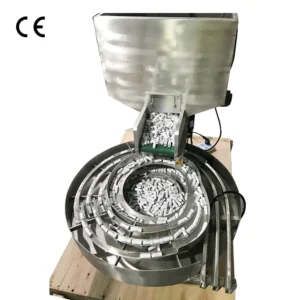
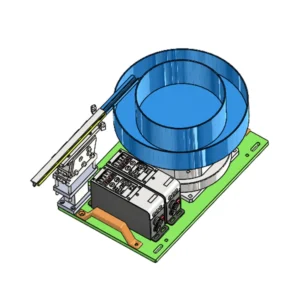
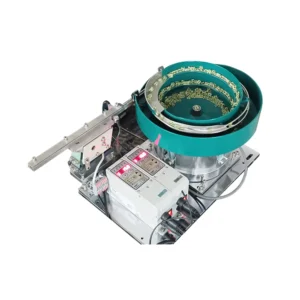
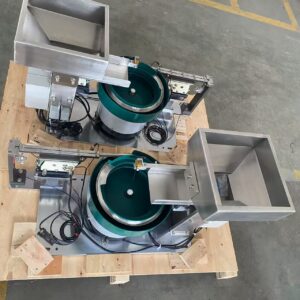
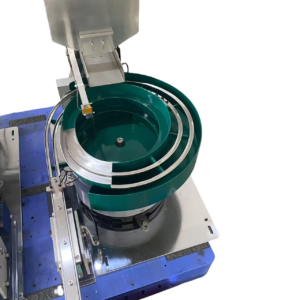
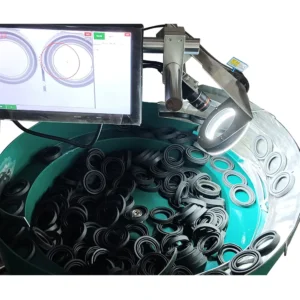
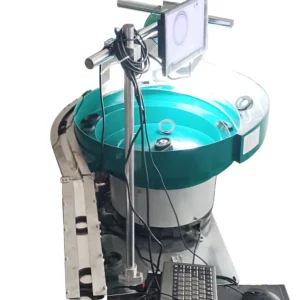
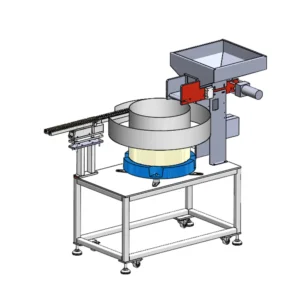
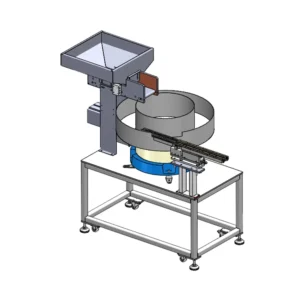
Equipping a vibratory bowl feeder with a counting function adds significant value to automated production lines. The main functions and benefits include:
I. Core Functions
Production Quantity Monitoring
Tracks the number of parts fed from the bowl in real time.
Provides accurate, continuous count data for the production run.
Batch Counting
Counts parts into preset batch sizes (e.g., 100, 500, 1000 pieces).
Triggers an output signal (e.g., stops the bowl, activates a diverter, or alerts an operator) when the batch target is reached.
Total Production Recording
Accumulates total parts fed over a shift, day, or job.
Helps measure overall equipment effectiveness (OEE) and production output.
Integration with Production Control Systems
Sends count data to a PLC, HMI, or higher-level manufacturing execution system (MES).
Enables real‑time production tracking and data logging.
Process Automation Support
Count signals can trigger downstream actions:
Stop the bowl when a container is full.
Divert parts to a different bin or conveyor after a batch is complete.
Request operator attention when a batch threshold is near.
II. Benefits / Advantages
Eliminates Manual Counting – Reduces labor cost and eliminates human counting errors.
Improves Inventory Accuracy – Provides reliable data for raw material consumption and finished goods counting.
Enables Just‑In‑Time (JIT) Feeding – Sends exactly the required number of parts to an assembly station, reducing work‑in‑progress.
Supports Quality Assurance – Can be combined with a reject counting function to track defect rates.
Reduces Overfill / Underfill – Prevents incorrect quantities in downstream packaging or kitting operations.
Provides Traceability – Count data can be linked to batch numbers, production dates, or machine identifiers.
 Portuguese (Portugal)
  English
  Spanish (Mexico)
  Czech
Czech  Arabic
  Russian
  German
  French
  Turkish
  Italian
  Ukrainian
  Polish
  Romanian
  Bengali
  Thai
Thai  Japanese
  Korean
  Hebrew
  Uzbek
Uzbek  Hindi
Hindi  Slovak
  Vietnamese
  Portuguese (Brazil)
  Spanish (Peru)
  Spanish (Spain)
  Spanish (Venezuela)
Avaliações
Ainda não existem avaliações.