
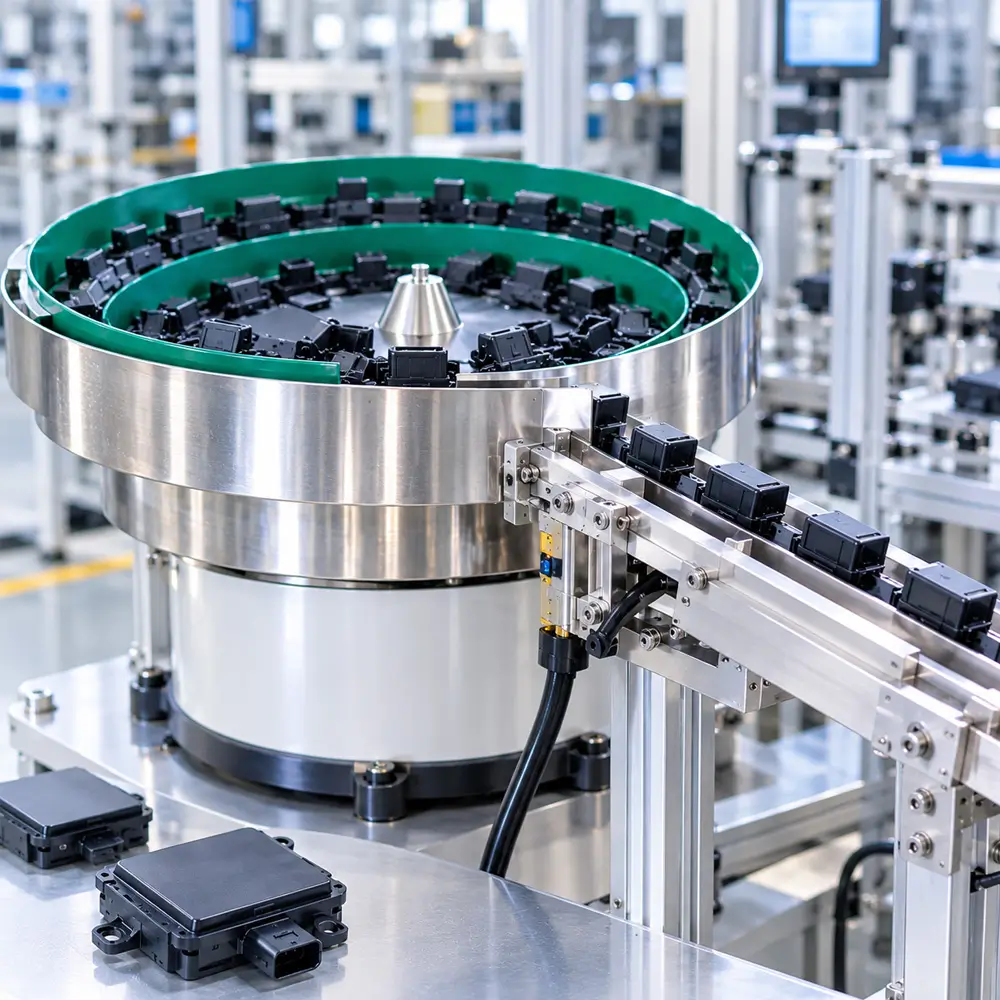
Automotive radar systems play an important role in modern vehicle safety and driver assistance. Their production requires accurate component feeding and stable assembly processes.
Manufacturers need reliable feeding equipment to handle small radar housings, electronic components, connectors, and other precision parts.
A custom automotive radar vibratory bowl feeder helps arrange these components in the correct direction. It also supplies parts to assembly machines, inspection stations, and other automated equipment.
SWOER manufactures custom vibratory bowl feeders for automotive radar production. Each system follows the customer’s component drawings, feeding requirements, and production line layout.
Why Do Automotive Radar Components Need Custom Vibratory Bowl Feeders?
Automotive radar components come in different shapes, sizes, and materials. Some parts have small holes, irregular edges, or special positioning requirements.
Standard feeding equipment may not handle every component correctly. Custom bowl feeders provide better control over part orientation and feeding direction.
Common challenges include:
Part orientation: Components must enter the assembly machine in the correct position.
Stable feeding: Production lines need a continuous supply of parts.
Part protection: Feeding tracks must reduce collisions and scratches.
Accurate positioning: Parts must reach the next station in a consistent position.
Production speed: The feeding system must match the required assembly cycle.
Custom track design helps solve these problems. SWOER adjusts the bowl structure, spiral track, and discharge outlet according to the actual component.
What Types of Automotive Radar Parts Can a Vibratory Bowl Feeder Handle?
Automotive radar production involves several types of components. Different parts require different bowl structures and track designs.
| Automotive Radar Components | Feeding Requirements | Suitable Feeding Solutions |
|---|---|---|
| Radar sensor housings | Directional feeding and positioning | Custom vibratory bowl feeder |
| Plastic radar covers | Stable orientation and surface protection | Bowl feeder with customized track |
| Metal brackets | Correct positioning and separation | Vibratory bowl feeder |
| Electronic connectors | Accurate alignment | Precision bowl feeder |
| Small fastening parts | Continuous and orderly feeding | Bowl feeder with counting system |
| Radar assembly components | Controlled transfer to assembly stations | Integrated feeding system |
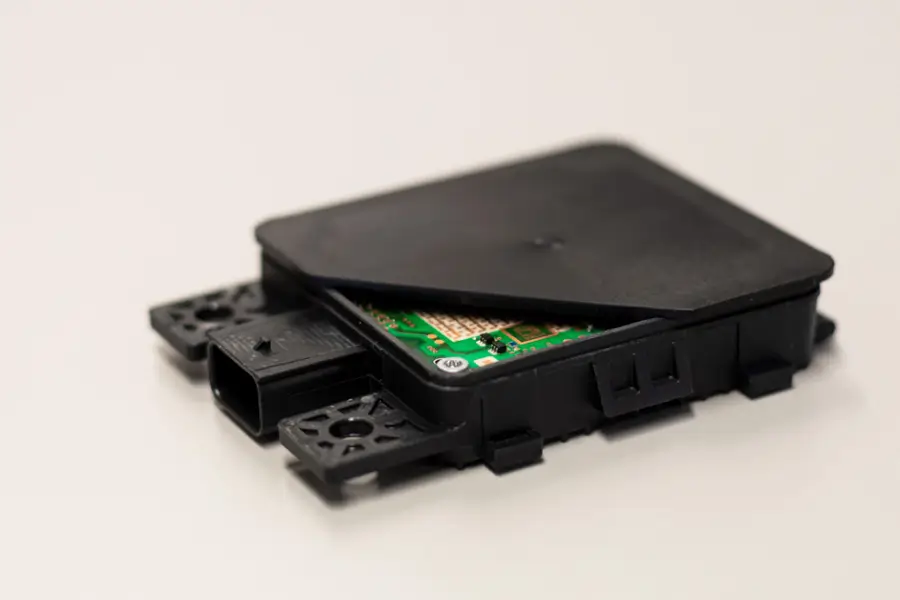
Different components need different feeding methods. Therefore, manufacturers should provide actual samples or technical drawings before equipment design.
How Does a Custom Automotive Radar Vibratory Bowl Feeder Work?
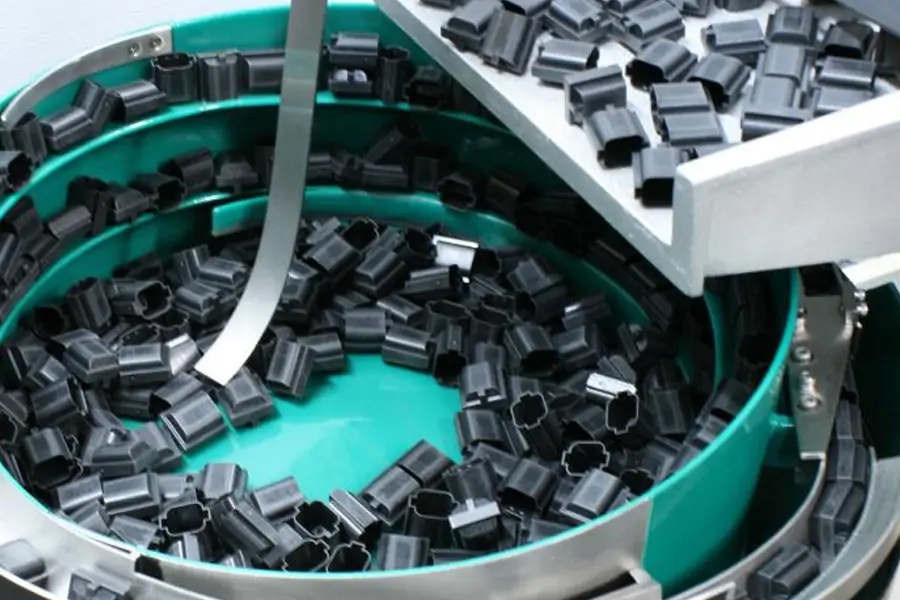
Vibratory bowl feeder uses controlled vibration to move components along a spiral track. Special track structures guide parts into the required orientation.
The feeding process usually includes four steps:
Part loading: Operators or automatic hopper systems load components into the bowl.
Vibratory feeding: The bowl moves parts upward along the spiral track.
Part orientation: Custom tooling separates incorrectly positioned parts and keeps correctly oriented parts moving.
Automatic discharge: Components enter a linear track or conveyor and move to the next machine.
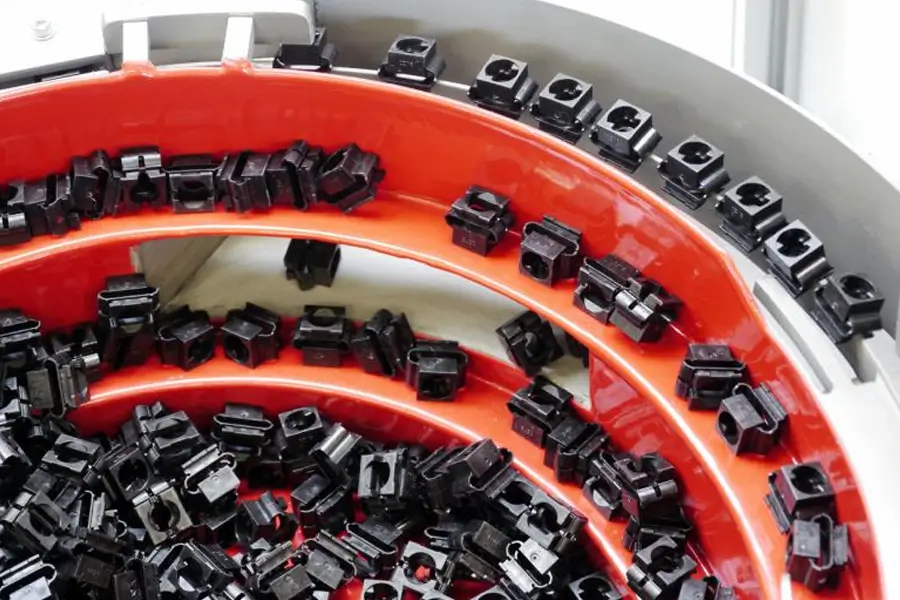
For higher production demands, the system can connect with a hopper elevator conveyor. This setup reduces manual loading and supports longer production runs.
Additional options include:
Automatic material replenishment
Linear feeding tracks
Part separators
Counting systems
No-material alarms
Jam detection
Soundproof enclosures
The final configuration depends on the component and production requirements.
What Should You Consider When Choosing an Automotive Radar Feeder Factory
Choosing the right vibratory bowl feeder manufacturer affects feeding performance and production efficiency.
Manufacturers should evaluate several factors before placing an order.
1. Custom Track Design
The track must match the component’s shape, dimensions, and feeding direction. Incorrect track design may cause jamming or unstable feeding.
2. Feeding Speed
The bowl feeder must supply parts at the speed required by the assembly machine. Testing with actual components helps confirm the feeding capacity.
3. Component Protection
Some radar components have sensitive surfaces or precision structures. Suitable track materials and surface treatments help reduce damage.
4. Machine Integration
The feeding equipment should connect with the customer’s assembly machine, conveyor, or inspection system.
5. Factory Experience
Check whether the manufacturer can provide custom equipment, sample testing, technical drawings, and production support.
A suitable factory should understand both the component and the complete production process.
SWOER Custom Vibratory Bowl Feeders for Automotive Radar Production
SWOER specializes in custom vibratory bowl feeders and automatic feeding systems for industrial production.
We design equipment according to customer parts, production speed, and machine layout. Our goal is to provide stable feeding solutions that work with the customer’s existing or planned production line.
Our feeding solutions include:
SWOER provides a complete customization process:
Customers provide component samples, drawings, and production requirements.
SWOER designs the feeding system and prepares a 3D model for customer confirmation.
Both parties confirm the technical details and production agreement.
SWOER manufactures and tests the equipment.
The finished machine is shipped to the customer.
SWOER provides technical support and installation guidance after delivery.
Our team focuses on practical equipment design, custom track development, and production line integration.
Looking for a reliable automotive radar vibratory bowl feeder factory?
Contatta SWOER with your component drawings or samples. Our team can review your feeding requirements and provide a suitable custom solution.

 Italian
 English
 Spanish (Mexico)
 Czech
 Arabic
 Russian
 German
 French
 Turkish
 Ukrainian
 Polish
 Romanian
 Bengali
 Portuguese (Portugal)
 Thai
 Japanese
 Korean
 Hebrew
 Uzbek
 Hindi
 Slovak
 Vietnamese
 Portuguese (Brazil)
 Spanish (Peru)
 Spanish (Spain)
 Spanish (Venezuela)