
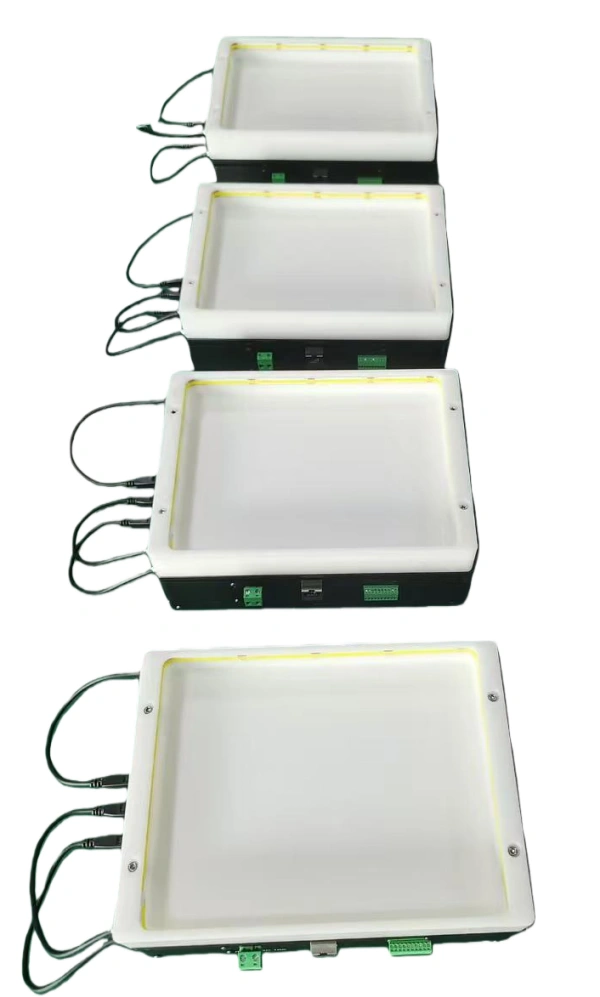
Which is better – a flexible feeder or a vibratory bowl feeder? What are the differences between them?
I. Quick Answer
Neither is universally “better” – they are designed for different applications. The choice depends on your part characteristics, production volume, changeover frequency, and budget.
Choose a alimentador vibratorio de cuenco for high‑speed, long‑run feeding of a single part type that is rigid, uniform, and can be mechanically oriented.
Choose a flexible feeder for high‑mix, low‑volume production, or when parts are delicate, complex, tangle‑prone, or difficult to orient mechanically.
II. Key Differences (Comparison Table)
| Característica | Alimentador vibratorio de cuenco | Alimentador flexible |
|---|---|---|
| Principio de funcionamiento | Uses vibration + mechanical tooling (tracks, wipers, slots) to orient parts as they move along a spiral track | Uses vibration to scatter parts on a flat tray + vision system to locate them + robot to pick |
| Part orientation | Achieved via passive mechanical tooling (fixed) | Achieved via vision‑guided robot picking (software‑defined) |
| Changeover time | Slow – typically 1–4 hours (requires track/tooling replacement) | Fast – typically 1–5 minutes (only software recipe change) |
| Speed (parts/min) | Very high – up to 300–1000+ parts/min | Moderate – typically 10–60 parts/min (limited by robot cycle) |
| Suitable part types | Rigid, uniform, dry, non‑tangling parts (screws, nuts, electronic components, pills) | Delicate, tangle‑prone, sticky, oily, complex‑shaped, or fragile parts (springs, O‑rings, connectors, PCBs) |
| Part damage risk | Moderate – parts may scratch or collide | Low – parts are gently scattered and picked |
| Initial investment | Lower (mechanical tooling only) | Higher (requires robot, vision, software) |
| Maintenance | Moderate (springs, coils, track wear) | Higher (vision calibration, robot programming, gripper wear) |
| Footprint | Compact (bowl + base) | Larger (requires space for robot, camera, and tray) |
| Noise level | High (part‑to‑metal impact) | Low (no impact noise) |
| Operator skill | Basic – only needs to refill parts and adjust amplitude | Advanced – requires programming and vision tuning skills |
III. Which One to Choose – Decision Guide
| Your Requirement | Recommended Feeder |
|---|---|
| One part type, long production runs, high speed | ✅ Vibratory bowl feeder |
| Many part types, frequent changeovers | ✅ Alimentador flexible |
| Parts are fragile, easily scratched, or sticky | ✅ Alimentador flexible |
| Parts are springs, O‑rings, or irregular shapes | ✅ Alimentador flexible (vibratory bowls often cannot handle these) |
| Parts are standard screws, washers, or pills | ✅ Vibratory bowl feeder (most cost‑effective) |
| Budgets are tight | ✅ Vibratory bowl feeder (lower initial cost) |
| You need 100% in‑line inspection (vision‑based) | ✅ Alimentador flexible (vision is already part of the system) |
| You have limited floor space | ✅ Vibratory bowl feeder (smaller footprint) |
| You want to run lights‑out operation with minimal human intervention | ✅ Either – but the flexible feeder is better for mixed‑part boxes |
IV. Summary
| Aspect | Alimentador vibratorio de cuenco | Alimentador flexible |
|---|---|---|
| Best for | High‑volume, single‑part applications | High‑mix, low‑volume, delicate parts |
| Velocidad | ⭐⭐⭐⭐⭐ (very high) | ⭐⭐⭐ (moderate) |
| Flexibilidad | ⭐ (very low) | ⭐⭐⭐⭐⭐ (very high) |
| Costo | ⭐⭐⭐⭐ (lower) | ⭐⭐ (higher) |
| Part damage | ⭐⭐ (some risk) | ⭐⭐⭐⭐⭐ (very gentle) |
| Changeover | ⭐ (long, mechanical) | ⭐⭐⭐⭐⭐ (short, software) |
| Space | ⭐⭐⭐⭐ (compact) | ⭐⭐ (larger) |

 Spanish (Venezuela)
  English
  Spanish (Mexico)
  Czech
Czech  Arabic
  Russian
  German
  French
  Turkish
  Italian
  Ukrainian
  Polish
  Romanian
  Bengali
  Portuguese (Portugal)
  Thai
Thai  Japanese
  Korean
  Hebrew
  Uzbek
Uzbek  Hindi
Hindi  Slovak
  Vietnamese
  Portuguese (Brazil)
  Spanish (Peru)
  Spanish (Spain)