Introduction
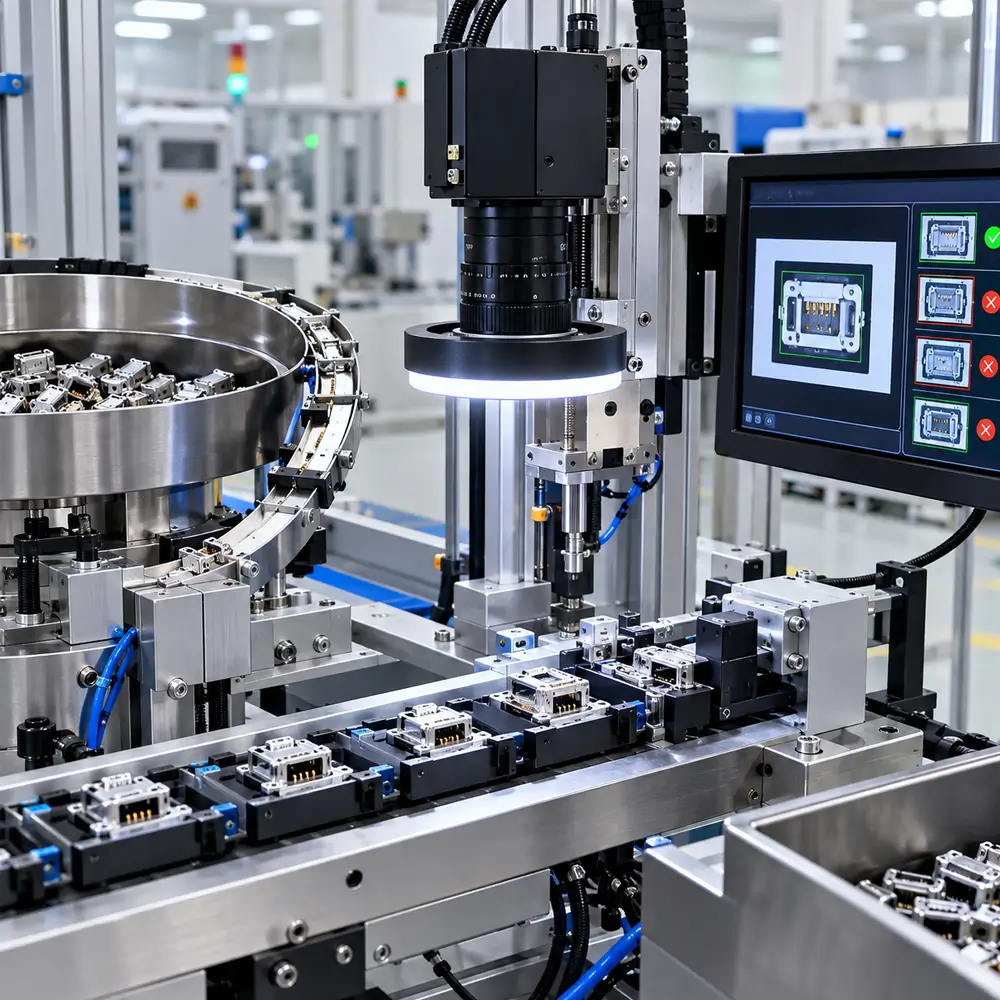
Vision inspection can make an automated assembly machine more accurate and reliable. It checks parts during production and finds problems before defective products reach the next process.
For manufacturers, this means better quality control, fewer manual checks, and more stable production.
Improve Assembly Accuracy
Small parts often require precise positioning during assembly. Even a small position error can affect the final product.
A vision inspection system uses cameras to check the position, direction, shape, and appearance of parts. The system can identify parts that are not correctly placed and send a signal to the assembly machine.
This helps maintain consistent assembly quality during long production runs.
Detect Defective Parts
Vision inspection can check parts before or after the assembly process.
Common inspection items include:
- Missing parts
- Wrong part orientation
- Incorrect position
- Damaged parts
- Size differences
- Surface defects
- Incomplete assembly
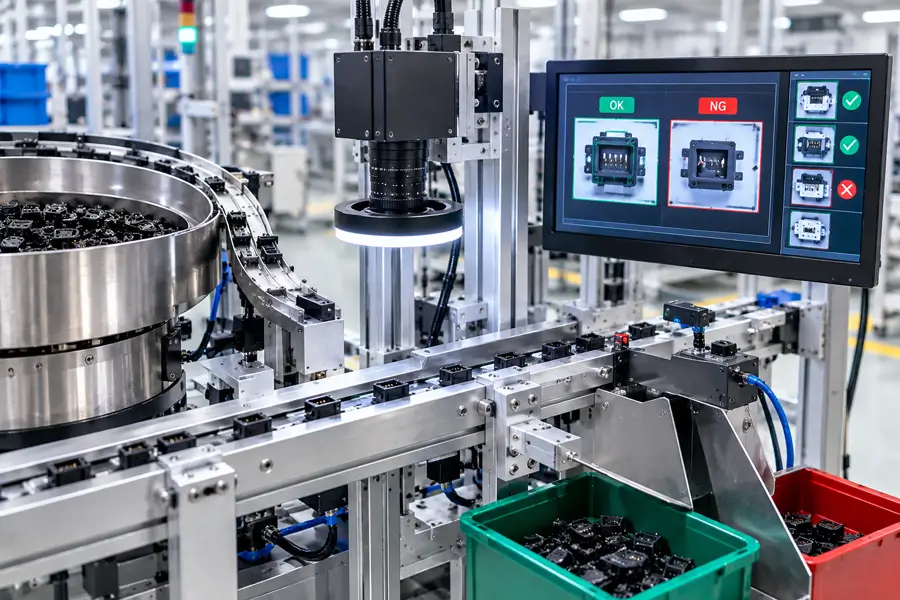
When the system detects a defective product, it can separate the product from qualified parts. This reduces the chance of defective products moving to the next production stage.
Reduce Manual Inspection
Manual inspection takes time and requires workers to check products one by one. It can also become difficult to maintain the same inspection standard during long production runs.
An automated vision system can check products as they move through the assembly machine. This allows operators to focus on machine operation, material supply, and other production tasks.
Vision inspection works especially well for products with small parts or high inspection requirements.
Improve Production Efficiency
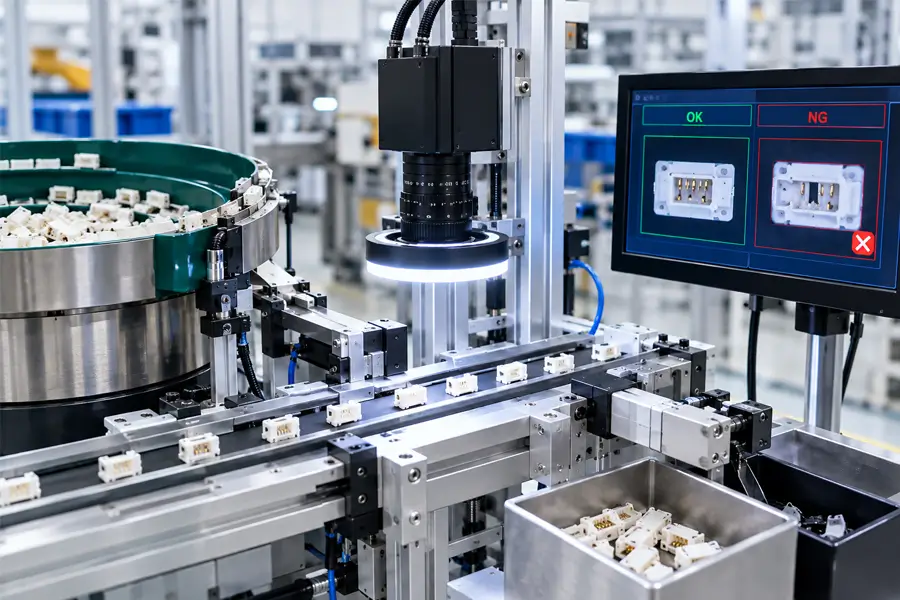
Combining feeding, assembly, and vision inspection in one machine can reduce unnecessary handling.
For example, a production process can include:
| Production Step | Main Function |
| Part feeding | Supplies parts to the assembly station |
| Part positioning | Places parts in the correct position |
| Automatic assembly | Joins or installs components |
| Vision inspection | Checks assembly quality |
| Defective part separation | Removes unqualified products |
| Product output | Sends qualified products to the next process |
This setup allows several production steps to work together in one automated system.
Provide More Consistent Quality Control
Human inspection can vary between operators and production shifts. Vision inspection uses the same inspection rules for each product.
Manufacturers can set inspection requirements based on the product structure and quality standards. The system then checks each product according to these requirements.
This can be useful for high-volume production where consistent quality is important.
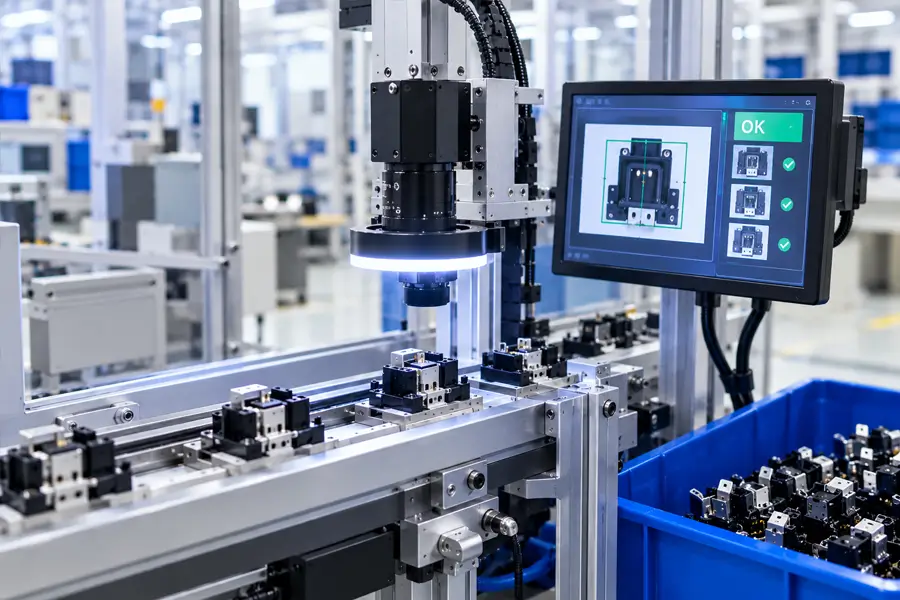
Combine Vision Inspection With Automatic Feeding
Vision inspection can work with different feeding systems.
For small components, a vibratory bowl feeder can supply parts to the assembly machine in a controlled direction. The vision system can then check the parts before they enter the assembly station.
This combination can help control both part feeding and product quality.
For example:
Vibratory Bowl Feeder → Part Positioning → Automatic Assembly → Vision Inspection → Good/Defective Separation
This type of setup is suitable for connectors, electronic components, springs, plastic parts, hardware, and other small components.
Support Custom Assembly Applications
Different products require different inspection points. Some products need one camera, while others may require multiple cameras and inspection positions.
A custom assembly machine can combine feeding, assembly, vision inspection, and product separation based on the customer’s product structure and production requirements.
SWOER can design custom assembly machines according to the customer’s drawings, product structure, production volume, and inspection requirements.
The machine can include:
- Vibratory bowl feeders
- Flex feeders
- Assembly stations
- Vision inspection systems
- Defective product separation
- Conveyors
- Counting systems
- Robotic handling
- Safety enclosures
This approach allows the inspection system to match the actual assembly process instead of adding a separate inspection step after production.
What Should You Consider Before Adding Vision Inspection?
Before choosing a vision inspection system, manufacturers should check several factors:
- Product size and shape
Small or complex parts may require higher-resolution cameras. - Inspection requirements
Define whether the system needs to check position, appearance, missing parts, dimensions, or assembly results. - Production speed
The camera and inspection system must keep up with the assembly cycle. - Lighting conditions
Proper lighting is important for stable inspection results. - Product variation
Different product models may require different inspection settings. - Defective product handling
The machine should have a clear method for separating rejected products.
Conclusion
Integrating vision inspection into an automated assembly machine can improve inspection accuracy, reduce manual checks, and support stable production.
For manufacturers with small components, high production volumes, or strict quality requirements, combining feeding, automatic assembly, and vision inspection can create a more complete production solution.
SWOER provides custom assembly machines based on product drawings and production requirements. The system can combine feeding, assembly, inspection, and product handling in one production line.
Need a custom assembly machine with vision inspection? Contact SWOER to discuss your product and production requirements.
Get a solution
 English
  Spanish (Mexico)
  Czech
Czech  Arabic
  Russian
  German
  French
  Turkish
  Italian
  Ukrainian
  Polish
  Romanian
  Bengali
  Portuguese (Portugal)
  Thai
Thai  Japanese
  Korean
  Hebrew
  Uzbek
Uzbek  Hindi
Hindi  Slovak
  Vietnamese
  Portuguese (Brazil)
  Spanish (Peru)
  Spanish (Spain)
  Spanish (Venezuela)