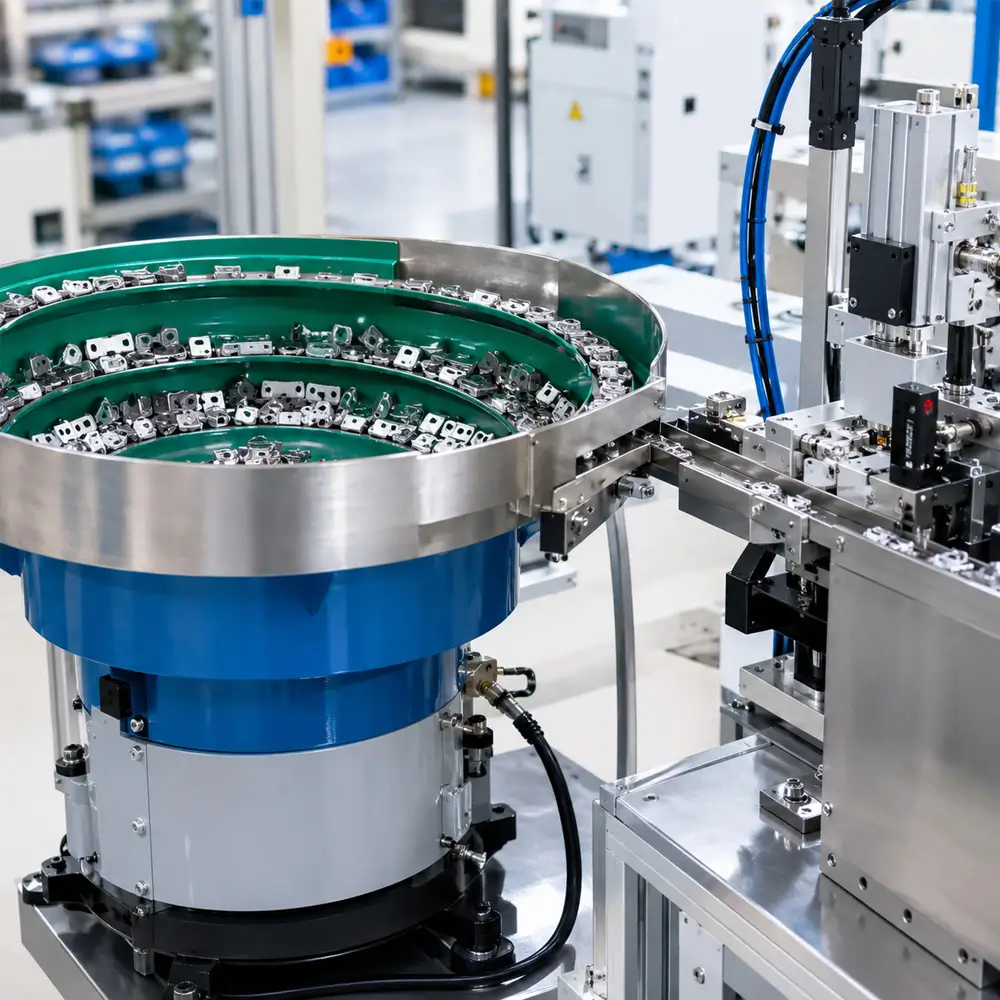
Vibratory bowl feeders help manufacturers automate the feeding and positioning of small parts. They are widely used with assembly machines, packaging equipment, inspection systems, and other production equipment.
When looking for vibratory bowl feeder manufacturers in the USA, buyers need to consider more than the equipment price. Part shape, feeding speed, orientation, machine integration, and technical support can all affect the final solution.
Some applications can use standard bowl feeders. Others require custom tooling and feeding systems based on the customer’s parts and production line.
This guide explains what to check when choosing a vibratory bowl feeder manufacturer and how to select a suitable solution for your production needs.
What Does a Vibratory Bowl Feeder Manufacturer Provide?
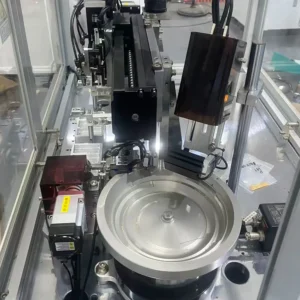
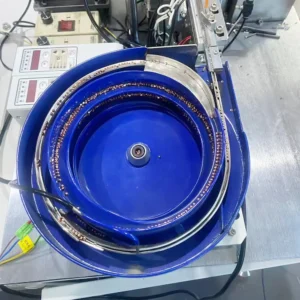
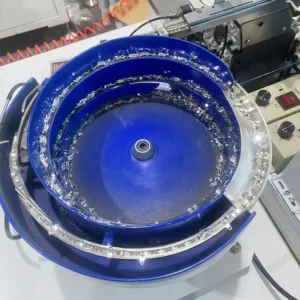
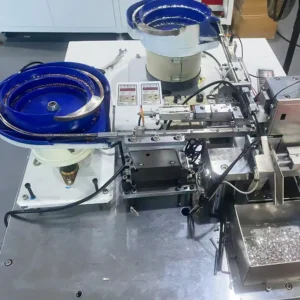
A vibratory bowl feeder moves bulk parts into a controlled feeding path through vibration. The bowl track separates and orients the parts before sending them to the next production process.
Depending on the application, manufacturers may provide:
- Máy cho ăn bát rung
- Linear vibratory feeders
- Máy cấp liệu bậc thang
- Bộ nạp Flex
- Hopper elevator conveyors
- Bowl feeder controllers
- Part sensors
- Counting systems
- Soundproof covers
- Complete automatic feeding systems
The required equipment depends on the component and production process.
For example, a small metal part may need a custom bowl track to reach the correct orientation. Another application may need a hopper elevator to keep the feeder supplied with parts during continuous production.
How to Choose a Vibratory Bowl Feeder Manufacturer
Choosing the right manufacturer starts with your parts and production requirements.
Before requesting a quotation, prepare information such as:
- Part drawings or 3D files
- Part dimensions
- Part material
- Part weight
- Required feeding direction
- Target feeding speed
- Production cycle time
- Available installation space
- Assembly machine information
The manufacturer should understand how your parts behave during feeding. Part shape and surface condition can affect feeding stability.
Ask the supplier whether they can test your actual parts before final production. Testing can help identify feeding problems before the equipment is installed on your production line.
A supplier should also explain how the feeder will connect with your existing equipment.
Custom Vibratory Bowl Feeders for Different Parts
Not every component works well with a standard vibratory bowl feeder.
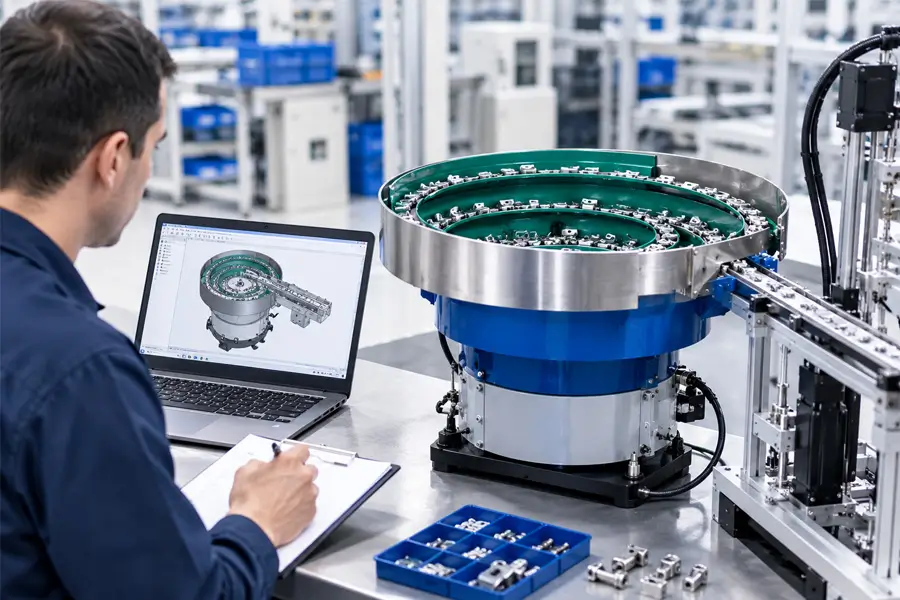
Parts with unusual shapes, soft materials, small dimensions, or strict orientation requirements may need custom tooling.
Custom bowl tooling can control how parts move along the feeding track. The design can also be adjusted to meet the required feeding direction and production speed.
SWOER provides custom vibratory bowl feeders based on customer parts and production requirements.
The feeding solution can include:
| Solution | Typical use |
| Vibratory bowl feeder | Sorting and orienting small parts |
| Linear feeder | Moving parts from the bowl to the machine |
| Flex feeder | Feeding different types of components |
| Step feeder | Feeding parts with a suitable step-based process |
| Hopper elevator | Supplying parts automatically |
| Counting system | Counting parts during production |
| Vision inspection | Checking part position or defects |
| Soundproof cover | Reducing feeder operating noise |
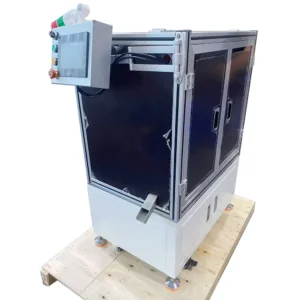
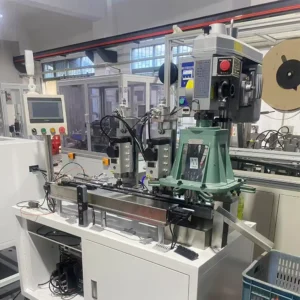
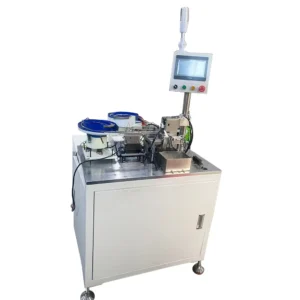
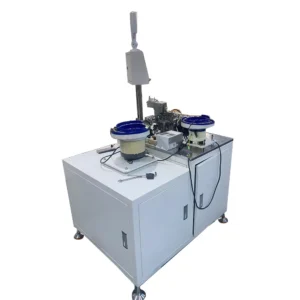
SWOER can also design feeding equipment for integration with automatic assembly machines and other production equipment.
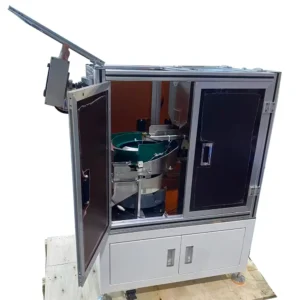
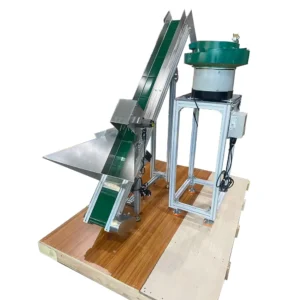
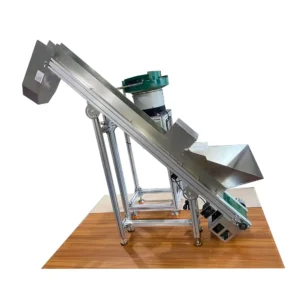
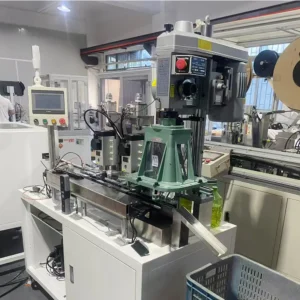
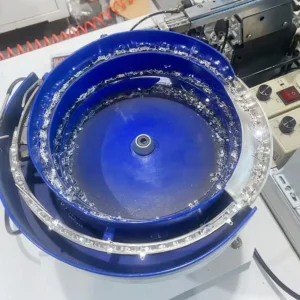
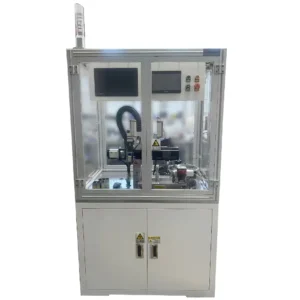
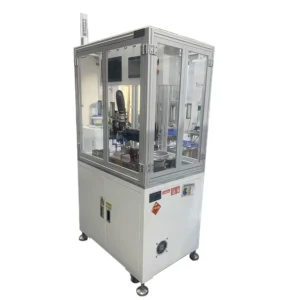
Vibratory Bowl Feeder Integration With Assembly Machines
Many manufacturers do not need a standalone feeder. They need a feeding system that works with an automatic assembly machine.
The feeder can supply components to the assembly station at a controlled rate. Sensors can monitor part supply and help control the feeding process.
A typical system may include:
Hopper → Vibratory Bowl Feeder → Linear Feeder → Sensor → Assembly Machine
For applications that require quality inspection, a vision system can be added before the parts enter the assembly process.
For example, a connector assembly machine may use a custom vibratory bowl feeder to orient connectors before the assembly station picks and installs them.
This type of integration can reduce manual part loading and provide a more consistent supply of components.
What Affects Vibratory Bowl Feeder Prices?
Vibratory bowl feeder prices vary between applications. The equipment cost depends on the feeder design, part characteristics, and automation requirements.
Important cost factors include:
- Bowl size
- Part dimensions
- Part material
- Required feeding speed
- Custom tooling
- Linear feeder length
- Hopper capacity
- Sensors and controls
- Soundproof enclosure
- Counting system
- Vision inspection
- Assembly machine integration
A simple feeder for one type of part can have a different cost from a complete feeding and assembly system.
When comparing quotations from manufacturers in the USA or overseas suppliers, check the full scope of supply.
Ask whether the quotation includes tooling, controls, testing, spare parts, shipping, installation guidance, and other required services.
USA Vibratory Bowl Feeder Manufacturers vs. Overseas Suppliers
US manufacturers can provide local communication and service for customers who prefer domestic suppliers. Overseas manufacturers can also be considered when buyers need custom equipment or complete automation solutions.
The right choice depends on the project requirements.
When comparing suppliers, look at:
- Manufacturing experience
- Custom feeder design
- Part testing
- Tích hợp tự động hóa
- Production capacity
- Quality control
- Delivery time
- Spare parts
- Technical support
- Installation guidance
Price should not be the only comparison point. The feeder must also meet the required production speed and part orientation.
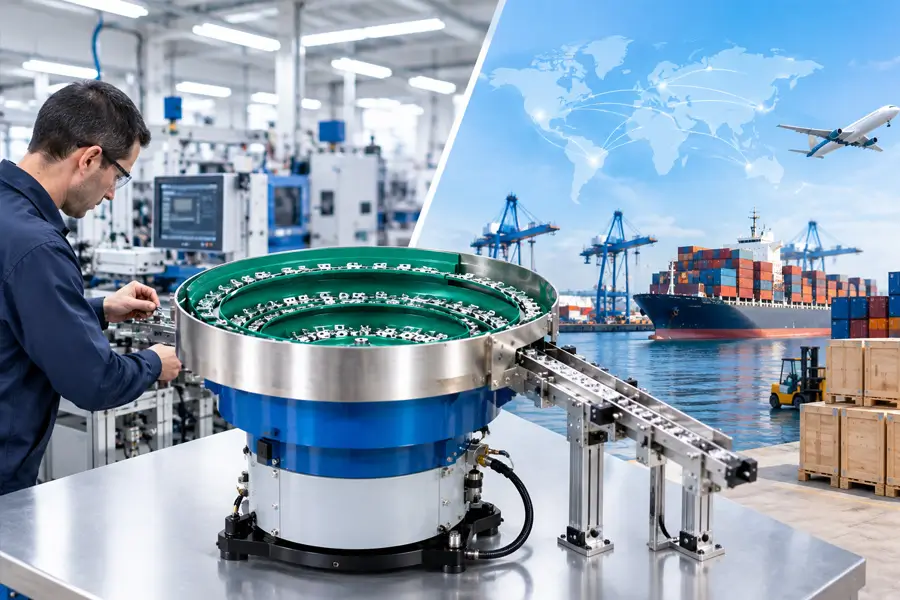
For international projects, buyers should also confirm shipping arrangements, technical documents, remote support, and installation requirements before placing an order.
Why Choose SWOER for Custom Vibratory Bowl Feeders?
SWOER is a Chinese manufacturer specializing in vibratory bowl feeders, flex feeders, step feeders, and custom feeding systems.
SWOER designs feeding solutions based on customer parts and production requirements rather than using the same feeder design for every application.
The company can provide:
- Custom vibratory bowl feeders
- Flex feeders and flex trays
- Máy cấp liệu bậc thang
- Hopper elevator conveyors
- Linear feeding systems
- Counting systems
- Soundproof covers
- Vision inspection systems
- Feeding systems for assembly machines
Customers can provide part drawings, samples, production targets, and machine requirements for evaluation.
SWOER can then develop a feeding solution based on the application and provide technical information for customer review.
For manufacturers in the USA, this approach can be useful when standard feeding equipment does not meet the requirements of an existing production line.
What Information Should You Send for a Feeder Quote?
Providing complete information can make the quotation process faster and more accurate.
Send the following information when contacting a vibratory bowl feeder manufacturer:
- Part drawing or sample
Show the exact component that needs feeding. - Part dimensions and weight
These details help determine the bowl and tooling design. - Required feeding speed
Provide the target parts per minute or production cycle time. - Feeding direction
Explain how the part needs to enter the assembly machine. - Machine information
Provide details about the equipment that will receive the parts. - Production requirements
Include working hours, output targets, and other important requirements. - Available space
Provide the installation area if the feeder needs to fit into an existing line.
With this information, the manufacturer can better understand the project and recommend the right feeding method.
Find a Custom Vibratory Bowl Feeder Manufacturer
A good vibratory bowl feeder should match the part, feeding speed, orientation, and production equipment.
For standard applications, a standard feeder may be enough. For complex components or automated assembly lines, custom feeder design can provide better control over part orientation and feeding performance.
SWOER provides customized vibratory bowl feeders and automatic feeding systems for different industrial applications.
If you are looking for a vibratory bowl feeder manufacturer for your production line, send your part drawing, sample, target speed, and machine requirements to SWOER.
Need a Custom Vibratory Bowl Feeder? Send Your Part Details to người chửi thề.

 Vietnamese
  English
  Spanish (Mexico)
  Czech
Czech  Arabic
  Russian
  German
  French
  Turkish
  Italian
  Ukrainian
  Polish
  Romanian
  Bengali
  Portuguese (Portugal)
  Thai
Thai  Japanese
  Korean
  Hebrew
  Uzbek
Uzbek  Hindi
Hindi  Slovak
  Portuguese (Brazil)
  Spanish (Peru)
  Spanish (Spain)
  Spanish (Venezuela)