
Small batch production needs a different approach from high-volume manufacturing. Production volumes may change often, and product designs can require frequent adjustments.
Choosing the right assembly system can reduce labor costs, improve production quality, and keep your line flexible.
For small batch work, fully automatic systems are not always the best choice. Semi-automatic and modular assembly systems can also offer strong results.
This guide explains the main factors to consider before choosing an assembly system for small batch production.
1. Check Your Production Volume
Production volume should be the first factor to consider.
Small batch production usually involves lower output than mass production. However, production demand can change over time.
Consider these questions:
- How many parts do you need to assemble per day?
- How many working shifts do you have?
- Will production volume increase later?
- How often do you change products?
Not Sure Which Assembly System Fits Your Production Volume?
Production volume affects the right automation level, machine capacity, and overall cost.
Tell SWOER your target output and production schedule. Our team can recommend a suitable assembly system for your small batch production.
Get an Assembly SolutionFor lower volumes, semi-automatic assembly machines may provide a better balance between equipment cost and production output.
Higher volumes may justify a fully automatic assembly system.
2. Consider Product Size and Part Design
Product structure has a direct impact on machine design.
Small components often need accurate feeding, positioning, and assembly. Complex products may require several assembly steps.
Check the following product details before selecting equipment:
| Product Factor | Why It Matters |
| Part size | Determines feeder and tooling design |
| Part shape | Affects feeding and orientation |
| Malzeme | Influences handling and contact surfaces |
| Assembly method | Determines the required stations |
| Tolerance | Affects positioning accuracy |
| Product structure | Determines machine layout |
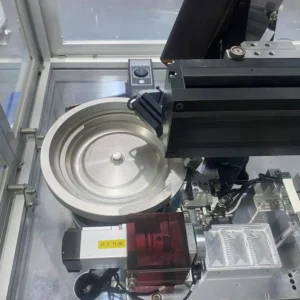
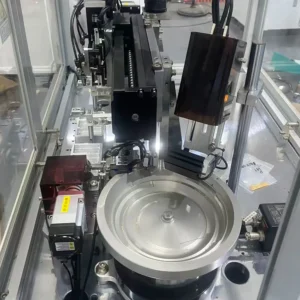
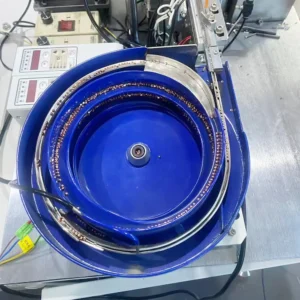
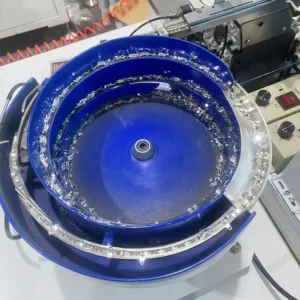
Titreşimli kase besleyiciler, adım besleyiciler, Ve esnek besleyiciler can handle different types of small parts.
The feeding system should match the shape, material, and production requirements of each component.

3. Choose Between Manual, Semi-Automatic, and Fully Automatic Assembly
Different production volumes need different levels of automation.
Manual Assembly
Manual assembly can work well for very small orders and frequent product changes.
It requires a lower initial investment. However, labor costs and production consistency can become concerns as output increases.
Semi-Automatic Assembly
Semi-automatic equipment combines operators with automated processes.
The machine can handle repetitive tasks such as:
- Part feeding
- Positioning
- Press fitting
- Screw fastening
- Inspection
- Counting
This option often works well for small batch production because operators can make product changes more easily.
Fully Automatic Assembly
Fully automatic systems can provide higher production output with less manual work.
They usually require higher initial investment and more detailed machine design.
Fully automatic assembly makes more sense when production volume is stable and the same product runs for long periods.

4. Look for a Flexible Assembly System
Flexibility becomes important when your product range is not fixed.
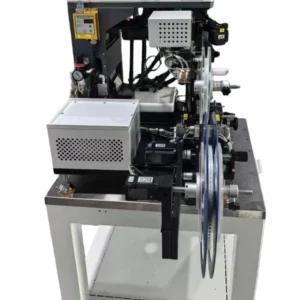
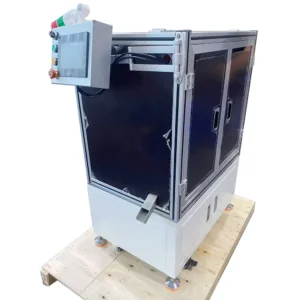
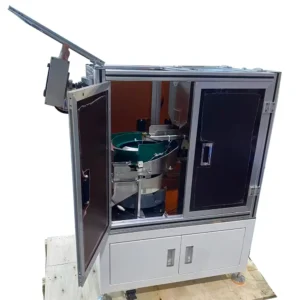
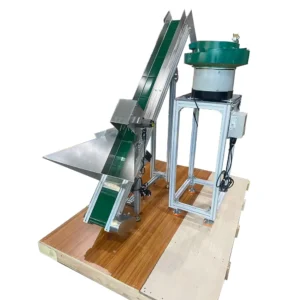
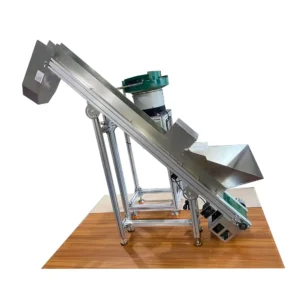
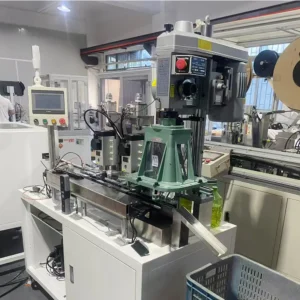
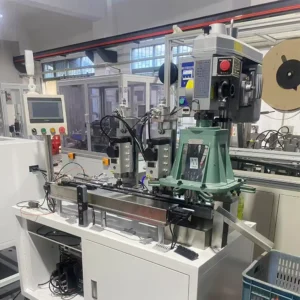
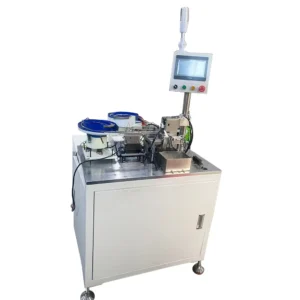
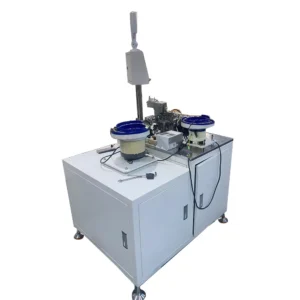
A modular assembly system can make future changes easier. Machine stations, feeders, fixtures, sensors, and inspection units can work together based on the product.
Useful customization options include:
- Titreşimli kase besleyiciler
- Esnek besleyiciler
- Adım besleyiciler
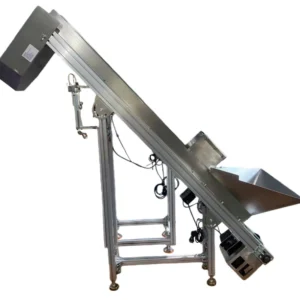
- Hopper elevator conveyors
- Vision inspection systems
- Assembly stations
- Robotic pick-and-place units
- Counting systems
- Product conveyors
Flexible equipment can also support different product models with changes to tooling, feeding tracks, or machine programs.
5. Compare Total Cost, Not Only Machine Price
Machine price is only one part of the total production cost.
Consider:
- Equipment cost
- Labor cost
- Tooling cost
- Maintenance cost
- Energy consumption
- Changeover time
- Production output
- Future upgrade costs
For small batch production, a lower-cost system may provide better value than a highly complex automatic line.
The best choice depends on your production volume, labor costs, product structure, and expected return on investment.
6. Consider Future Production Needs
Production requirements can change after you purchase the machine.
You may receive larger orders or add new product models. Your assembly system should leave room for future upgrades when possible.
Modular machine structures can make it easier to add:
- New feeding systems
- Additional assembly stations
- Vision inspection
- Automatic testing
- Additional conveyors
- Robotic handling
Planning for future production can prevent the need to replace the entire system later.
7. Choose a Custom Assembly System When Standard Equipment Is Not Enough
Standard assembly machines work well for simple and common applications.
However, many small batch products have unique structures and assembly requirements.
Custom assembly automation can combine feeding, positioning, assembly, inspection, and conveying in one system.
SWOER designs customized assembly machines based on the customer’s product structure and production requirements.
The process starts with product drawings and production requirements. SWOER then develops a 3D machine design for customer confirmation before production.
This approach helps match the machine to the actual assembly process instead of forcing the product into a standard machine design.

Çözüm
Choosing an assembly system for small batch production requires more than comparing machine prices.
Production volume, product structure, flexibility, automation level, and future demand all affect the final choice.
Semi-automatic systems can suit many small batch applications. Fully automatic systems can work better when production volume becomes stable and higher.
For products with special structures or complex assembly steps, customized assembly automation can provide a more suitable solution.
Need an Assembly System for Small Batch Production?
Have a small batch project with special assembly requirements?
SWOER can design a customized assembly system based on your product structure, production volume, and assembly process.
Send us your product drawings, part samples, or production requirements. Our team can review your application and recommend a suitable automation solution.
Tell us your product, target output, and assembly requirements.
Get a Custom Assembly Solution
 Turkish
  English
  Spanish (Mexico)
  Czech
Czech  Arabic
  Russian
  German
  French
  Italian
  Ukrainian
  Polish
  Romanian
  Bengali
  Portuguese (Portugal)
  Thai
Thai  Japanese
  Korean
  Hebrew
  Uzbek
Uzbek  Hindi
Hindi  Slovak
  Vietnamese
  Portuguese (Brazil)
  Spanish (Peru)
  Spanish (Spain)
  Spanish (Venezuela)