
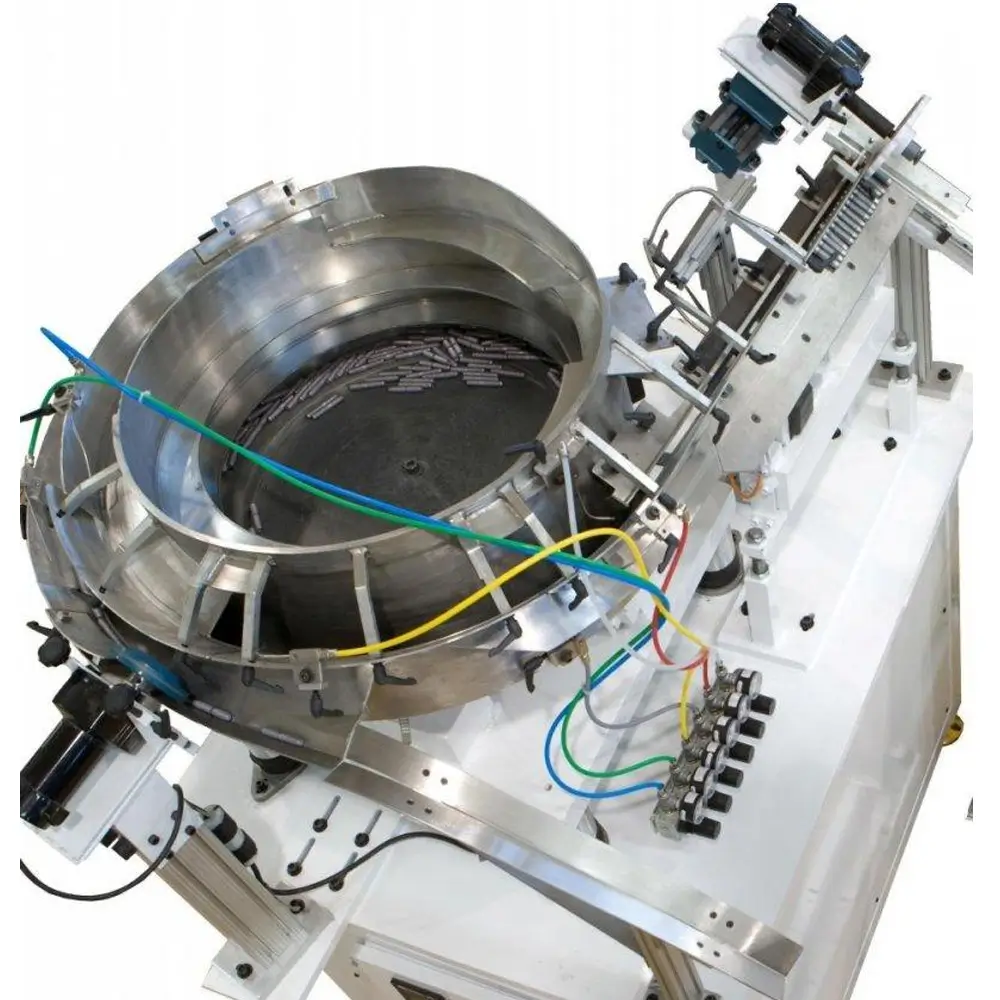
Bolt length sorting is an important step in fastener manufacturing. Different bolt lengths can cause problems during assembly. Manual inspection also takes time and may lead to sorting errors.
SWOER provides custom vibratory bowl feeder systems for automatic bolt feeding and sorting. The system can work with sensors, cameras, and mechanical sorting units. It helps manufacturers separate bolts by length and prepare parts for the next production step.
Why Do Manufacturers Need Automatic Bolt Length Sorting?
Bolt manufacturers often produce several sizes of fasteners. These bolts may look similar, but their lengths can differ.
Mixed bolt sizes can cause problems in assembly and packaging. Manual measurement also limits production speed.
Automatic bolt length sorting offers several benefits:
- Consistent inspection: The system checks bolt dimensions using preset inspection standards.
- Less manual work: Automatic feeding and sorting reduce the need for hand inspection.
- Separate output channels: Different bolt lengths can move into separate collection bins.
- Better production flow: Automatic sorting supports assembly, counting, and packaging processes.
- Manufacturers can also connect the sorting system to an existing production line.
How Does a Vibratory Bowl Feeder Sort Bolts by Length?
The alimentator vibrator cu bol supplies bolts to the inspection and sorting station in a controlled direction.
The system usually includes several working sections:
1. Automatic bolt feeding
Bolts enter the vibratory bowl in bulk. Vibration moves them along a custom spiral track. Special guide rails help control bolt position and direction.
2. Bolt orientation and alignment
Custom tracks guide bolts into the required position. The system can separate overlapping parts and control the distance between bolts.
3. Length inspection
A sensor or vision inspection unit checks each bolt. The inspection method depends on bolt shape, size, surface, and required accuracy.
4. Automatic sorting
The sorting unit directs bolts into different outlets. For example, short bolts and long bolts can enter separate collection bins. Defective or unqualified parts can also go to a reject outlet.
Vision Inspection or Mechanical Sorting: Which Method Is Better?
Different bolt sorting projects require different inspection methods. The best choice depends on the bolt design and inspection requirements.
| Inspection Method | Main Function | Suitable Applications |
|---|---|---|
| Mechanical sorting | Uses custom guides, gaps, or positioning structures | Bolts with clear length differences |
| Sensor inspection | Detects bolt position or length at a fixed point | Stable bolt shapes and defined inspection points |
| Vision inspection | Uses cameras to check bolt dimensions and appearance | Multiple specifications and visual defects |
Mechanical sorting can offer a simple solution for bolts with clear size differences. Sensor inspection works well when the inspection point remains consistent.
Vision inspection can check more than bolt length. It may also identify missing features, damaged heads, and other visible defects.
The final inspection method should match the actual samples and required accuracy. Testing with customer bolts helps confirm the design.
Custom Vibratory Bowl Feeder Solutions for Different Bolt Sizes
Bolt dimensions and production requirements vary between manufacturers. Standard feeding equipment may not suit every bolt type.
SWOER develops custom feeding and sorting systems based on customer samples and production needs.
Available customization options include:
- Custom bowl and track design: Matches bolt diameter, length, and head shape.
- Dual-track feeding: Supports two feeding paths when the production layout allows.
- Automatic separation: Directs different bolt sizes into separate outlets.
- Vision inspection integration: Connects cameras and inspection software when visual checks are needed.
- Counting system: Counts sorted bolts before collection or packaging.
- Hopper elevator conveyor: Supplies bolts to the bowl feeder for longer production runs.
- Soundproof enclosure: Helps reduce operating noise when required.
The system layout can also include support frames, conveyors, and connections to automatic assembly machines.
Why Choose SWOER for Automatic Bolt Sorting Equipment?
SWOER specializes in custom vibratory bowl feeders, flex feeders, step feeders, and automatic feeding systems.
Our engineers design feeding tracks and sorting structures based on customer parts and production requirements. We can also integrate vision inspection, counting systems, conveyors, and other automation equipment.
SWOER supports customers from equipment design to production and delivery. Before manufacturing, our team can prepare a 3D design for customer review and confirmation.
After delivery, SWOER provides technical support and installation guidance.
Whether your project requires simple bolt length separation or a complete automatic inspection and sorting line, SWOER can develop a solution around your actual production needs.
Contactați SWOER to discuss your bolt samples, length ranges, sorting requirements, and target production speed.

 Romanian
 English
 Spanish (Mexico)
 Czech
 Arabic
 Russian
 German
 French
 Turkish
 Italian
 Ukrainian
 Polish
 Bengali
 Portuguese (Portugal)
 Thai
 Japanese
 Korean
 Hebrew
 Uzbek
 Hindi
 Slovak
 Vietnamese
 Portuguese (Brazil)
 Spanish (Peru)
 Spanish (Spain)
 Spanish (Venezuela)