
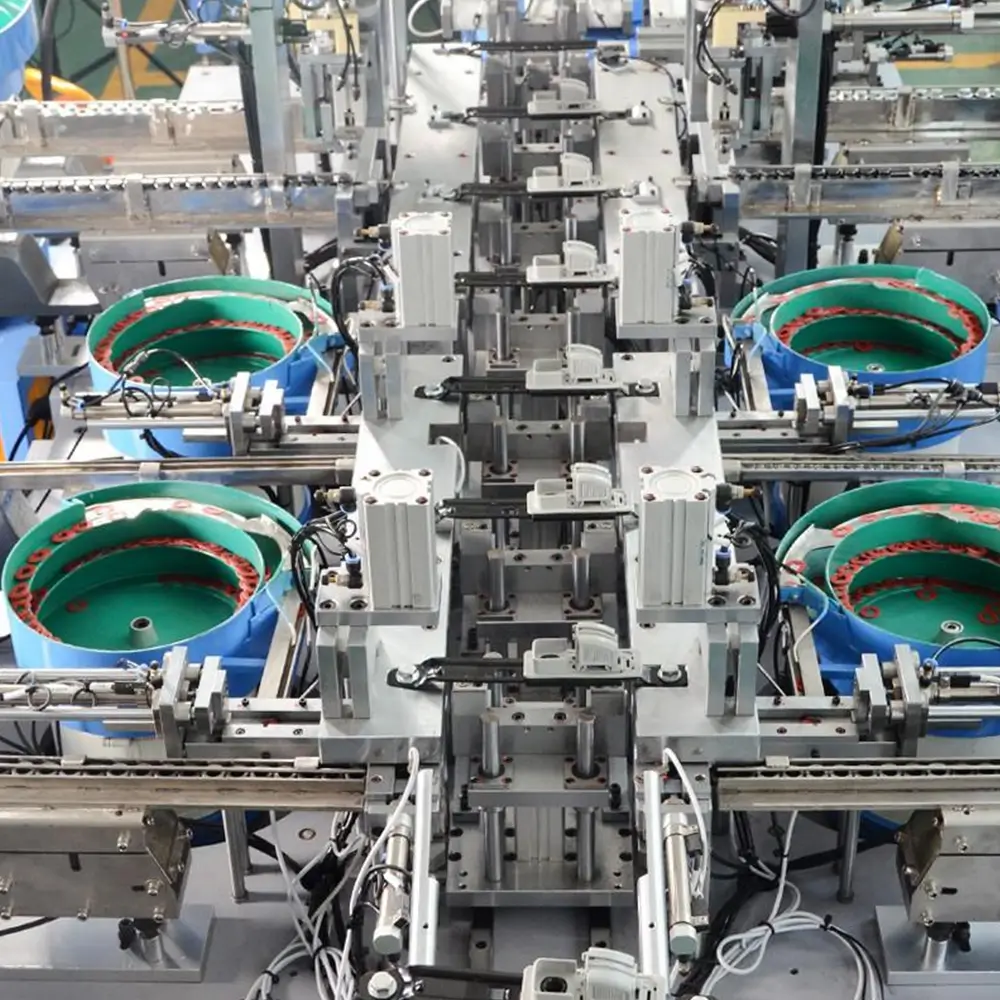
Automotive parts require accurate assembly, stable production, and consistent quality. Manual assembly can work for low-volume production, but higher output often requires better control and repeatability.
Automatic assembly machines help manufacturers feed, position, assemble, test, and inspect automotive components with less manual work. Manufacturers can also combine several production steps into one machine.
For companies producing clips, springs, washers, connectors, switches, plastic components, and other automotive parts, custom assembly automation can improve production efficiency while maintaining consistent assembly quality.
What Are Automatic Assembly Machines for Automotive Parts?
Automatic assembly machines combine mechanical systems, feeding equipment, sensors, robots, and control systems to complete multiple assembly tasks.
Each machine can follow a different production process based on the automotive part and assembly requirements.
Typical processes include:
- Automatic part feeding
- Part sorting and orientation
- Component positioning
- Press fitting
- Screw tightening
- Spring installation
- Clip assembly
- Grease application
- Vision inspection
- Functional testing
- Product marking
- Automatic unloading
Manufacturers can also connect the machine with conveyors or other assembly line machines to create a complete production line.
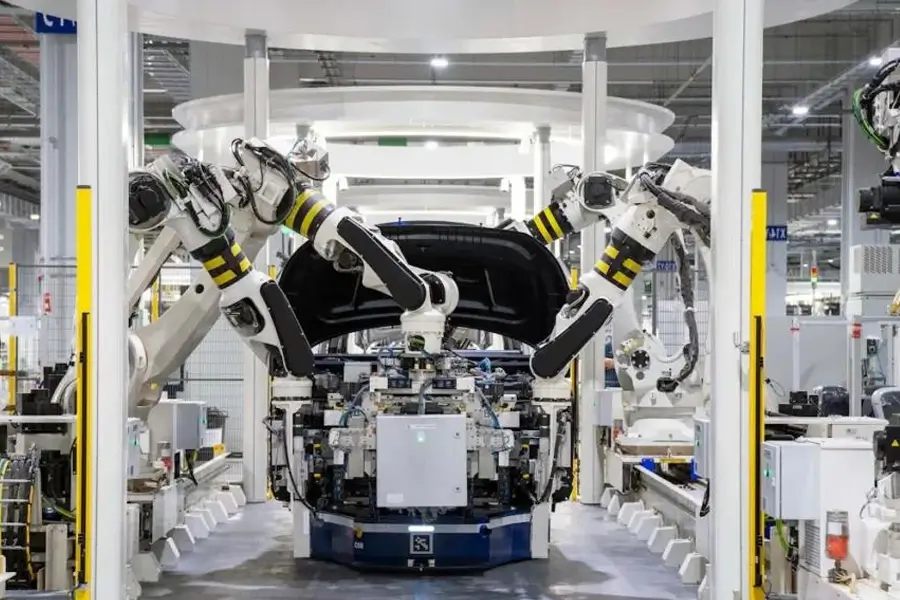
Why Use Automation for Automotive Parts Assembly?
Automotive component production often involves small parts and repeated assembly operations. Manual work can create differences between operators and limit production speed.
Automatic assembly machines provide better control over these repeated operations.
Higher Production Output
Automated feeding and assembly systems can run continuously with limited operator intervention. Production teams can therefore handle higher output without adding the same amount of manual labor.
Consistent Assembly Quality
Machines follow programmed movements and controlled assembly parameters. Consistent positioning, pressing, tightening, and inspection help reduce variations between products.
Lower Manual Work
Automatic feeding and assembly reduce repetitive tasks for operators. Workers can instead focus on machine monitoring, material supply, quality checks, and production management.
Integrated Quality Inspection
Vision cameras and sensors can check components during the assembly process. Inspection systems can detect missing parts, incorrect positions, wrong orientations, and other assembly problems.
What Automotive Parts Can Assembly Machines Handle?
Automotive assembly automation can handle many types of components. The machine design depends on the part shape, material, size, assembly method, and required production speed.
Common applications include:
| Automotive Part | Possible Assembly Process |
| Plastic Clips | Feeding, positioning, insertion, inspection |
| Molas | Feeding, orientation, insertion |
| Washers | Feeding, positioning, pressing |
| Connectors | Component feeding, insertion, testing |
| Switch Components | Feeding, assembly, electrical testing |
| Rubber Components | Feeding, positioning, pressing |
| Fasteners | Feeding, sorting, tightening |
| Gear Components | Feeding, positioning, assembly |
| Small Plastic Parts | Feeding, assembly, vision inspection |
| Sensor Components | Component assembly, testing, marking |
Manufacturers can also combine several components within one machine when the product requires multi-step assembly.
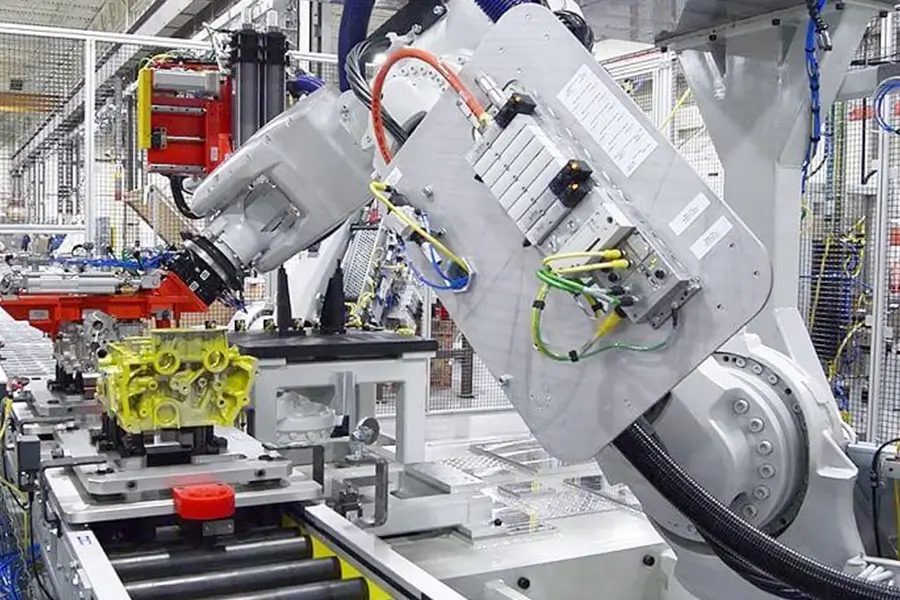
How Does an Automotive Parts Assembly Machine Work?
Most automatic assembly machines follow a series of controlled steps.
Step 1 — Automatic Part Feeding
Feeding systems deliver components from bulk storage to the assembly station.
Alimentadores de tigela vibratória work well for many small automotive components. Alimentadores centrífugos, alimentadores flexíveis, alimentadores de passo, and conveyors can handle other part shapes and production requirements.
Step 2 — Part Orientation
The feeding system separates and orients components before they reach the assembly station.
Correct orientation helps the assembly mechanism position each component accurately.
Step 3 — Component Positioning
Fixtures or positioning mechanisms hold the components in the correct location.
Servo motors, pneumatic cylinders, linear modules, and robotic systems can control different positioning operations.
Step 4 — Automatic Assembly
The machine performs the required assembly operation.
Depending on the product, the process may include pressing, inserting, fastening, snapping, riveting, or other mechanical operations.
Step 5 — Inspection and Testing
Sensors and vision systems check the assembly result.
Testing systems can also measure dimensions, force, electrical performance, leakage, or other product requirements.
Step 6 — Automatic Unloading
After the machine completes assembly and inspection, the system sends qualified products to the next production step.
Defective products can move to a separate collection area for further inspection.
How to Choose an Automotive Parts Assembly Machine
Choosing the right automotive parts assembly machine requires more than checking the machine’s maximum speed.
Manufacturers should first define the part, assembly process, production target, and quality requirements.
Tamanho e forma da peça
Small, lightweight, flexible, or irregular components may require different feeding methods.
Part drawings and physical samples help engineers select suitable feeding and positioning systems.
Assembly Process
The required assembly operation determines the machine structure.
Press fitting, screw tightening, spring installation, clip insertion, and electrical testing each require different mechanisms.
Production Capacity
Target output directly affects the number of assembly stations, feeding systems, and automation units.
Manufacturers should provide the required output per hour or per day when requesting a machine design.
Inspection Requirements
Products with strict quality requirements may need cameras, sensors, force monitoring, dimensional checks, or functional testing.
Early inspection planning helps engineers integrate quality control into the machine rather than adding separate inspection work later.
Factory Space
Machine dimensions and production layout also affect the final design.
Engineers can arrange feeding systems, assembly stations, conveyors, control cabinets, and safety guards around the available factory space.
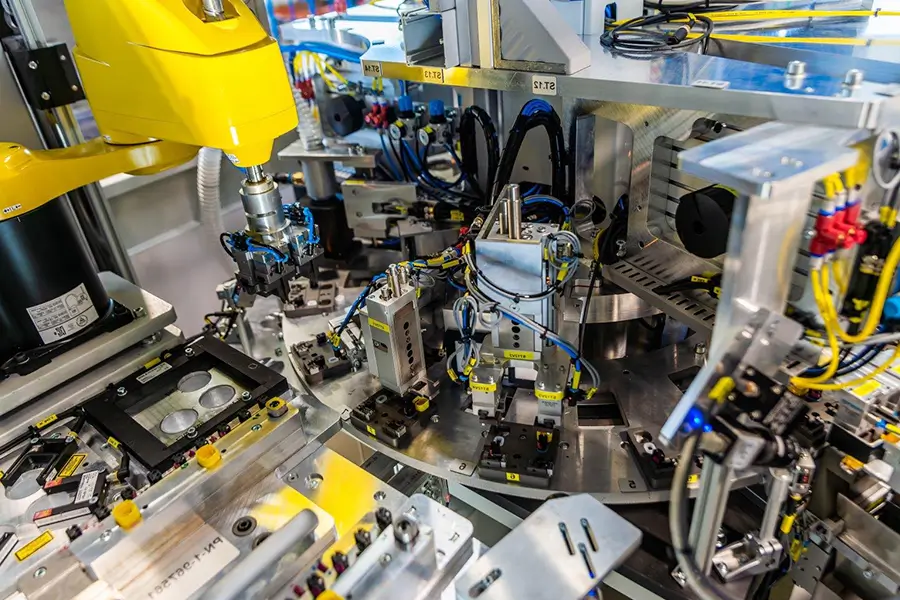
Custom Automotive Assembly Machines from SWOER
SWOER develops custom automatic assembly machines for different automotive components and production processes.
The engineering process starts with the customer’s product information and assembly requirements.
Customers can provide:
- Product drawings
- 3D files
- Physical samples
- Assembly process information
- Target production capacity
- Inspection requirements
- Factory space information
SWOER can then design the machine structure and 3D layout for customer review before production.
The final machine can combine feeding, assembly, testing, vision inspection, conveying, and other automation functions according to the application.
After delivery, SWOER also provides technical guidance for machine installation, operation, and adjustment.
When Should Manufacturers Consider Assembly Automation?
Automation makes the most sense when production involves repetitive assembly tasks, stable product demand, and clear quality requirements.
Manufacturers should consider an automatic assembly machine when they need to:
- Increase production output
- Reduce repetitive manual work
- Improve assembly consistency
- Reduce assembly errors
- Integrate inspection into production
- Control production cycle times
- Build a complete automated assembly line
Low-volume production may still benefit from automation when the assembly process requires high precision or strict quality control.
Conclusão
Automatic assembly machines help automotive parts manufacturers handle repetitive production tasks with better speed, consistency, and process control.
The right system depends on the automotive part, assembly process, production volume, inspection requirements, and factory layout.
For customized automotive parts assembly, SWOER can combine automatic feeding, assembly, testing, inspection, and conveying systems into one production solution.
Need an automatic assembly machine for your automotive parts? Send your product drawings or samples to SWOER and discuss your assembly requirements with the engineering team.
Contato SWOER
 Portuguese (Portugal)
  English
  Spanish (Mexico)
  Czech
Czech  Arabic
  Russian
  German
  French
  Turkish
  Italian
  Ukrainian
  Polish
  Romanian
  Bengali
  Thai
Thai  Japanese
  Korean
  Hebrew
  Uzbek
Uzbek  Hindi
Hindi  Slovak
  Vietnamese
  Portuguese (Brazil)
  Spanish (Peru)
  Spanish (Spain)
  Spanish (Venezuela)