
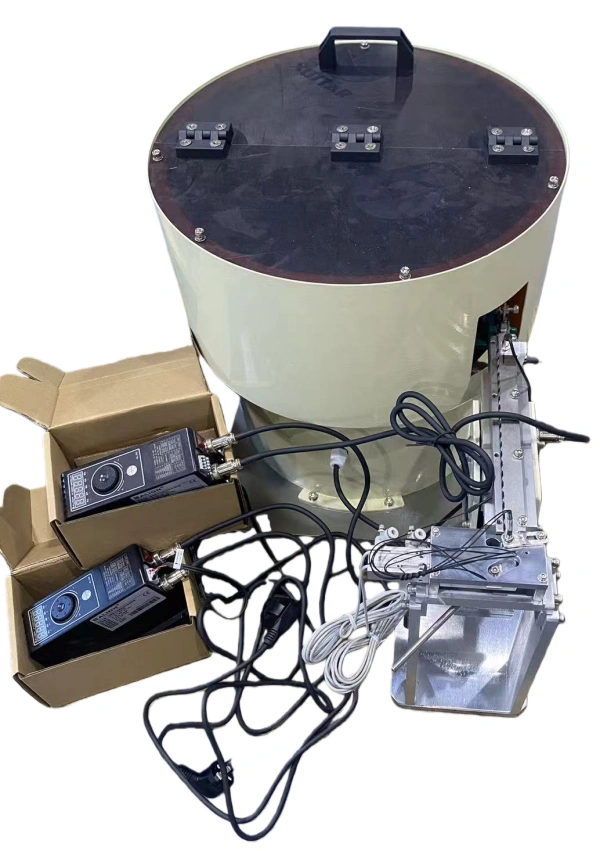
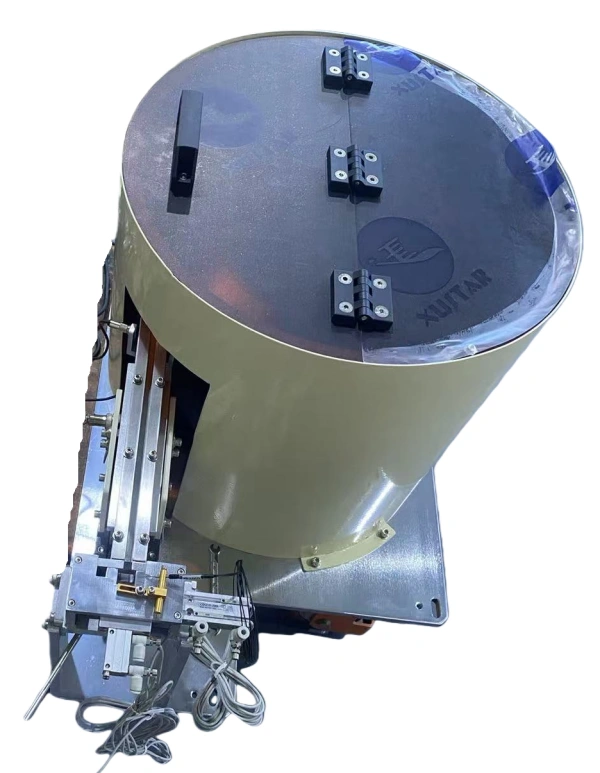
Adding a soundproof enclosure (also called an acoustic cover or noise-reducing hood) to a vibratory bowl feeder significantly improves workplace conditions and operational efficiency. Below are the primary functions and benefits.
I. Functions of a Soundproof Enclosure
1. Noise Reduction
Función: Blocks and absorbs airborne sound generated by the vibrating bowl and parts colliding with the bowl wall and track.
Mechanism: The enclosure is typically lined with acoustic foam or other sound-absorbing materials, while the outer shell reflects sound inward.
2. Physical Isolation
Función: Creates a physical barrier between the operating vibratory bowl and the surrounding environment.
Mechanism: The enclosure covers the bowl entirely, often with transparent windows for visibility and access doors for maintenance.
3. Dust and Debris Containment
Función: Prevents fine particles, dust, or small parts from escaping into the work area.
Mechanism: The sealed design contains airborne particles generated during feeding.
4. Safety Protection
Función: Provides a guard against moving parts (the vibrating bowl and track).
Mechanism: Prevents accidental contact by operators or foreign objects with the bowl mechanism.
5. Temperature Stabilization (Optional)
Función: Helps maintain a more consistent internal temperature, particularly important for temperature-sensitive materials or adhesives.
Mechanism: Slows heat exchange with the environment, reducing the impact of ambient temperature fluctuations.
6. Visual Access
Función: Allows operators to observe the feeding process without opening the enclosure.
Mechanism: Transparent windows or panels (e.g., polycarbonate or acrylic) are incorporated into the cover.
II. Benefits of a Soundproof Enclosure
1. Improved Worker Health and Comfort
Benefit: Reduces operator exposure to high noise levels, which is a known workplace hazard (hearing loss, fatigue, stress).
Result: Lower risk of noise-induced hearing loss and improved morale.
2. Regulatory Compliance
Benefit: Helps meet occupational noise exposure regulations.
Result: Avoid fines, legal liabilities, and the need for mandatory hearing protection programs.
3. Enhanced Concentration and Communication
Benefit: Lower background noise makes it easier for operators to concentrate and communicate verbally.
Result: Fewer errors and improved teamwork.
4. Reduced Dust Contamination
Benefit: Contains dust, small parts, and debris that might otherwise escape into the work area.
Result: Keeps the production area cleaner and reduces cleaning labor.
5. Protection from External Contaminants
Benefit: Prevents dust, liquid spills, or falling objects from entering the bowl.
Result: Maintains part cleanliness and prevents bowl damage or jams.
6. Lower Overall Plant Noise Level
Benefit: Significant reduction in noise radiating from the bowl feeder to the rest of the facility.
Result: Quieter factory environment benefits all workers, even those not directly operating the bowl.
7. Safety Compliance
Benefit: Provides a physical guard around moving parts, meeting machine guarding requirements.
Result: Safer workplace and compliance with machine safety standards (e.g., ISO 12100, OSHA 1910.212).
8. Reduced Rework from Part Contamination
Benefit: Contains dust and debris generated by part-to-part or part-to-bowl contact.
Result: Keeps sensitive parts (electronics, medical devices) cleaner, reducing downstream rework.
9. Visual Monitoring Without Opening
Benefit: Transparent panels allow operators to see the bowl’s operation without exposing themselves to noise or removing the guard.
Result: Quicker troubleshooting and safer operation.
10. Lower Insurance and Liability Risk
Benefit: Demonstrates proactive attention to hearing conservation and machine guarding.
Result: Potentially lower worker compensation insurance premiums and reduced liability exposure.
III. Summary Table: Benefits at a Glance
| Benefit Category | Key Outcome |
|---|---|
| Worker Health | Reduced hearing damage risk |
| Regulatory Compliance | Meets noise exposure limits |
| Communication | Easier verbal communication |
| Housekeeping | Contains dust and debris |
| Part Quality | Protects from external contaminants |
| Safety | Physical guarding of moving parts |
| Plant Noise | Quieter overall work environment |
| Productivity | Less distraction; fewer interruptions |
| Monitoring | Visual access without opening |
IV. Typical Noise Reduction Achievable
| Condition | Noise Level (Approximate) |
|---|---|
| Without Enclosure (bare bowl) | 85–100 dBA (depending on part size, material, bowl size) |
| With Soundproof Enclosure | 70–80 dBA (typical 10–20 dBA reduction) |
| With Enclosure + Additional Measures (acoustic base, damped track) | As low as 65–75 dBA |
Note: A 10 dBA reduction is perceived by the human ear as roughly half as loud.
Resumen: A soundproof enclosure for a vibratory bowl feeder provides a compelling combination of worker health protection, regulatory compliance, safety guarding, and cleanliness benefits. It significantly reduces noise exposure, contains dust, protects the bowl from contamination, and helps meet occupational safety standards. For any vibratory bowl operating in a manned production area, a well-designed acoustic enclosure is a valuable investment that pays dividends in worker well-being, productivity, and compliance.


 Spanish (Peru)
  English
  Spanish (Mexico)
  Czech
Czech  Arabic
  Russian
  German
  French
  Turkish
  Italian
  Ukrainian
  Polish
  Romanian
  Bengali
  Portuguese (Portugal)
  Thai
Thai  Japanese
  Korean
  Hebrew
  Uzbek
Uzbek  Hindi
Hindi  Slovak
  Vietnamese
  Portuguese (Brazil)
  Spanish (Spain)
  Spanish (Venezuela)
Reseñas
No hay ninguna reseña todavía.