
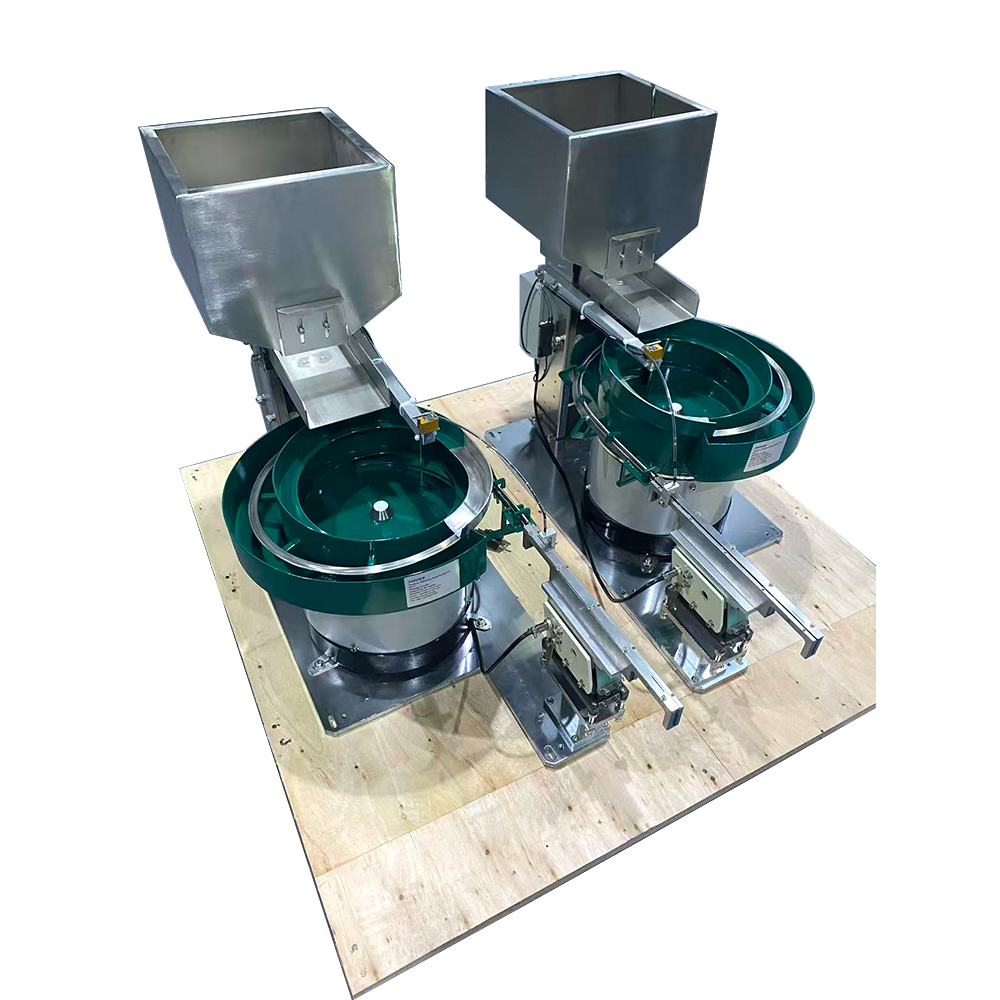
Manufacturers use many tools to automate production.
A vibratory bowl feeder is one of them.
It helps move and sort small parts quickly.
Therefore, many factories rely on it daily.
Understanding a Vibratory Bowl Feeder
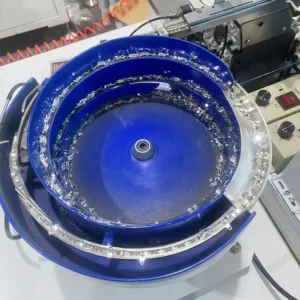
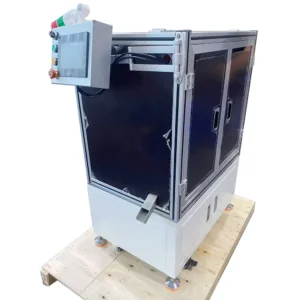
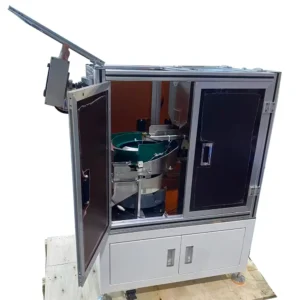
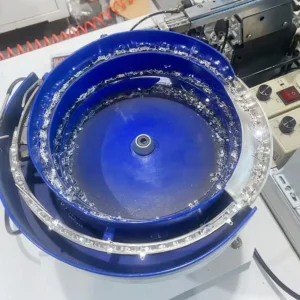
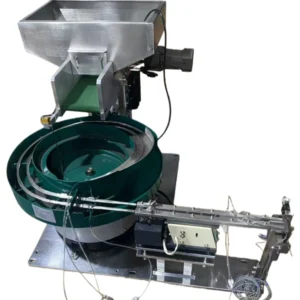
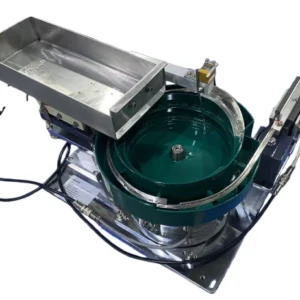
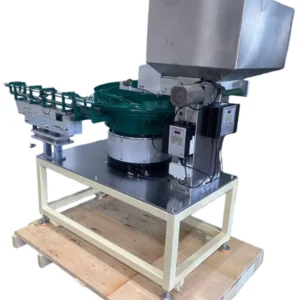
Vibratory bowl feeders move parts through vibration.
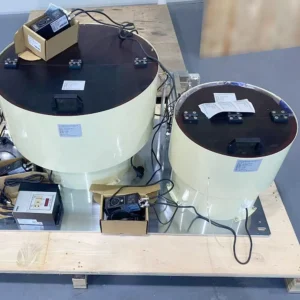
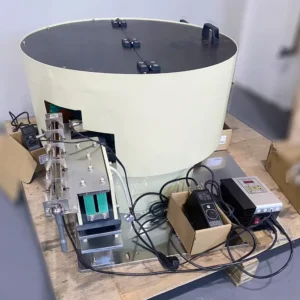
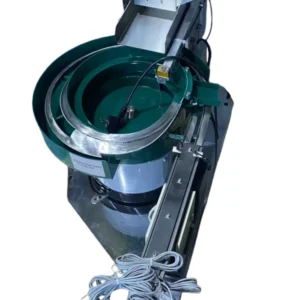
It contains a bowl, a base, and a track.
First, the bowl is gently shaken by vibration.
Next, parts climb along the spiral track.
Then, the system aligns each part correctly.
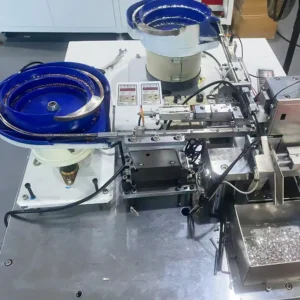
As a result, machines receive parts in the order they are needed.
Main Uses of a Vibratory Bowl Feeder
Qismning yo'nalishi
Many production lines need correctly positioned parts.
For example, screws must face the same direction.
Therefore, the feeder sorts and aligns them.
Consequently, machines work faster and more accurately.
Automated Feeding
Factories must supply parts continuously.
However, manual feeding slows production.
Thus, vibratory feeders deliver parts automatically.
As a result, workers can focus on other tasks.
High-Speed Assembly
Assembly lines often run at high speed.
Therefore, parts must arrive quickly and consistently.
Vibratory feeders maintain a steady flow.
Consequently, production efficiency increases.
Handling Small Components
Many industries handle tiny components.
For instance, electronics factories use micro parts.
Similarly, medical device factories use small pieces.
Thus, vibratory feeders move these parts safely.
Industries That Use Vibratory Bowl Feeders
Several industries rely on this equipment.
- Electronics manufacturing
- Automotive assembly
- Medical device production
- Packaging equipment
- Consumer goods manufacturing
Therefore, vibratory bowl feeders play a key role in automation.
Benefits of Using Vibratory Bowl Feeders
Companies choose these feeders for several reasons.
First, they improve production speed.
Second, they reduce manual labor.
Moreover, they ensure accurate part orientation.
In addition, they support continuous operation.
As a result, factories gain higher productivity.
Xulosa
Vibratory bowl feeder supports modern automation.
It moves, sorts, and aligns parts efficiently.
Therefore, it improves assembly line performance.
Consequently, many industries depend on this technology.

 Uzbek
Uzbek  English
  Spanish (Mexico)
  Czech
Czech  Arabic
  Russian
  German
  French
  Turkish
  Italian
  Ukrainian
  Polish
  Romanian
  Bengali
  Portuguese (Portugal)
  Thai
Thai  Japanese
  Korean
  Hebrew
  Hindi
Hindi  Slovak
  Vietnamese
  Portuguese (Brazil)
  Spanish (Peru)
  Spanish (Spain)
  Spanish (Venezuela)