
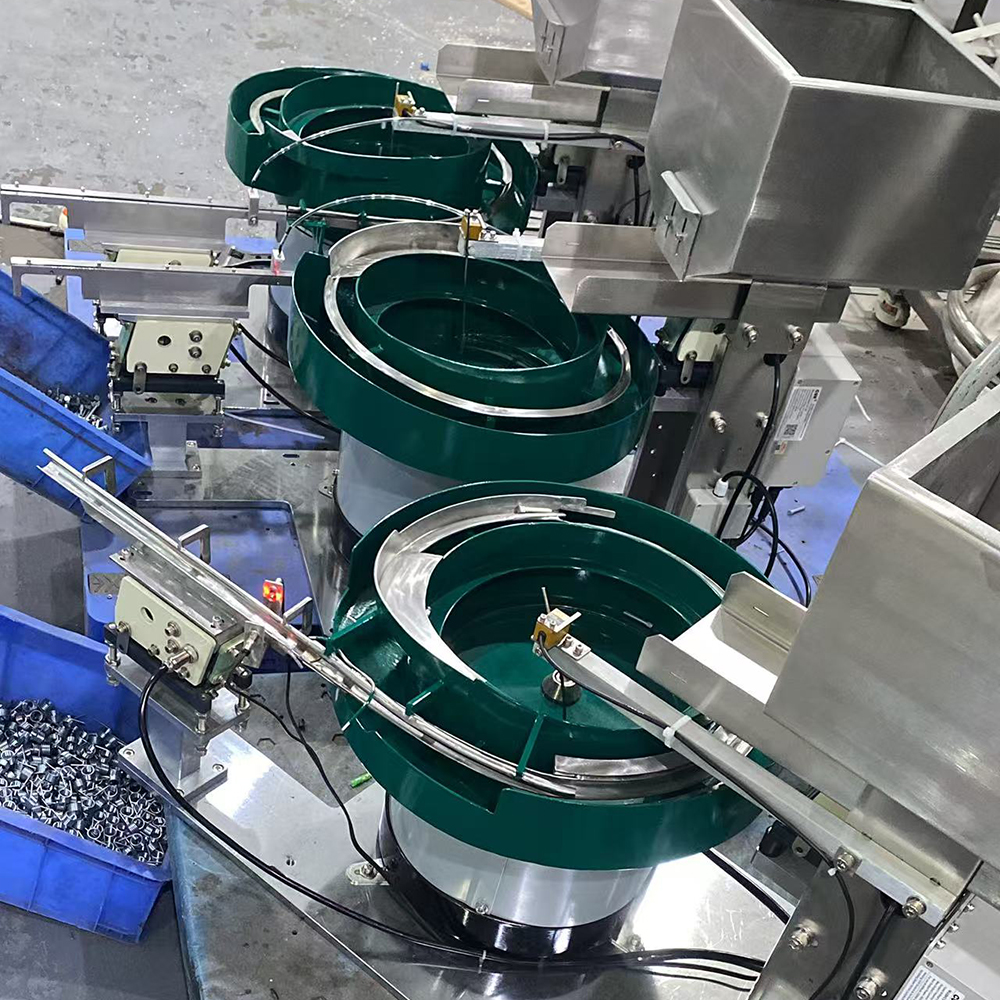
Small parts assembly needs precision and speed. Therefore, many factories use vibratory bowl feeders. These systems sort and orient components automatically.
However, selecting the right feeder can be challenging. Many factors influence performance. This guide explains how to choose the right vibratory bowl feeder. In addition, it highlights how Swoer solutions support modern automation.
Understand Your Part Characteristics
First, analyze the parts you need to feed. Size, weight, and shape all matter.
For example, metal screws behave differently from plastic caps. In addition, fragile parts require smoother handling.
Consider these factors:
- Part dimensions
- Material type
- Surface condition
- Fragility
As a result, understanding part characteristics prevents feeding problems.
In many projects, Swoer engineers analyze parts before designing the feeder. Therefore, the system matches the part structure and improves feeding stability.
Determine the Required Feed Rate
Next, calculate the required feed rate. This means the number of parts delivered per minute.
For instance, high-speed assembly lines need faster feeding. However, smaller production lines require lower capacity.
Therefore, the feeder must match the production rhythm. Otherwise, feeding interruptions may occur.
Many manufacturers, including Swoer, design feeders based on production requirements. Consequently, the feeding system supports stable assembly operations.
Select the Correct Bowl Size
Bowl size strongly affects efficiency. Larger bowls can store more parts.
However, oversized bowls increase energy use. They also occupy more production space.
Instead, choose a bowl size that matches the part volume and feed rate. This improves efficiency and reduces vibration.
For example, Swoer custom bowl feeders are designed to balance capacity and stability. As a result, production lines maintain consistent feeding.
Evaluate Part Orientation Requirements
Orientation plays a key role in automated assembly.
For example, bolts, pins, and caps must face the correct direction. Therefore, the feeder needs precise orientation tooling.
Custom tracks and selectors guide parts into position. In addition, correct orientation reduces manual correction.
Companies like Swoer specialize in custom tooling design. Consequently, parts can be sorted and oriented accurately.
Consider Bowl Material and Surface Coating
Bowl material affects durability and part protection.
Common options include:
- Stainless steel bowls
- Aluminum bowls
- Polyurethane coatings
For example, coated bowls reduce noise and protect delicate parts. Meanwhile, stainless steel provides strong durability.
Therefore, material selection depends on production conditions.
Many Swoer bowl feeders include special coatings. As a result, noise is reduced, and parts remain protected during feeding.
Check Noise and Vibration Control
Vibratory systems generate noise during operation. Therefore, vibration control is important.
Modern feeders include vibration isolation bases and sound-reducing coatings. In addition, optimized track design lowers impact noise.
For instance, Swoer feeding systems focus on stable vibration control. Consequently, factories achieve quieter and more comfortable working environments.
Ensure Easy Maintenance
Maintenance directly affects production uptime. Therefore, feeders should allow easy cleaning and adjustment.
For example, modular tooling simplifies maintenance. In addition, removable components speed up servicing.
Many Swoer feeders are designed with accessible structures. As a result, technicians can complete maintenance quickly.
Work with a Professional Feeder Manufacturer
Finally, choose a reliable manufacturer. Experienced suppliers understand complex feeding challenges.
They also provide custom engineering and technical support.
Working with specialists like Swoer helps companies achieve reliable automation. In addition, expert design reduces installation risks and improves long-term performance.
Concluzie
Choosing the right alimentator vibrator cu bol requires careful evaluation.
First, analyze part characteristics. Next, determine feed rate and bowl size. Also consider orientation, materials, and maintenance.
With professional support from companies such as Swoer, manufacturers can build efficient small parts assembly lines and improve automation productivity.

 Romanian
  English
  Spanish (Mexico)
  Czech
Czech  Arabic
  Russian
  German
  French
  Turkish
  Italian
  Ukrainian
  Polish
  Bengali
  Portuguese (Portugal)
  Thai
Thai  Japanese
  Korean
  Hebrew
  Uzbek
Uzbek  Hindi
Hindi  Slovak
  Vietnamese
  Portuguese (Brazil)
  Spanish (Peru)
  Spanish (Spain)
  Spanish (Venezuela)