
What Parts Make Up a Vibratory Bowl Feeder?
I. Main Mechanical Components
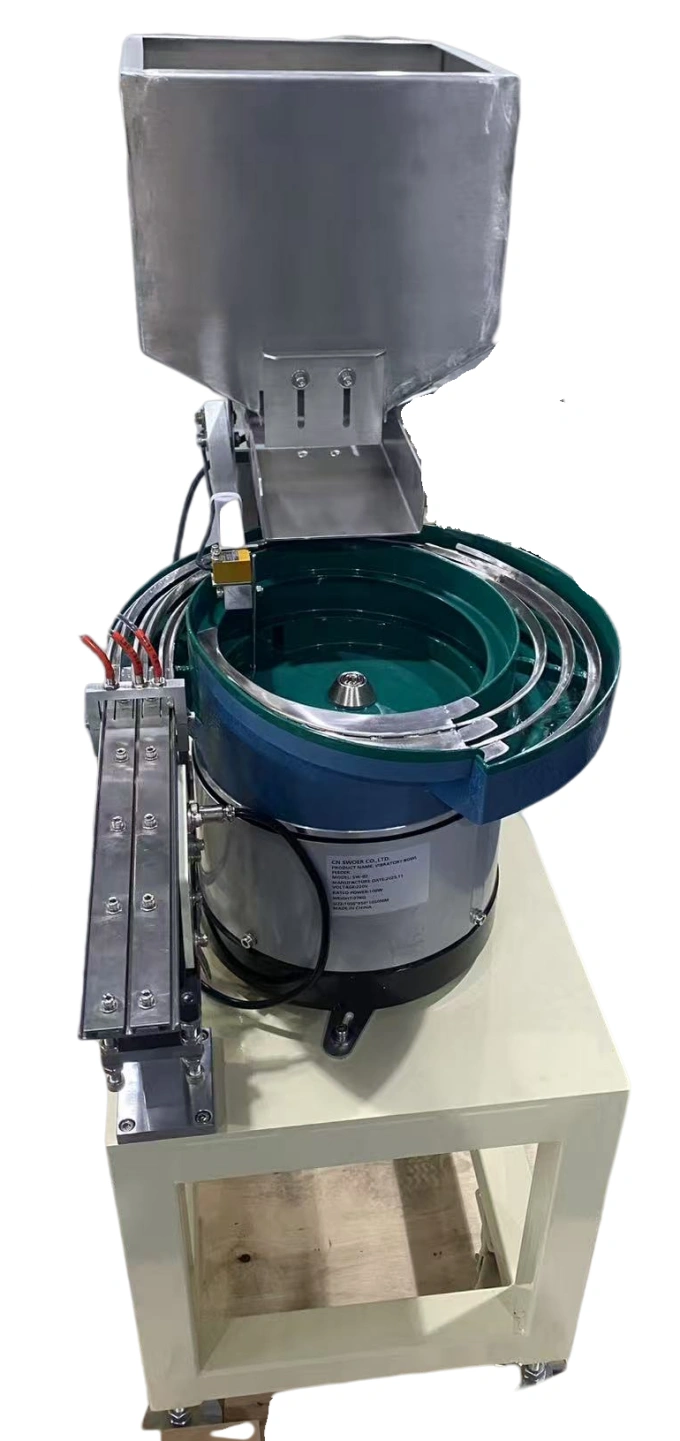
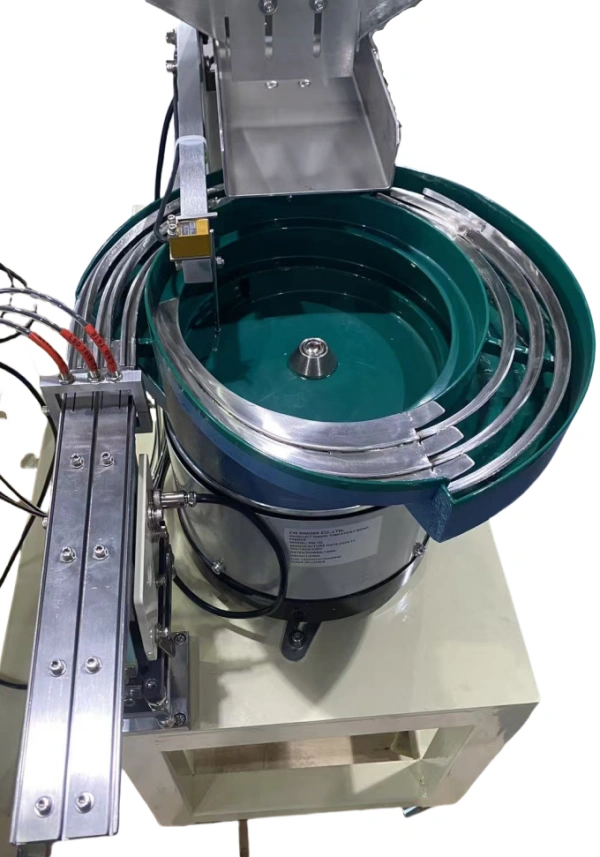
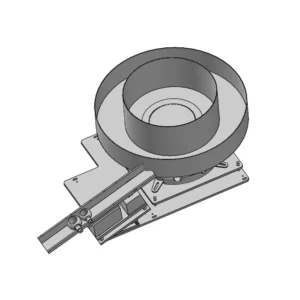
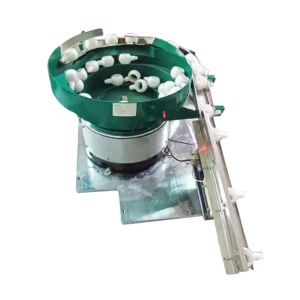
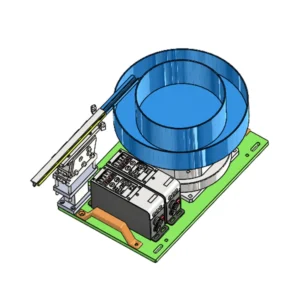
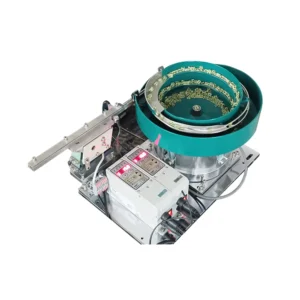
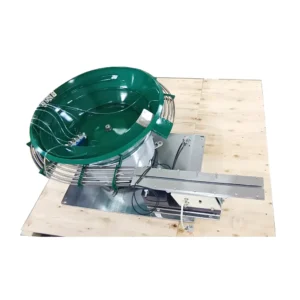
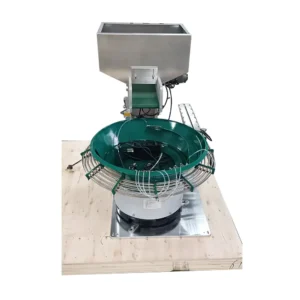
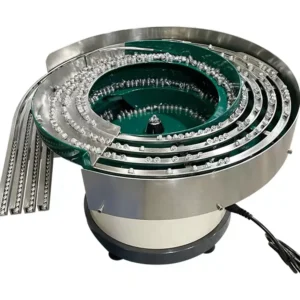
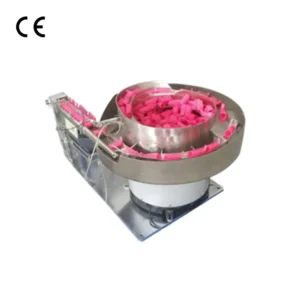
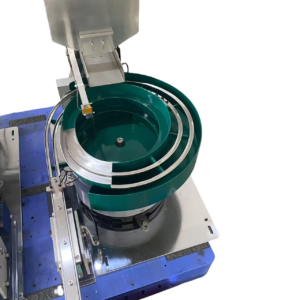
Bowl (Bowl Body): The main spiral, conical container, typically made of stainless steel.
Track (Bowl Tooling): The spiral path inside the bowl. It includes orienting devices like wiper blades, gaps, and air jets to sort and orient parts.
Base/Support Frame: The rigid structure supporting the entire assembly.
Electromagnet: The core driver that generates pulsed magnetic force.
Armature: Connected to the bowl, it is alternately attracted and released by the electromagnet.
Leaf Springs: Elastic components connecting the bowl to the base. Their stiffness and angle determine vibration amplitude and direction.
II. Electrical & Control Components
Kontroler: Regulates the electromagnet.
Variable Voltage: Adjusts amplitude.
Variable Frequency: Adjusts vibration frequency.
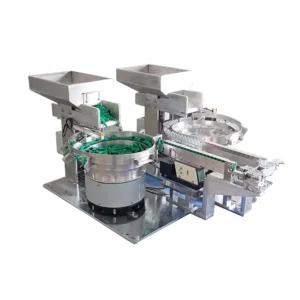
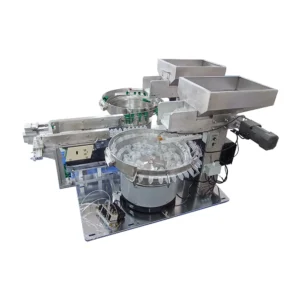
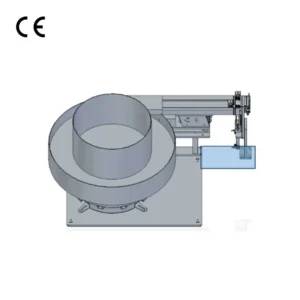
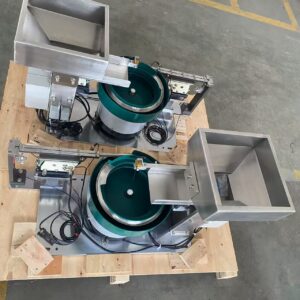
Linear Feeder: A straight track connected to the bowl outlet, transporting parts smoothly to the next station. It has its own drive unit.
III. Auxiliary & Optional Components
Hopper/Supply Bin: A large-capacity container for bulk storage and automatic replenishment.
Sensors: Photoelectric or fiber optic sensors at the discharge detect part presence for automated control.
Coatings: Track surfaces may have Teflon, rubber, or polyurethane coatings to control friction and protect parts.
Summary: At its core, a vibratory bowl is a magnetically driven, spring-suspended bowl. The precision track inside sorts and orients parts, while the controller fine-tunes its operation.
 Polish
  English
  Spanish (Mexico)
  Czech
Czech  Arabic
  Russian
  German
  French
  Turkish
  Italian
  Ukrainian
  Romanian
  Bengali
  Portuguese (Portugal)
  Thai
Thai  Japanese
  Korean
  Hebrew
  Uzbek
Uzbek  Hindi
Hindi  Slovak
  Vietnamese
  Portuguese (Brazil)
  Spanish (Peru)
  Spanish (Spain)
  Spanish (Venezuela)
Opinie
Na razie nie ma opinii o produkcie.