
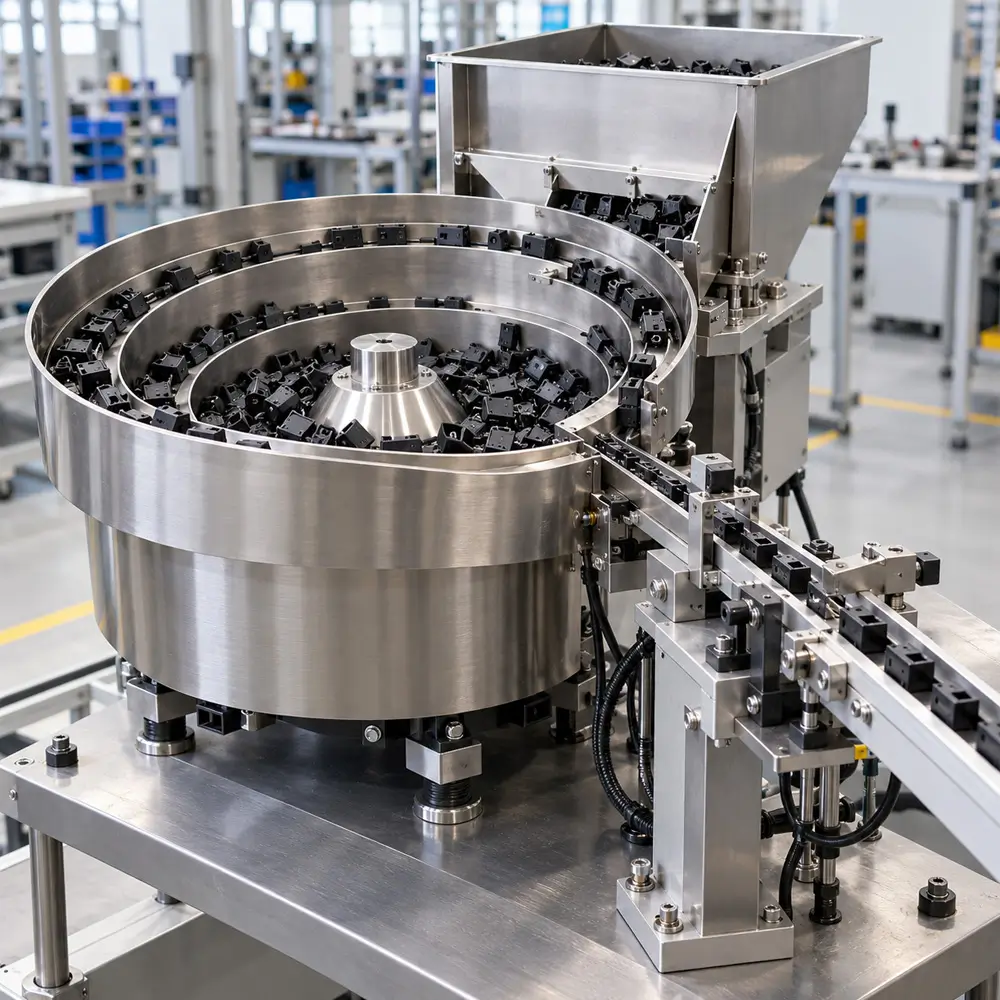
Getting quotes for a vibratory bowl feeder for switches starts with clear part and production requirements. Switch housings, buttons, contacts, and springs each present different feeding challenges.
Price alone cannot show whether a feeder will suit your assembly process. The quotation should also explain the required orientation, output rate, equipment scope, and machine connection.
This guide explains what affects feeder cost, which details to prepare, and how to compare supplier quotations.
Which Switch Parts Need Custom Feeding?
Switch production involves several components with different shapes, materials, and handling needs. Suppliers should assess each component separately before selecting a feeding method.
Common parts to review include:
- Plastic housings for rocker switches and microswitches.
- Push buttons, caps, and actuators.
- Metal terminals and contact pieces.
- Small screws and fastening parts.
- Springs that may require separate handling.
For example, plastic housings may need a specific opening to face upward. Metal contacts may require careful handling to protect their working surfaces.
Small springs can tangle, while thin terminals may overlap. Sample testing determines whether conventional bowl tooling can handle these parts reliably.
When requesting a custom vibratory bowl feeder, identify the exact component. Clarify whether you need to feed loose parts or completed switches.
What Affects the Cost of a Switch Bowl Feeder?
Switch feeder pricing depends on the work needed to separate, orient, and deliver your parts.
Part Shape and Required Orientation
Distinctive features can give the tooling a clear way to identify the correct position. Nearly symmetrical parts may require additional checks.
Deep cavities, projecting terminals, and delicate surfaces also influence the design. Suppliers need to understand which features can contact the track.
Feed Rate and Outlet Arrangement
Specify the number of correctly oriented parts your assembly station needs per minute.
Higher output may require different tooling, additional outlets, or more storage capacity. However, the supplier should confirm practical output through testing.
Multiple lanes also require clear specifications. State whether each lane feeds a separate station or supplies one shared process.
Equipment Scope and Optional Features
The quotation may cover only the bowl and drive. Alternatively, it may include a complete feeding system.
Options to discuss include:
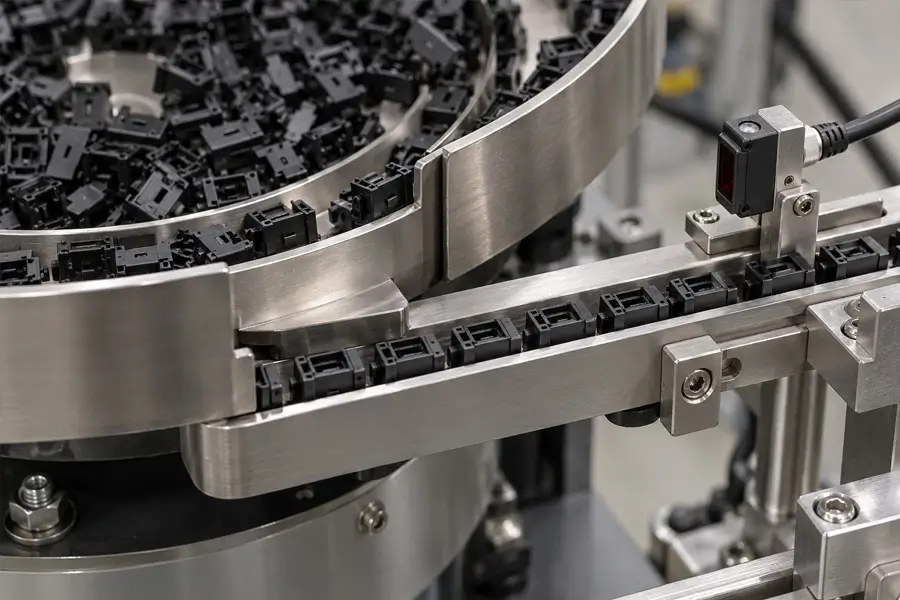
- Linear feeders for transferring parts to the next station.
- Hopper elevator conveyors for bulk replenishment.
- Escapements for releasing individual components.
- Part-presence sensors and level controls.
- Soundproof enclosures.
- Inspection equipment where the application requires it.
Request separate prices for optional items so you can compare equivalent configurations.
What Should You Send to Get an Accurate Quote?
Prepare the following information before contacting suppliers. Manufacturer quotation guidance commonly requests samples or CAD files, feed rate, orientation, downstream process details, and installation constraints.
| Information | What to Provide |
|---|---|
| Part identification | Component name, part number, and switch type |
| মাত্রা | Length, width, height, and critical tolerances |
| উপাদান | Plastic or metal type, coating, and surface condition |
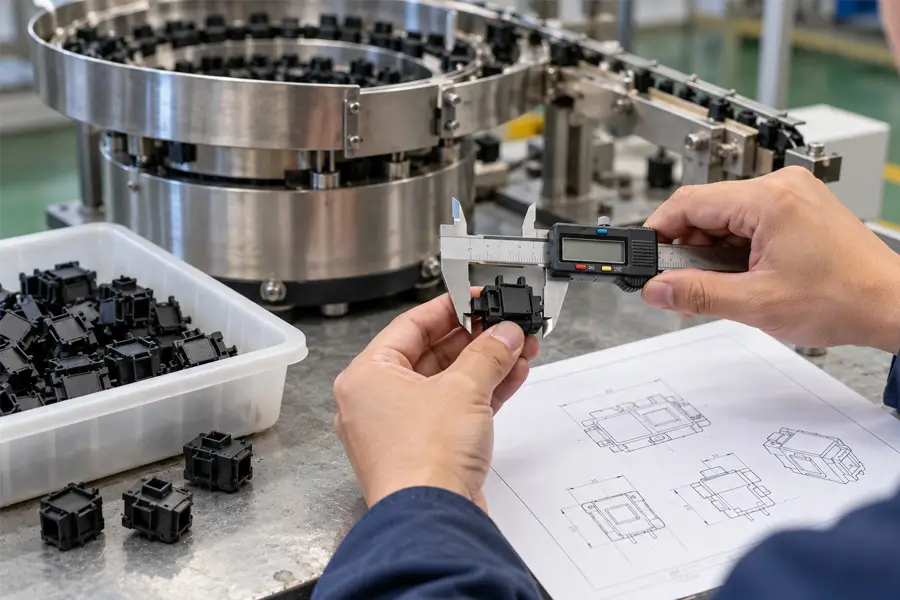
| Samples | Representative production parts, including relevant variants |
| Output orientation | Photos or drawings showing the required final position |
| Feed rate | Required correctly oriented parts per minute, per outlet |
| Machine connection | Track height, transfer point, and receiving fixture |
| Available space | Layout drawing and installation limits |
| Utilities and controls | Power supply, compressed air, and control interface requirements |
| Handling restrictions | Acceptable contact areas, scratches, and deformation limits |
Send photos from several angles if samples are not immediately available. However, ask whether the supplier needs physical parts before confirming performance and price.
For multiple switch models, provide information for every variant. Similar appearance does not guarantee compatibility with the same tooling.
SWOER এর সাথে যোগাযোগ করুন with your part drawings, sample photos, and required feed rate to discuss your project.
How Should You Compare Supplier Quotes?
Compare quotations against the same written requirements. Otherwise, differences in equipment scope can make the lowest price misleading.
First, check whether each quotation includes the bowl, drive, controller, transfer track, and supporting structure.
Next, review these points:
- Performance: Does the supplier specify correctly oriented output at the final handoff?
- Testing: Which samples, test duration, and operating conditions will demonstrate performance?
- মিশ্রণ: Who handles mounting, wiring, control signals, and machine commissioning?
- Changeover: Which switch variants can the system run, and which adjustments does it require?
- Commercial terms: What do the price, delivery terms, warranty, and support arrangements include?
Request an itemized quotation when the scope remains unclear.
Also discuss spare tooling, wear parts, and maintenance access. These details affect the cost of operating the feeder after installation.
What Should You Check During Sample Testing?
Sample testing should show how the feeder handles your actual production parts.
Request a continuous running video that shows the bowl, outlet track, and final transfer point. Close-up footage alone may hide interruptions elsewhere in the system.
During the review, check:
- Whether parts reach the outlet in the correct orientation.
- Whether the system maintains the agreed output.
- Whether parts jam, overlap, or escape from the track.
- Whether handling damages visible or functional surfaces.
- How the feeder responds when the downstream station stops.
- How operators replenish parts and clear interruptions.
Agree on measurable acceptance criteria before production begins. Include the sample batch, test duration, output target, and permitted operator interventions.
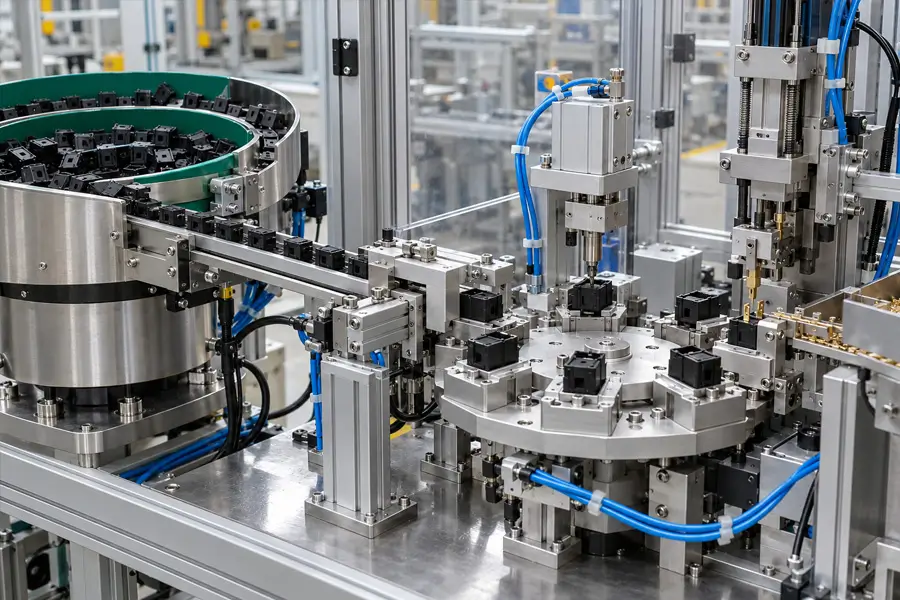
For projects involving a switch assembly machine, assess the feeder and receiving fixture together. Successful delivery into the assembly position matters more than movement inside the bowl.
Get a Custom Switch Feeding Quote from SWOER
SWOER supplies vibratory bowl feeders, linear feeders, hopper elevator conveyors, and custom assembly equipment. This product range supports projects that need both component feeding and assembly integration.
Customization can cover track design, outlet direction, feeding height, storage capacity, and machine interfaces. The final configuration depends on your switch parts and production requirements.
For projects involving automatic assembly machines, SWOER can review the connection between feeding, part transfer, and assembly operations.
Share your drawings and samples first. Then confirm the proposed layout, equipment scope, and acceptance requirements before placing your order.
SWOER also provides installation guidance, operator training, and after-sales technical support for international customers.

 Bengali
 English
 Spanish (Mexico)
 Czech
 Arabic
 Russian
 German
 French
 Turkish
 Italian
 Ukrainian
 Polish
 Romanian
 Portuguese (Portugal)
 Thai
 Japanese
 Korean
 Hebrew
 Uzbek
 Hindi
 Slovak
 Vietnamese
 Portuguese (Brazil)
 Spanish (Peru)
 Spanish (Spain)
 Spanish (Venezuela)