Small parts manufacturing often requires accurate feeding, stable positioning, fast handling, and repeatable assembly.
Manual handling can become difficult when production volume increases. Small components may also require different feeding and assembly methods.
A robotic assembly solution can combine part feeding, pick and place, assembly, inspection, and product transfer in one production system.
The right solution depends on the product structure, assembly process, production target, and required accuracy.
Check the Size and Shape of Your Parts
Part size and shape are important when choosing robotic assembly equipment.
Small parts may include connectors, springs, clips, washers, terminals, screws, electronic components, and plastic parts.
Different shapes require different feeding and handling methods.
| Part Characteristic | Possible Solution |
| Small metal parts | Vibratory bowl feeder |
| Small plastic parts | Bowl feeder or flex feeder |
| Delicate parts | Flex feeder with vision |
| Irregular parts | Vision-based feeding |
| Screws and fasteners | Screw feeding system |
| High-volume small parts | Automatic feeder + robot |
The feeding system should deliver parts in a stable position before the robot picks them.
SWOER can combine কম্পনকারী বাটি ফিডার, ফ্লেক্স ফিডার, ধাপ ফিডার, conveyors, এবং robotic handling systems based on the actual part requirements.
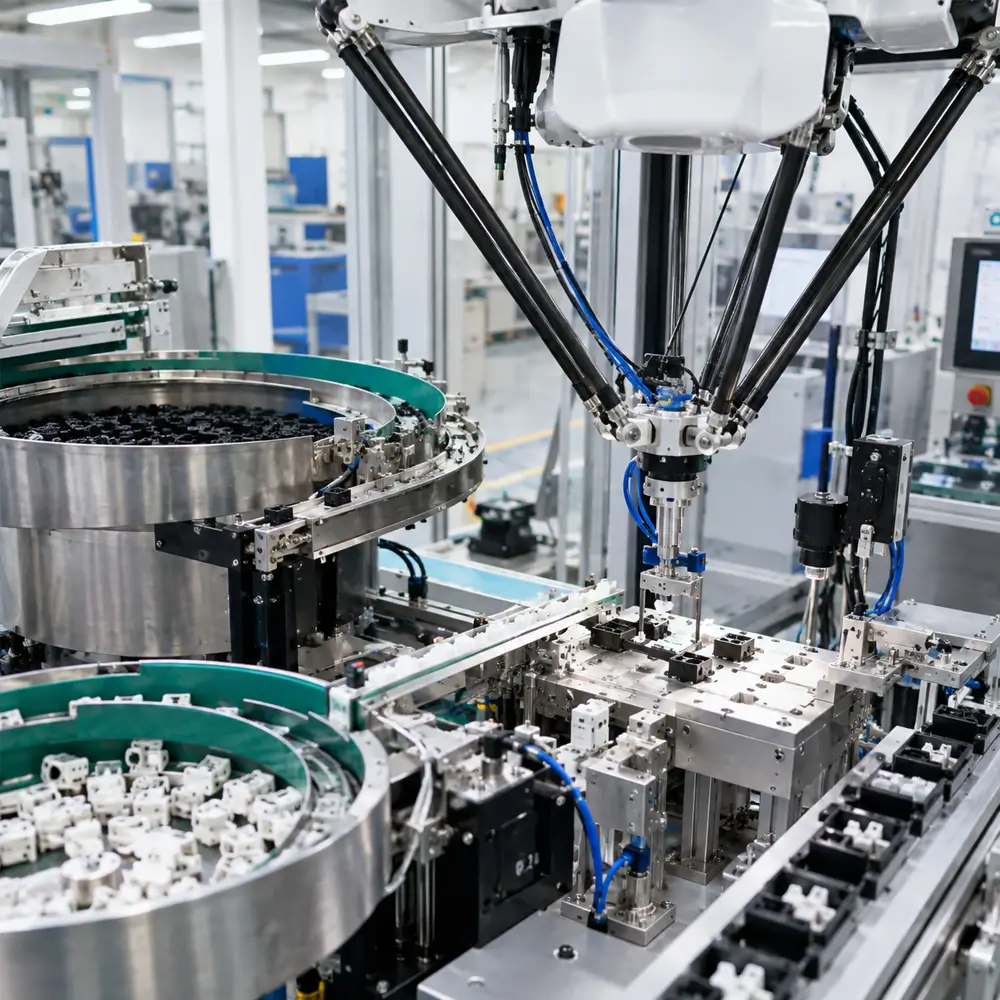
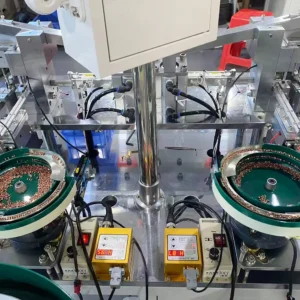
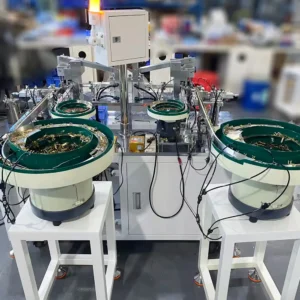
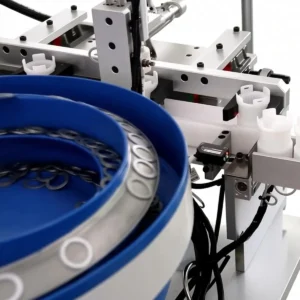
A vibratory bowl feeder can orient many small parts and deliver them to a robot or assembly station.
Define the Assembly Process
The robot should match the actual assembly process.
Start by listing every production step.
For example:
- Feed the components.
- Orient the parts.
- Pick the parts.
- Position the parts.
- Insert or press the components.
- Fasten or connect the parts.
- Inspect the assembled product.
- Transfer the finished product.
Simple pick-and-place applications may only need a robot and feeding system.
More complex products may need several assembly stations.
These stations can include:
- Press fitting
- Screw fastening
- রিভেটিং
- Gluing
- Insertion
- Testing
- Vision inspection
- Automatic unloading
A robotic system can also connect with an indexing table or conveyor.
This allows the robot to transfer parts between different production stations.
Choose the Right Robot Type
Different robotic structures suit different small-parts applications.
| Robot Type | Suitable Application | Key Consideration |
| Delta Robot | High-speed pick and place | Fast handling of lightweight parts |
| SCARA Robot | Precision assembly | Good for insertion and assembly |
| 4-Axis Robot | Assembly and handling | Flexible movement |
| 5-Axis Robot | More complex movements | Greater movement flexibility |
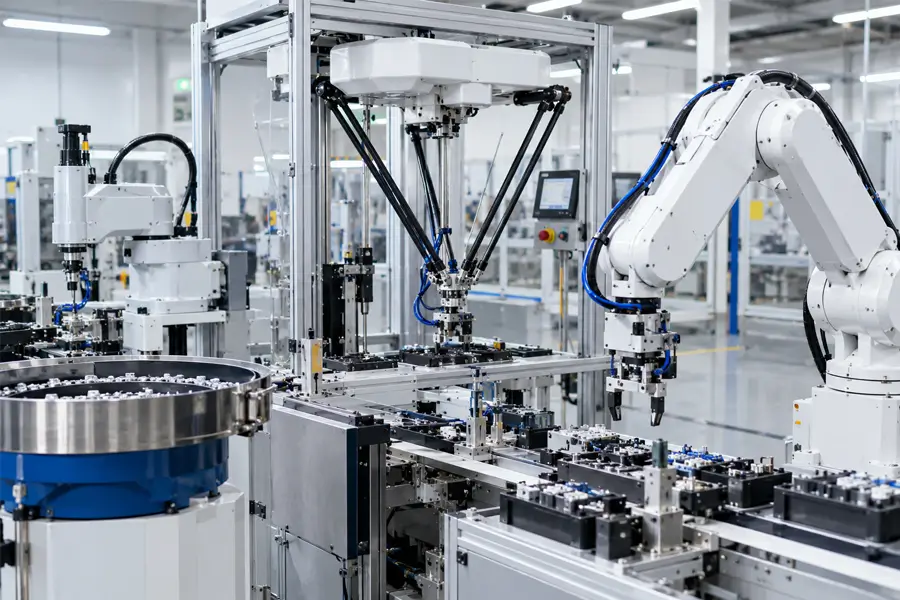
Delta robots are useful for high-speed pick-and-place applications involving lightweight small parts.
SCARA robots can suit applications that require precise positioning, insertion, screwdriving, dispensing, or press-fit operations.
The robot should be selected according to payload, working area, cycle time, movement requirements, and assembly accuracy.
Match the Robot Speed With Production Requirements
Production speed is another important factor.
Calculate the required output before selecting the robot.
For example, a project may require:
- 500 units per hour
- 1,000 units per hour
- 3,000 units per hour
- 6,000 units per hour
The target output affects the robot cycle time, feeder speed, number of stations, and conveyor design.
High production volume may require multiple robots or parallel assembly stations.
However, maximum robot speed does not always mean higher production efficiency.
The complete system must work together.
The feeder must supply parts fast enough.
The robot must pick parts without unnecessary movement.
The assembly station must complete its operation within the required cycle time.
The inspection system must also keep up with production.
Consider Part Feeding and Orientation
Part feeding is one of the most important parts of a robotic assembly system.
Robots work more efficiently when parts arrive at a known position.
For many metal and plastic components, a vibratory bowl feeder can sort and orient parts before sending them to the robot.
Flex feeders can provide another option for parts that need flexible feeding and vision-based picking.
A complete system may use:
Hopper → Feeder → Linear Track → Vision System → Robot → Assembly Station → Inspection → Conveyor
This setup reduces manual part handling.
SWOER specializes in custom feeding systems and can design the feeder around the actual part shape, material, orientation, and production speed.
Decide Whether Vision Inspection Is Required
Vision inspection can improve control over small-part assembly.
A camera system can check whether:
- The part is present
- The part is correctly positioned
- The correct component is installed
- A component is missing
- The assembly is complete
- A visible defect is present
Vision can also guide a robot when parts arrive in different positions.
For flexible feeding applications, the vision system can identify the part position and provide coordinates for robotic picking.
This is useful when standard mechanical orientation is difficult.
SWOER can integrate vision inspection with robotic handling and feeding systems when the production process requires it.
Check the Available Factory Space
Factory space should be considered before selecting the equipment.
A robotic assembly system may include:
- রোবট
- ফিডার
- Assembly mechanism
- Control cabinet
- Conveyor
- Vision system
- Safety enclosure
- Operator interface
The layout should leave enough space for operation and maintenance.
Compact equipment can be useful when floor space is limited.
A custom machine can also combine several processes into one system.
This can reduce unnecessary material transfer between separate machines.
Consider Future Production Changes
Production requirements may change after the machine is installed.
New product models may require different components.
Production volume may also increase.
For this reason, consider future requirements when designing the robotic assembly system.
Useful options may include:
- Modular feeding systems
- Adjustable fixtures
- Replaceable tooling
- Additional inspection stations
- Expandable conveyors
- Multiple product programs
- Robot vision integration
A flexible system can make future changes easier.
However, the machine should not include unnecessary functions only for possible future use.
The design should balance current production needs with realistic expansion plans.
Choose Custom Robotic Assembly When Standard Equipment Is Not Enough
Standard robotic equipment may work well for simple handling tasks.
Complex small-part production may require a combination of feeding, robotics, assembly, and inspection.
Custom automation can be useful when the product has:
- Multiple small components
- Complex assembly steps
- Tight positioning requirements
- Special feeding requirements
- High production volume
- Integrated inspection needs
- Limited factory space
Customized Assembly Applications
SWOER designs custom assembly machines around the customer’s product structure and production requirements.
- The system can combine:
- কম্পনশীল বাটি ফিডার
- ফ্লেক্স ফিডার
- স্টেপ ফিডার
- Delta robots
- Parallel robots
- Assembly mechanisms
- Vision inspection
- Conveyors
- Testing systems
- Automatic unloading
This approach allows different production functions to work as one automated system.
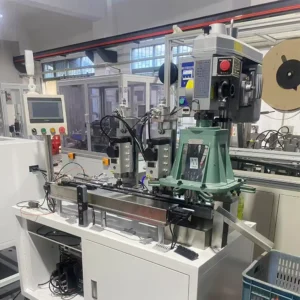
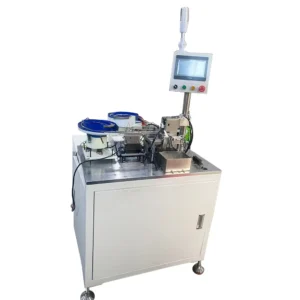
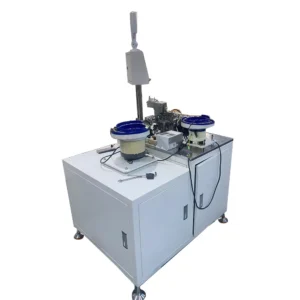
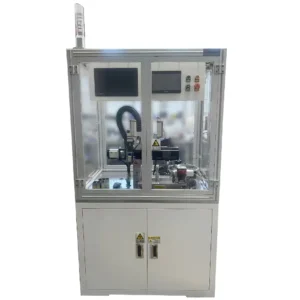
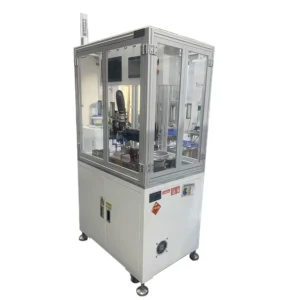
SWOER’s existing small-parts assembly solutions also show how feeders can connect directly with assembly stations and robotic pick-and-place systems.
What Information Should You Send to a Robotic Assembly Supplier?
Good project information helps the supplier understand the production requirements.
Prepare the following information:
| Information | Why It Matters |
| Product drawings | Shows product structure and dimensions |
| Part samples | Helps test feeding and handling |
| Assembly process | Defines required production stations |
| Target output | Determines robot and feeder speed |
| Part weight | Helps select the robot |
| Part material | Helps determine the feeding method |
| Assembly tolerance | Defines positioning requirements |
| Inspection requirements | Determines camera and sensor needs |
| Factory space | Helps design the machine layout |
Product drawings and physical samples are especially useful.
SWOER can review these materials and develop a machine concept around the actual production process. Its custom assembly approach can combine feeding, robots, assembly, inspection, and conveyors in one solution.
SWOER Robotic Assembly Solutions for Small Parts
SWOER focuses on custom automation for small-part manufacturing.
The engineering team designs the feeding and robotic system based on the customer’s product structure, assembly sequence, production speed, and quality requirements.
Typical applications include:
- Connector assembly
- Electronic component assembly
- Spring assembly
- Clip assembly
- Terminal assembly
- Sensor assembly
- Small plastic parts
- Precision mechanical parts
SWOER can also connect robotic systems with Automatic Connector Assembly Machine, Automatic Chip Assembly Machine, and other customized assembly equipment.
These internal links connect the robotic assembly topic to your existing product pages and build a stronger content structure around assembly automation.
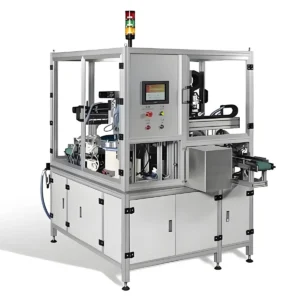
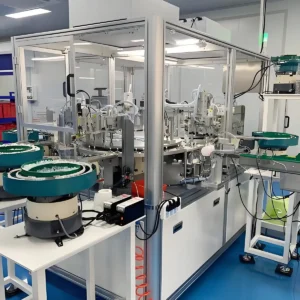
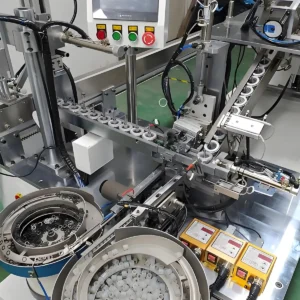
How SWOER Develops a Custom Robotic Assembly System
The project can start with product drawings, samples, and production requirements.
The general process includes:
Product information → Process review → 3D machine design → Customer confirmation → Machine production → Testing → Shipping → Installation guidance
SWOER designs the equipment around the actual assembly process rather than forcing the product into a standard machine structure.
The final system can integrate feeding, robotic handling, assembly, inspection, testing, and product transfer.
This approach is suitable when small parts require several automated production steps.
উপসংহার
Choosing a robotic assembly solution requires more than selecting a robot.
Manufacturers should evaluate the part size, feeding method, assembly process, production speed, robot type, inspection requirements, factory space, and future production needs.
A complete system may combine feeding, robotic pick and place, assembly, vision inspection, testing, and conveying.
When standard equipment cannot meet the production requirements, a custom robotic assembly system can provide a more suitable approach.
Need a robotic assembly solution for small parts? Send SWOER your product drawings, samples, assembly process, and target output to discuss a suitable automation solution.
Get a customized solution
 Bengali
  English
  Spanish (Mexico)
  Czech
Czech  Arabic
  Russian
  German
  French
  Turkish
  Italian
  Ukrainian
  Polish
  Romanian
  Portuguese (Portugal)
  Thai
Thai  Japanese
  Korean
  Hebrew
  Uzbek
Uzbek  Hindi
Hindi  Slovak
  Vietnamese
  Portuguese (Brazil)
  Spanish (Peru)
  Spanish (Spain)
  Spanish (Venezuela)