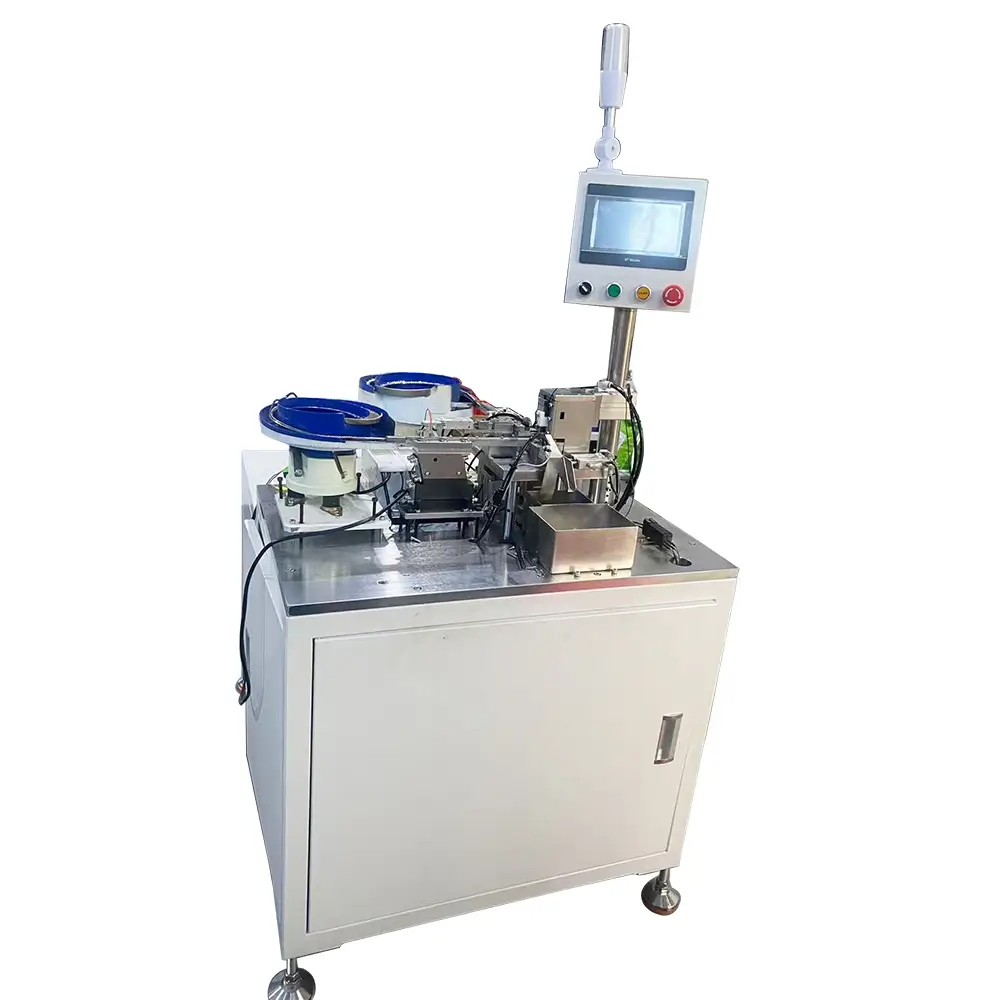
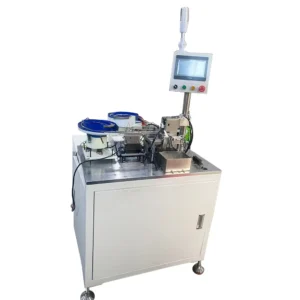
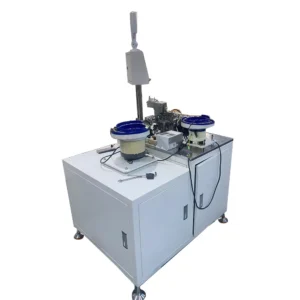
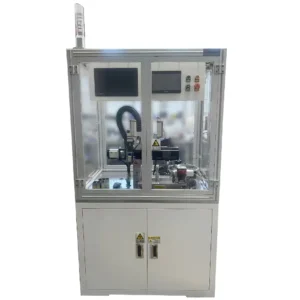
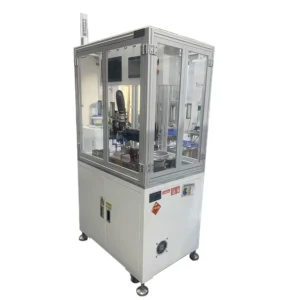
Small parts assembly machines help manufacturers automate repetitive assembly tasks. These machines can handle feeding, positioning, assembly, inspection, and other production steps.
Machine prices vary because each production project has different requirements. Part size, assembly steps, production speed, feeding systems, and inspection functions can all affect the final cost.
For this reason, suppliers usually quote small parts assembly machines based on the actual product and production requirements.
Small Parts Assembly Machine Cost Overview
Small parts assembly machines can range from simple semi-automatic equipment to fully automatic custom systems.
Semi-automatic machines usually suit simple assembly tasks. Fully automatic machines suit high-volume production with several assembly steps.
Small Parts Assembly Machine Cost Overview
Small parts assembly machines can range from simple semi-automatic equipment to fully automatic custom systems.
Semi-automatic machines usually suit simple assembly tasks. Fully automatic machines suit high-volume production with several assembly steps.
| Machine Type | Typical Use | Automation Level |
| Semi-Automatic Machine | Simple assembly tasks | Medium |
| Automatic Assembly Machine | Repetitive small parts assembly | High |
| Custom Assembly Machine | Complex assembly processes | High |
| Fully Automatic Line | High-volume production | Very High |
Exact pricing depends on the product and required functions. A supplier needs to review the production process before giving an accurate quotation.
What Affects Small Parts Assembly Machine Cost?
Several factors can change the machine cost. Understanding these factors helps manufacturers choose the right automation level.
অংশের আকার এবং আকৃতি
Small parts often require precise feeding and positioning. Irregular parts may need special feeding systems.
Part material also affects the feeding method. Plastic, metal, rubber, and electronic parts may require different solutions.
Number of Assembly Steps
Simple products may need only one or two assembly operations. More complex products may require several stations.
For example, one machine may need to:
- Feed components
- Position parts
- Insert components
- Press parts together
- Tighten screws
- Apply adhesive
- Inspect finished products
- Transfer products to the next process
More assembly steps usually require more stations and control functions.
Production Speed
Production targets also affect machine design.
Low-volume production may work well with semi-automatic equipment. High-volume production usually requires automatic feeding and continuous assembly.
Manufacturers should provide the target output when requesting a quotation. This information helps suppliers select suitable machine speed and components.
Feeding System
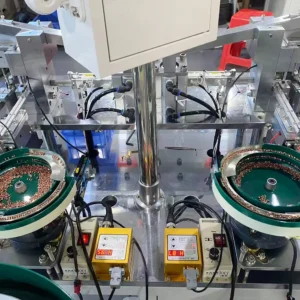
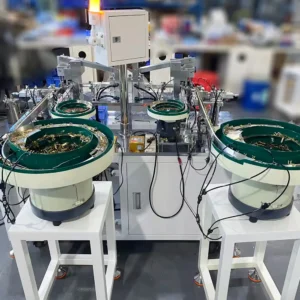
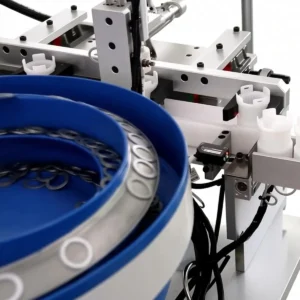
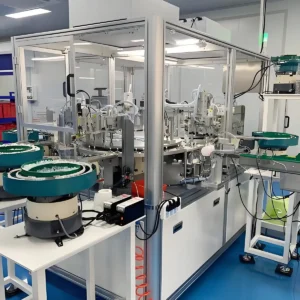
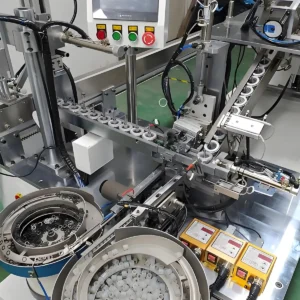
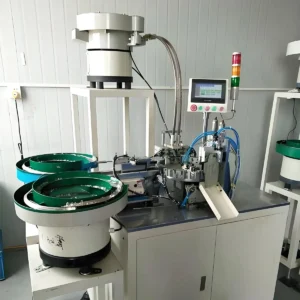
Small parts need stable and accurate feeding. Vibratory bowl feeders work well for many small components.
Other projects may need centrifugal feeders, flex feeders, step feeders, or conveyor systems.
The number and type of feeders can have a major effect on the overall machine cost.
Inspection Requirements
Some products need inspection during or after assembly.
Vision systems can check:
- Part presence
- Part position
- Assembly condition
- Product orientation
- Missing components
- Surface defects
Inspection requirements can add cameras, lighting, sensors, and control functions to the machine.
Custom Functions
Many small parts assembly machines require custom mechanisms.
Examples include pressing, riveting, screw fastening, gluing, testing, marking, and automatic unloading.
Custom functions require engineering work and mechanical design. Therefore, they can affect the final machine price.
How Does Automation Level Affect Cost?
Automation level plays an important role in machine pricing.
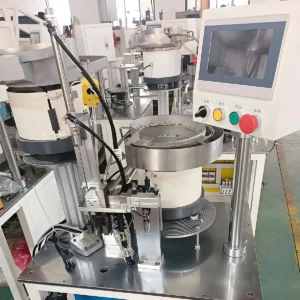
Semi-automatic equipment can reduce manual work while keeping some operations under operator control. This option can suit lower production volumes or simpler assembly processes.
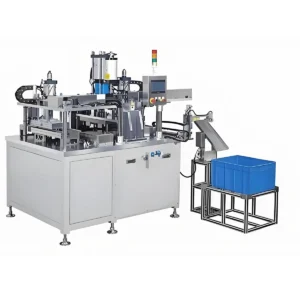
Automatic equipment can handle more production steps without continuous manual operation.
For high-volume production, automatic feeding and assembly can reduce repetitive labor and improve production consistency.
The right choice depends on more than the initial machine cost. Manufacturers should also consider labor costs, production volume, working hours, and long-term production needs.
What Can a Small Parts Assembly Machine Automate?
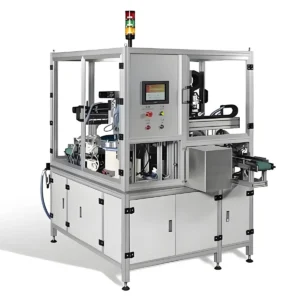
Modern assembly machines can combine several production functions in one system.
Common functions include:
- Automatic component feeding
- Part separation and positioning
- Component insertion
- Press fitting
- Screw fastening
- রিভেটিং
- Gluing
- Product testing
- Vision inspection
- Automatic unloading
- Product counting
Combining several functions can reduce manual handling between production steps.
Custom machines can also connect with conveyors, robots, feeders, sensors, and vision systems.
Is Automatic Assembly Worth the Investment?
Machine cost should not be the only factor when comparing automation options.
Manufacturers should also consider the cost of manual production.
Manual assembly may require several operators for feeding, assembly, inspection, and product handling. Labor costs can increase as production volume grows.
Automatic assembly can reduce repetitive manual work. It can also maintain stable production speed during long production runs.
The investment makes more sense when production volume is high and the assembly process remains stable.
A simple comparison can help:
| Production Factor | Manual Assembly | Automatic Assembly |
| Labor Requirement | Higher | Lower |
| Production Speed | Depends on operators | Machine-controlled |
| Feeding | Manual | Automatic |
| Assembly Consistency | Depends on operators | More consistent |
| Long Production Runs | More labor | Less manual work |
| Product Inspection | Manual or separate process | Can integrate vision inspection |
Manufacturers should compare the machine investment with expected labor savings and production output before making a decision.
What Information Do Suppliers Need for a Quote?
Suppliers need clear production information to calculate machine requirements and cost.
Prepare the following information before requesting a quotation:
| Information | Why It Matters |
| Product drawings | Shows part dimensions and assembly structure |
| Product samples | Helps check feeding and assembly methods |
| Assembly process | Defines required production stations |
| Target output | Determines required machine speed |
| Part dimensions | Helps select feeding systems |
| Inspection requirements | Defines sensors and vision functions |
| Production requirements | Helps select the right automation level |
Product drawings and samples provide especially useful information.
Suppliers can review the parts and assembly process before recommending a machine configuration.
How to Get an Accurate Small Parts Assembly Machine Quote
Providing more production information can help suppliers prepare a more accurate quotation.
Send the following materials when possible:
Product drawings
- Product samples or clear product photos
- Assembly process details
- Target production output
- Required inspection functions
- Factory power requirements
- Preferred automation level
SWOER can review these requirements and develop a machine configuration based on the actual production process.
The machine can combine feeding, assembly, inspection, and unloading functions according to the product requirements.
Need a quote for your small parts assembly project? Send your product drawings, samples, assembly process, and target output to SWOER. Our team can review your requirements and recommend a suitable machine configuration.

 Bengali
  English
  Spanish (Mexico)
  Czech
Czech  Arabic
  Russian
  German
  French
  Turkish
  Italian
  Ukrainian
  Polish
  Romanian
  Portuguese (Portugal)
  Thai
Thai  Japanese
  Korean
  Hebrew
  Uzbek
Uzbek  Hindi
Hindi  Slovak
  Vietnamese
  Portuguese (Brazil)
  Spanish (Peru)
  Spanish (Spain)
  Spanish (Venezuela)